Telemedicine vs Telehealth: Which One Is Right For Your Healthcare Organization?

Jigar Mistry
Healthcare has come a long way from being limited to hospitals, clinics, and scheduled office visits. The U.S. Department of Health & Human Services report says 95% of HRSA-funded health centers provided primary care through telehealth in 2024
Today, health care can reach patients wherever they are through digital healthcare platforms.
But here's where many people get confused.
Are telemedicine and telehealth the same thing? The terms are often used interchangeably, yet they describe different aspects of remote healthcare. Understanding the distinction is more than a matter of terminology.
The growing adoption of telehealth devices, AI-powered remote monitoring, virtual consultations, and digital health platforms has only made this conversation more important. At the same time, healthcare providers are increasingly relying on a trusted telehealth consultant to build patient-centric virtual care ecosystems.
So, where does the difference really lie when we discuss telemedicine vs telehealth?
Telemedicine focuses primarily on delivering remote clinical care, while telehealth encompasses a much broader ecosystem.
Telehealth Vs Telemedicine: A Brief Introduction
If you've ever searched for telemedicine vs telehealth, you've probably noticed that both terms are used almost interchangeably.
The easiest way to understand the difference between telehealth and telemedicine is to think of telehealth as the larger ecosystem. Telemedicine is one important part of that ecosystem, focused specifically on delivering remote clinical care.
Let's explore both in detail.
What Is Telehealth?
Telehealth refers to the use of digital communication technologies to deliver, manage, and improve healthcare services beyond the walls of a hospital.
The primary objective of telehealth is to make healthcare more accessible without limiting it by a patient’s location.
A modern telehealth ecosystem can include:
- Remote Patient Monitoring: Connected sensors and wearable devices continuously capture vital health metrics such as blood pressure, glucose levels, heart rate, oxygen saturation, and transmit them securely to healthcare providers.
- Virtual Consultations: Secure video appointments allow patients and clinicians to communicate in real time while reducing unnecessary travel and improving access to care.
- Mobile Health Applications: Smartphones and tablets support medication reminders, appointment scheduling, wellness tracking, patient education, and secure communication.
- Healthcare Administration: Telehealth also streamlines provider collaboration, staff training, digital documentation, scheduling, and care coordination across healthcare networks.
One of the biggest benefits of video conferencing in healthcare within telehealth is that it enables patients, specialists, nurses, and caregivers to collaborate instantly. As per the report, 85% of physicians currently use telehealth, with 93% conducting live video visits.
What Is Telemedicine?
Telemedicine is the clinical component of digital healthcare that enables healthcare providers to diagnose, treat, and monitor patients remotely using secure communication technologies. Telemedicine focuses solely on direct clinical care between patients and licensed medical professionals.
Common telemedicine services include:
- Virtual Clinical Consultations: Doctors assess symptoms, review medical history, diagnose conditions, and recommend treatment plans through secure video or audio consultations.
- Prescription Management: Physicians prescribe medications, renew prescriptions, and adjust treatment plans remotely while monitoring patient progress.
- Chronic Disease Management: Regular virtual follow-ups help patients with diabetes, hypertension, heart disease, and other chronic conditions receive continuous care.
- Post-Treatment Care: Recovery, wound healing, and rehabilitation progress can be monitored remotely, reducing unnecessary hospital visits.
- Specialist Consultations: Patients can connect with specialists regardless of location, improving access to timely diagnosis and expert care.
What Is The Difference Between Telemedicine vs Telehealth?
| Telemedicine vs Telehealth | ||
| Comparison Area | Telehealth | Telemedicine |
| Primary Purpose | Supports the complete digital healthcare ecosystem, including clinical and operational services. | Focuses on delivering medical diagnosis, treatment, and follow-up care remotely. |
| Overall Coverage | Encompasses patient care, provider collaboration, education, administration, and health management. | Limited to direct interactions between patients and healthcare providers for clinical care. |
| Primary Users | Physicians, nurses, therapists, healthcare administrators, educators, and patients. | Licensed physicians, specialists, nurse practitioners, and patients. |
| Typical Services | Remote patient monitoring, wellness programs, virtual education, patient engagement, and care coordination. | Virtual consultations, prescription management, chronic disease follow-ups, specialist consultations, and post-treatment care. |
| Communication Methods | Video conferencing, mobile health apps, patient portals, wearable devices, messaging platforms, and cloud-based systems. | Secure video calls, telephone consultations, digital imaging, and encrypted clinical messaging. |
| Technology Integration | Often integrates Electronic Health Records (EHR), AI analytics, IoT-enabled telehealth devices, and remote monitoring platforms. | Integrates clinical documentation systems, e-prescriptions, diagnostic tools, and patient records for virtual care delivery. |
| Healthcare Objective | Improves accessibility, preventive care, patient engagement, and healthcare operations across the organization. | Enables timely diagnosis, treatment, medical advice, and continuity of clinical care. |
| Business Impact | Helps healthcare organizations improve operational efficiency, expand care delivery, and enhance patient experience. | Reduces unnecessary hospital visits, shortens treatment delays, and improves access to qualified medical professionals. |
Key Differences That Matter for Healthcare Providers
When comparing telemedicine vs telehealth, the distinction goes far beyond definitions.
For healthcare providers, these differences directly influence compliance, technology investments, staffing decisions, reimbursement opportunities, and long-term digital transformation. Understanding these factors helps organizations build a virtual care model that is both scalable and sustainable.
Scope
Telemedicine is designed for licensed clinicians who diagnose, treat, and manage patients remotely. Telehealth extends beyond clinical care by involving nurses, therapists, pharmacists, health educators, care coordinators, and even AI-powered health platforms to support the overall patient journey.
Reimbursement
Virtual clinical consultations under telemedicine generally follow established reimbursement frameworks through Medicare, Medicaid, and many private insurers. In contrast, reimbursement for broader telehealth services such as remote monitoring or digital wellness programs often depends on payer policies, service type, and regional regulations.
Compliance
Clinical telemedicine services operate under stricter licensing and regulatory requirements because medical professionals must be authorized to treat patients in the applicable jurisdiction. Non-clinical telehealth services also require regulatory compliance, particularly for patient privacy, health information security, and digital health applications.
Technology
Telemedicine primarily depends on secure, real-time communication platforms that enable virtual consultations and clinical decision-making. Telehealth supports a broader technology ecosystem that includes patient portals, remote monitoring dashboards, mobile health applications, AI-driven analytics, and connected telehealth devices.
Increasingly, these platforms are enhanced with AI solutions for healthcare that enable intelligent triaging, predictive risk analysis, workflow automation, and personalized patient engagement.
Collaboration
Telemedicine focuses on direct physician-to-patient interactions. Telehealth promotes collaboration across multidisciplinary teams by connecting physicians, nurses, therapists, caregivers, and administrators through integrated digital workflows that improve continuity of care.
As healthcare organizations adopt AI to improve workforce productivity and care coordination, an AI-assisted workforce platform for healthcare can further optimize scheduling, resource allocation, and clinical collaboration across departments.
Patient Experience
One of the biggest benefits of video conferencing in healthcare is the ability to create meaningful face-to-face interactions without requiring patients to travel. When combined with remote monitoring and digital engagement tools, healthcare providers can deliver more personalized, continuous, and accessible care.
Pros and Cons of Telemedicine
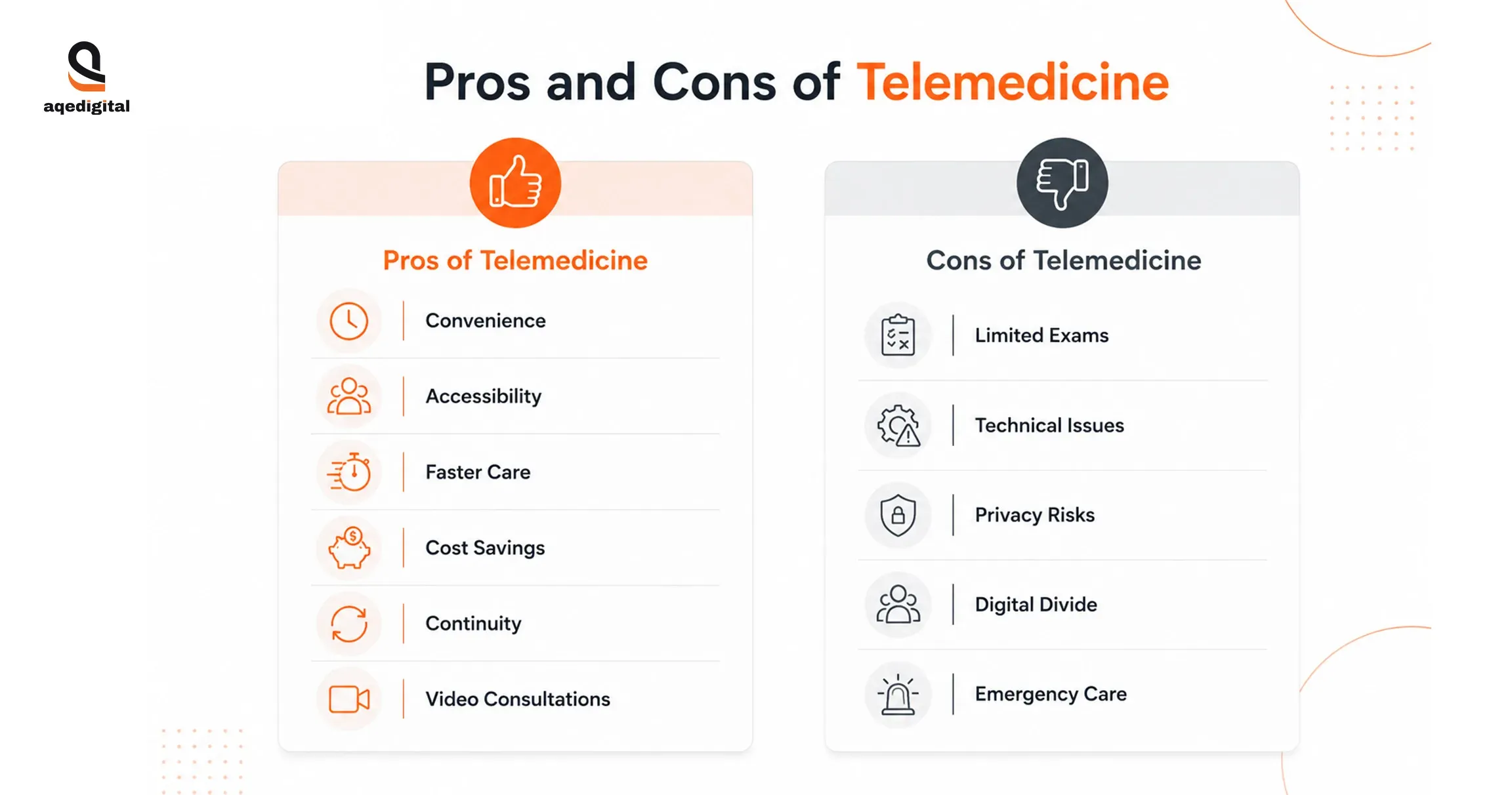
Telemedicine has transformed the way clinical care is delivered by making healthcare more accessible, convenient, and efficient. However, like any healthcare model, it comes with both strengths and limitations. Understanding these factors makes the telemedicine vs telehealth comparison much clearer.
Pros of Telemedicine
- Convenience: Patients can consult physicians from home, eliminating unnecessary travel, long waiting times, and disruptions to their daily schedules.
- Accessibility: Virtual consultations connect patients with specialists regardless of location, improving healthcare access for rural and underserved communities.
- Faster Care: Minor illnesses, follow-up appointments, and medication reviews can often be addressed more quickly than traditional in-person visits.
- Cost Savings: Reduced travel expenses, lower operational costs, and fewer unnecessary hospital visits create financial benefits for both patients and providers.
- Continuity: Regular virtual follow-ups help clinicians monitor chronic conditions while maintaining consistent communication throughout the treatment journey.
- Video Consultations: Among the major benefits of video conferencing in healthcare is the ability to support real-time discussions, visual symptom assessments, and collaborative decision-making.
Cons of Telemedicine
- Limited Exams: Certain medical conditions still require physical examinations, laboratory testing, or diagnostic imaging that cannot be performed remotely.
- Technical Issues: Poor internet connectivity, software glitches, or inadequate devices can interrupt consultations and affect the overall patient experience.
- Privacy Risks: Secure platforms are essential to protect sensitive patient information and maintain compliance with healthcare data regulations.
- Digital Divide: Older adults and individuals with limited digital literacy may face challenges using virtual healthcare platforms effectively.
- Emergency Care: Telemedicine is not designed to replace emergency medical services when immediate physical intervention is required.
Pros and Cons of Telehealth
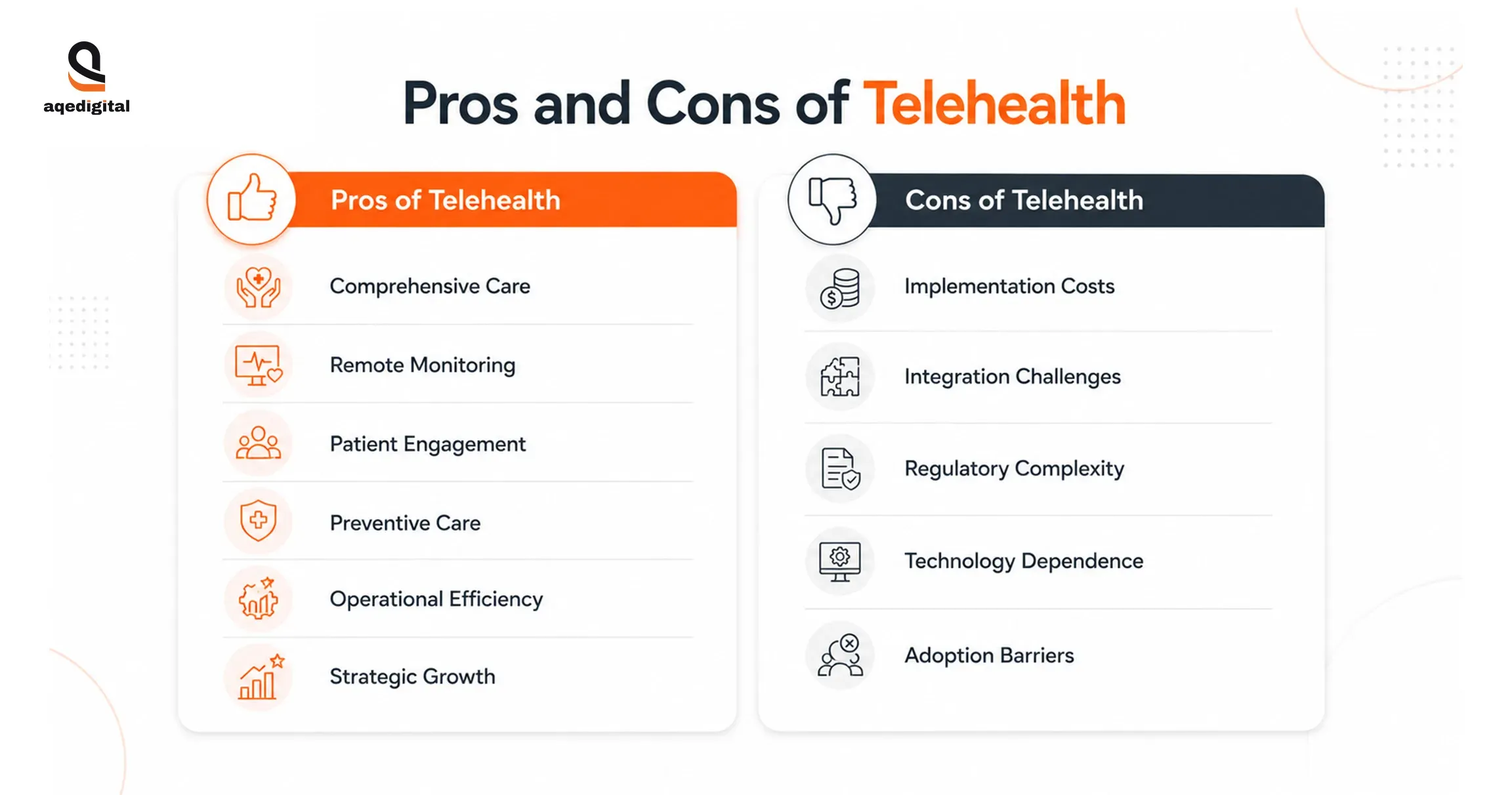
Telehealth extends far beyond virtual doctor visits. It supports patient engagement, remote monitoring, healthcare administration, education, and coordinated care across the healthcare ecosystem. Understanding these advantages highlights the broader difference between telehealth and telemedicine.
Pros of Telehealth
- Comprehensive Care: Telehealth combines clinical services with patient education, provider collaboration, administrative workflows, and preventive healthcare initiatives.
- Remote Monitoring: Connected telehealth devices continuously collect health data, enabling providers to identify risks early and intervene before conditions worsen.
- Patient Engagement: Mobile applications, patient portals, and digital communication encourage individuals to participate more actively in managing their health.
- Preventive Care: Continuous monitoring and health education help detect potential issues earlier while promoting healthier lifestyle choices.
- Operational Efficiency: Healthcare organizations streamline scheduling, documentation, care coordination, and communication across multiple departments.
- Strategic Growth: Working with an experienced telehealth consultant helps healthcare providers implement scalable virtual care solutions while improving compliance and long-term digital transformation.
Cons of Telehealth
- Implementation Costs: Building a secure telehealth ecosystem requires investments in infrastructure, software platforms, cybersecurity, and staff training.
- Integration Challenges: Connecting multiple digital systems, electronic health records, and monitoring platforms can be technically complex.
- Regulatory Complexity: Healthcare organizations must navigate evolving reimbursement policies, licensing requirements, and data privacy regulations.
- Technology Dependence: Reliable internet connectivity and compatible digital devices are essential for delivering uninterrupted telehealth services.
- Adoption Barriers: Some patients and healthcare professionals may require additional training before confidently using advanced virtual healthcare technologies.
By understanding both the advantages and limitations, healthcare organizations can make informed decisions when evaluating telemedicine vs telehealth.

Telemedicine vs Telehealth: Which Is the Right Choice for Your Healthcare Organization?
The right approach depends on your organization's clinical objectives, patient demographics, digital maturity, and long-term care strategy. Many healthcare providers also partner with healthcare IT consulting experts to evaluate their existing infrastructure, identify technology gaps, and develop a secure roadmap for virtual care transformation.
Choose Telemedicine If You Want To :
- Deliver Clinical Care: Conduct virtual consultations, diagnose medical conditions, prescribe treatments, and provide follow-up care through secure digital platforms.
- Expand Specialist Access: Connect patients with specialists faster, reducing geographical barriers and improving access to expert medical care.
- Support Chronic Care: Manage long-term conditions through scheduled virtual appointments, medication reviews, and continuous clinical follow-ups.
- Reduce Hospital Visits: Replace non-emergency in-person appointments with virtual consultations to improve convenience while optimizing clinical resources.
- Generate Reimbursable Care: Deliver billable virtual medical services that align with payer requirements and reimbursement policies.
Choose Telehealth If You Want To:
- Monitor Patients: Use connected telehealth devices to track vital signs, detect health risks early, and support proactive intervention between clinical visits.
- Educate Patients: Deliver health education, wellness programs, discharge instructions, and preventive care resources through digital platforms.
- Coordinate Care: Improve communication among physicians, nurses, specialists, caregivers, and administrative teams using integrated digital workflows.
- Optimise Operations: Streamline scheduling, documentation, provider collaboration, and healthcare administration to improve organizational efficiency.
- Improve Engagement: Encourage patients to stay involved in their care through mobile applications, patient portals, remote monitoring, and digital communication tools.
Understand Which Virtual Care Model Fits Your Healthcare Organization.
As healthcare continues to evolve, success will depend less on adopting digital tools and more on creating connected care experiences that are secure, scalable, and patient-focused. While the telemedicine vs telehealth discussion helps organizations understand available care models, the real opportunity lies in building an integrated digital ecosystem that adapts to future healthcare demands.
At AQe Digital, we combine healthcare domain expertise with advanced digital engineering to develop secure, interoperable, and future-ready virtual care solutions tailored to evolving business and patient needs. Our technology-first approach enables healthcare organizations to accelerate innovation while maintaining compliance and operational excellence.
Contact us to explore the right healthcare solution for your organization to build a smarter and more reliable digital healthcare system.