

Precision and accuracy are the topmost priorities of healthcare providers with the digitization of almost every aspect of the industry, especially with the billing process and financial transactions. Every claim, invoice, and reimbursement directly impacts both your organization’s financial health and your patients’ trust.
Relying on traditional billing methods comes with its own set of headaches related to high administrative costs and operational burden. Manual data entry, paper-based records, and outdated tracking systems not only slow down operations but also open the door to costly errors. Healthcare teams often struggle to keep up with constant regulatory changes while juggling tedious paperwork and complex claim settlements.
The evolution of medical billing software and AI healthcare solutions has transformed how healthcare providers handle financial operations, as it helps automate routine tasks, reduce human error, and ensure every claim is processed accurately and on time. Instead of getting work done with spreadsheets and manual data entries, healthcare providers can now focus on patient care.
For healthcare businesses aiming to stay competitive and compliant, building a robust billing software for medical use isn’t just a tech upgrade; it’s a strategic move toward better revenue cycle management. From integrating patient records to simplifying insurance claim tracking, modern billing systems can redefine how efficiently your practice operates.
What Is A Medical Billing Software?
Medical billing software automates the complex billing cycle, from generating accurate invoices to submitting insurance claims and tracking reimbursements in real-time. Instead of spending hours manually entering patient data or cross-checking codes, healthcare providers can now rely on intelligent systems that minimize human error and ensure every transaction is logged precisely.
Whether it’s a small clinic or a large hospital network, a well-designed billing solution simplifies every step of the process, such as automating claim submissions, verifying codes like ICD and CPT, and sending timely reminders for pending payments. By doing so, it helps providers maintain steady cash flow, reduce denials, and focus more on patient outcomes rather than paperwork.
Beyond speed and efficiency, these solutions ensure proper use of medical codes, reduce compliance risks, and give providers full visibility into their financial health. This is why custom software development has become a strategic investment for healthcare organizations looking to improve cash flow, reduce human error, and deliver a smoother billing experience for both staff and patients.

Why Medical Billing Software is Essential?
In a system where every claim and code counts, even small inefficiencies can create big problems. That’s why modern medical billing software has become an essential part of healthcare infrastructure, empowering providers to deliver care without drowning in administrative chaos.
Streamlining Billing and Revenue Processes
With automation, billing software eliminates repetitive data entry, validates claims in real time, and reduces the turnaround time between service and payment. This streamlined process keeps the cash flow healthy as well as helps practices focus on patient outcomes instead of paperwork.
Keeping Pace With Technological Advances
Using billing software for medical practices ensures that your organization stays compliant with the latest industry standards and security protocols. It also ensures that every code, claim, and transaction aligns with current standards. Automated updates, built-in security protocols, and seamless EHR integrations help providers stay compliant while minimizing manual effort.
Ensuring Regulatory Compliance
Regulations like HIPAA and ICD-10 demand constant attention, and noncompliance can lead to costly penalties. Whether you’re a large facility or investing in medical billing software for small business operations, modern systems automatically update with the latest rules and codes, ensuring your processes stay accurate and compliant without extra effort.
Enhancing Patient Experience
Clear invoices, transparent payment options, and easy-to-access patient portals enhance satisfaction and trust. When patients understand their bills and can pay without confusion, it creates a smoother experience that strengthens loyalty toward your practice.
Types of Medical Billing Software
Not every healthcare provider has the same workflow, team size, or patient volume. And that’s exactly why different types of medical billing systems exist. Choosing the right one depends on your practice’s operational needs, compliance requirements, and integration goals. Let’s explore the three main types of billing systems that shape the foundation of modern medical billing software development.
1. Open Billing System
An open billing system seamlessly integrates with Electronic Health Records (EHRs), giving healthcare professionals complete visibility into patient data. This interconnected approach enhances communication between departments, reduces redundancy, and enables faster, more accurate billing.
2. Closed Billing System
Unlike open systems, closed billing platforms keep patient data tightly contained within specific departments or practitioners. Think of it as a secure digital vault where information stays private, accessible only to authorized users. This structure reduces the risk of unauthorized access and supports strong compliance with healthcare privacy laws.
Limited data sharing can create bottlenecks in communication, especially in organizations where multiple specialists need shared visibility with this system. Smaller clinics or practices with simpler processes may find this system ideal for maintaining control without over-complicating workflows.
3. Isolated Billing System
An isolated billing system gives control directly to the patient. It allows individuals to view, track, and manage their own billing information independently, without involving the healthcare provider. This transparency empowers patients to stay informed about their healthcare expenses and manage payments on their terms. It’s a great option for personal record-keeping, but less suited for coordinated care models.
What Are The Benefits of Developing a Medical Billing Software?
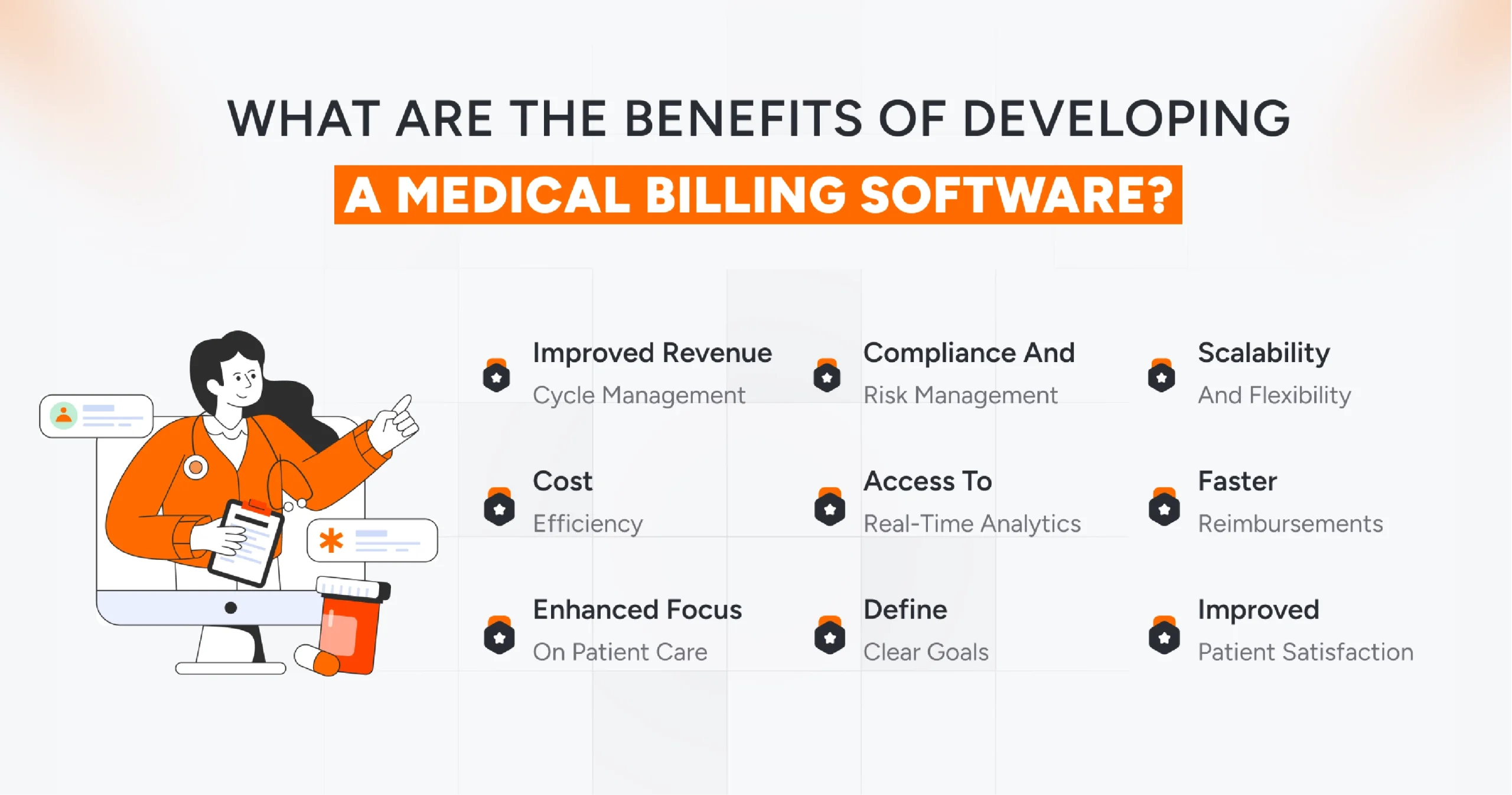
With intelligent medical billing software development, healthcare providers can bridge the gap between efficiency and profitability while reducing operational strain.
1. Improved Revenue Cycle Management
Managing the flow of claims and payments can be complex, but automation simplifies it. Medical billing software helps healthcare organizations maintain consistent cash flow by reducing claim denials and delays.
How Medical Billing Software Makes it Possible?
Through integrated coding validation, automated claim submissions, and real-time error detection, the software minimizes billing mistakes and accelerates reimbursement cycles. This leads to fewer revenue leaks and faster financial turnarounds for both small and large practices.
2. Cost Efficiency
Running a billing department manually requires large teams, training, and maintenance. Automating these functions can cut costs dramatically without compromising accuracy or compliance.
How Medical Billing Software Makes it Possible?
Cloud-based architecture and automation tools eliminate the need for costly infrastructure and manual oversight. For startups and clinics, adopting medical billing software for small businesses ensures scalability without the heavy administrative expense of traditional systems.
3. Enhanced Focus on Patient Care
Administrative overload often puts healthcare providers burden of administrative stress, not letting them focus on patient care. A well-built billing system allows medical professionals to shift their focus back to patient care instead of paperwork.
How Medical Billing Software Makes it Possible?
By automating billing and claim management, the software reduces manual intervention and administrative time. This creates room for healthcare teams to improve service quality, enhance patient relationships, and deliver more personalized care.
4. Compliance and Risk Management
Healthcare billing operates in one of the most regulated industries in the world. Staying compliant with HIPAA, ICD-10, and other standards is essential to avoid fines and maintain trust.
How Medical Billing Software Makes it Possible?
Automated compliance monitoring, data encryption, and built-in audit trails ensure every transaction meets industry regulations. The system continuously updates with the latest policy and code changes, reducing the risk of non-compliance and human oversight.
5. Access to Real-Time Analytics
Data-driven decision-making is at the heart of financial success in healthcare. Detailed insights into claim performance, denial rates, and revenue trends can transform how your practice grows. For example, we helped a UAE-based pharmaceutical company with pharma data analytics, helping them have enhanced productivity, efficiency, and data-driven insights.
How Medical Billing Software Makes it Possible?
Built-in dashboards and analytics tools visualize key financial metrics, helping administrators identify inefficiencies and make informed business decisions. It converts raw billing data into actionable intelligence for long-term growth.
6. Scalability and Flexibility
As a practice expands, billing complexity multiplies. Whether it’s adding new departments, services, or patient volumes, the system must adapt effortlessly.
How Medical Billing Software Makes it Possible?
Modern billing software uses a modular design and cloud scalability to handle fluctuating workloads. This flexibility ensures consistent performance, whether you’re managing a single clinic or an expanding healthcare network.
7. Faster Reimbursements
Delays in payments can disrupt the financial stability of any healthcare organization. With automation, payment cycles become faster and more predictable.
How Medical Billing Software Makes it Possible?
The system automatically tracks claim submissions, flags rejections, and follows up on pending payments. This proactive approach speeds up reimbursements and ensures steady revenue flow without manual intervention.
8. Reduced Administrative Burden
Paperwork, tracking, and repetitive billing tasks consume valuable time and resources. Automating them improves staff productivity and streamlines operations.
How Medical Billing Software Makes it Possible?
By centralizing billing activities on a unified platform, the software simplifies workflows, cuts duplication, and eliminates manual reporting. The result? A more efficient, organized, and focused administrative team.
9. Improved Patient Satisfaction
Billing transparency directly impacts patient trust and experience. When billing is clear, accurate, and timely, patients feel more confident about their care journey.
How Medical Billing Software Makes it Possible?
The system generates easy-to-understand statements, supports online payments, and integrates patient portals for convenient access to billing information. Fewer disputes, faster communication, and simplified payment options create a smoother experience for patients.
10. Seamless Integration with EHR and Systems
Disconnected systems slow down workflows and increase the risk of data discrepancies. Seamless integration ensures all patient, billing, and clinical information stays synchronized across platforms.
How Medical Billing Software Makes it Possible?
Through API-driven architecture and interoperable frameworks, the billing system connects effortlessly with Electronic Health Records (EHR) and Practice Management Software. This unified ecosystem eliminates duplicate data entry, enhances information accuracy, and creates a real-time link between patient care and financial operations.

What Features Should Medical Billing Software Have?
No matter whether you are integrating medical billing software for a small business or a big organization, you should consider below features in the software before making a final choice.
1. Automated Claim Management
With automated claim management, every claim gets scrutinized for errors before submission, which helps reduce denials and saves your staff countless hours. Once sent, the software tracks claim progress in real time, so you always know where payments stand.
2. Real-Time Eligibility Verification
Real-time eligibility verification helps you get instant confirmation and details about a patient’s insurance coverage before treatment begins. This allows you to get complete information about what’s covered and what’s not, which gives patients full clarity about their out-of-pocket costs.
3. Comprehensive Reporting and Analytics
Detailed reports reveal key metrics like outstanding claims, patient payments, and overall revenue trends. You can pinpoint bottlenecks, identify which procedures bring faster reimbursements, and even track which insurers are slowing things down.
4. Compliance and Security Features
The best billing software should include built-in HIPAA compliance and enterprise-level data protection. With encryption, access controls, and audit trails, you ensure only authorized users can view or edit sensitive patient data.
5. Patient Payment Tools
With automated reminders, online bill pay, and flexible payment plans, you make it easier for patients to clear balances on time. They can pay securely from anywhere, even set up recurring payments when needed.
6. Integration Capabilities
Your medical billing software should get connected seamlessly with your EHR and practice management tools. It helps sync data automatically across systems once the data gets recorded, making data management accurate and hassle-free.
7. Cloud-Based Access
It helps you access billing information securely from any device, at any time, and anywhere. Automatic updates keep your system updated without extra IT costs, and built-in security safeguards your data.
8. Customizable Workflows
Customizable workflows let you set rules, automate approvals, and route claims based on your internal process. Whether it’s assigning tasks by department or setting claim escalation triggers, you can tailor the system to match how your team works best.
How to Build a Robust Medical Billing Software?
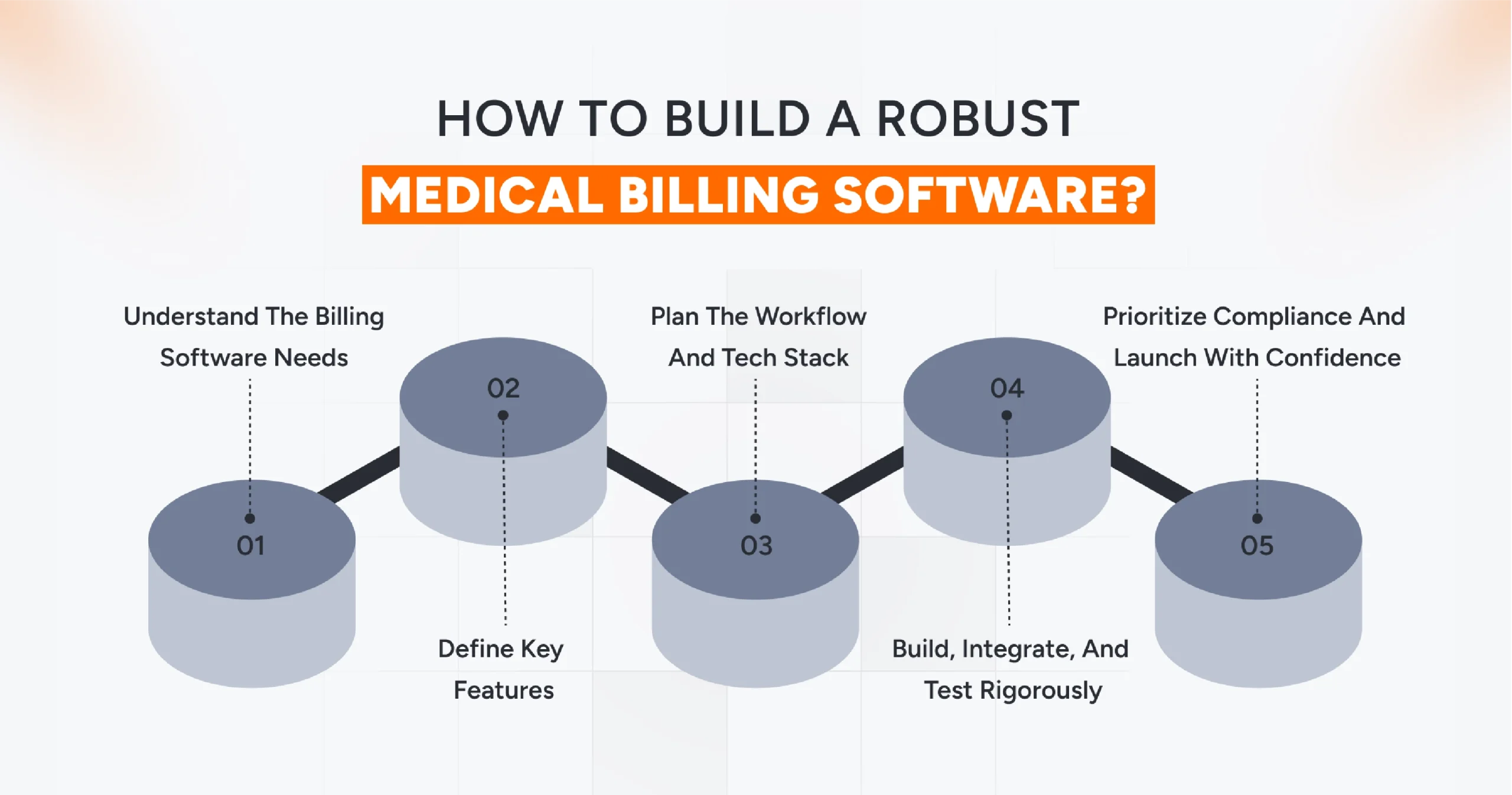
Building effective medical billing software for small businesses or big organizations is about solving real-world billing challenges that healthcare organizations face during their daily operations. When done right, your software becomes the silent engine that drives accuracy, compliance, and faster payments. The key is strategic medical billing software development that blends user insight with smart technology.
1. Understand the Billing Software Needs
Before you write a single line of code, start by understanding what the software truly needs to achieve. Every medical practice has different workflows, pain points, and compliance challenges.
Begin by conducting deep research and gathering insights from real users such as clinic owners, billing teams, and administrators. Listen to where they struggle:
- Are manual entries leading to claim rejections?
- Is insurance verification slowing down operations?
- Are revenue leaks going unnoticed because of poor reporting?
Once you identify the root problems, address them with a practical approach such as:
Automated claim submission and real-time tracking
- Insurance eligibility checks
- Data management and reporting tools
- HIPAA-compliant security protocols
When you design software based on actual operational pain points, you’re actually creating a solution that healthcare providers can’t imagine working without.
2. Define Key Features
Once you’re clear on the needs, it’s time to define the features that make your billing software stand out. Focus on usability, automation, and compliance.
Consider adding:
- Automation for claim management and follow-ups
- Instant data access for informed decisions
- Insightful reports and dashboards to monitor revenue
- HIPAA-grade security for total data protection
- Smooth integrations with EHR and accounting systems
3. Plan the Workflow and Tech Stack
Behind every reliable billing platform is a solid plan. Create a roadmap that outlines your goals, budget, resources, and tech stack. Define who’s building what, how long each phase will take, and what success looks like.
Make sure your plan includes:
- Clear budgeting across all development phases
- A qualified team with healthcare and tech expertise
- A modern, secure tech stack designed for scalability
4. Build, Integrate, and Test Rigorously
Write clean, efficient code and focus on integrations that make your software truly useful, ranging from EHRs to insurance and accounting systems.
Then, test everything. Functional, regression, and user acceptance testing will help ensure your product runs smoothly under real-world conditions. A well-tested product gives you confidence in reliability and performance.
5. Prioritize Compliance and Launch with Confidence
Make sure your software meets HIPAA standards, uses encryption, and restricts access to authorized users only. Add audit trails and healthcare data privacy protocols to enhance transparency and accountability.
How Much Does It Cost To Build Medical Billing Software?
There are several factors that affect the total cost of developing medical billing software. Factors like features, the tech stack, the platform, the location of the development team, and the number of team members affect the cost of development of tailored medical billing software. The cost of billing software for medical can range from $30,000 to $200,000, which can vary depending on the factors mentioned above.
When it comes to medical billing software development, there’s no single price tag that fits every project. The cost depends on what you want the software to do, how complex it needs to be, and how scalable you plan to make it.
Let’s break it down into three levels:
1. Basic Medical Invoice Software
If you’re building a simple medical invoice software solution focused on essentials like billing, patient data management, and claim generation, expect costs between $30,000 and $55,000. This setup works well for small clinics or independent practitioners who want to automate billing without unnecessary extras.
2. Mid-Range Medical Billing Systems
A mid-tier cloud-based solution that may include additional capabilities such as insurance eligibility verification, claim rejection management, advanced reporting, and EHR/EMR integration. These typically range from $55,000 to $100,000, striking a balance between affordability and robust functionality.
3. Advanced or Enterprise-Level Billing Software
For large-scale providers or enterprises looking for predictive analytics, machine learning automation, AI-driven claim accuracy, and advanced data security, the investment can reach $70,000 to $200,000 or more. These solutions deliver high performance, scalability, and integration depth across healthcare systems.
These figures are just estimates, and every project is unique; final costs depend on features, technology stack, and development strategy. So, it is advisable to consult a custom healthcare software partner to evaluate your requirements and receive a tailored estimate that aligns with your operational and compliance needs.
Conclusion
Accuracy in billing is non-negotiable, and integrating medical billing software for small businesses as well as big organizations can make a significant impact. Investing in medical billing software development helps streamline workflows, reduce claim errors, and accelerate payments. Medical billing solutions simplify complex billing tasks, ensuring compliance with evolving regulations. Leveraging advanced billing automation not only boosts efficiency but also improves profitability and enhances patient satisfaction.
As healthcare continues to evolve, the demand for reliable, secure, and scalable billing solutions is becoming essential for providers aiming to streamline operations and deliver better care. Whether it’s basic medical invoice software or a custom, fully integrated platform, the right solution can transform how your practice manages revenue. For a tailored, compliant, and efficient billing system built around your goals, contact us today to get started.
FAQs
Emerging trends like AI-driven claim analysis, RPA (Robotic Process Automation), cloud-based billing, and predictive analytics are reshaping medical billing. These innovations reduce denials, automate repetitive work, and improve accuracy in revenue cycle management.
Artificial intelligence identifies billing errors, flags potential claim denials, and automatically corrects code mismatches. This reduces human oversight, shortens reimbursement cycles, and boosts the overall accuracy of healthcare billing systems.
Frequent issues include coding errors, rejected claims, insurance policy updates, and compliance risks. Automating these processes through reliable billing software helps providers save time and prevent costly financial leaks.
For startups and small clinics, cloud billing software offers low setup costs, real-time data access, and easy scalability. It allows teams to operate securely from anywhere while maintaining compliance with HIPAA and other healthcare standards.
Billing systems with built-in analytics give healthcare providers insight into claim trends, denial causes, and payment timelines. These insights help optimize workflows, reduce errors, and enhance revenue predictability.