Core Features and Benefits of Manufacturing Execution System Software

Nirav Oza
Manufacturing is evolving rapidly, yet many production teams still struggle with disconnected systems and limited shop floor visibility. As operations expand, manual tracking and fragmented processes often create delays, quality issues, and costly production inefficiencies.
According to McKinsey, manufacturers that successfully implement digital manufacturing technologies can improve productivity by 30% to 50% while significantly reducing quality losses and machine downtime.
This is where manufacturing execution system software delivers measurable business value. It connects production activities with operational data, helping manufacturers monitor every stage of the production lifecycle through accurate, real-time insights.
Growing businesses often reach a stage where spreadsheets and isolated applications cannot support increasing production complexity. A robust manufacturing execution system (MES software) helps standardize workflows, eliminate bottlenecks, strengthen compliance, and maintain consistent product quality across every production line.
It doesn’t matter if your goal is scaling manufacturing capacity, improving resource utilization, or accelerating digital transformation; investing in the right MES system for manufacturing creates a stronger operational foundation.
What Is Manufacturing Execution System Software?
Manufacturing execution system software is a production management solution that connects people, machines, processes, and operational data within a unified digital environment. It enables manufacturers to monitor, control, and optimize shop floor activities while supporting faster, data-driven decisions.
Unlike standalone production tools, manufacturing execution systems provide real-time visibility into every manufacturing stage.
Key capabilities of a modern manufacturing execution system MES software include:
- Tracking production activities with real-time monitoring and complete process visibility.
- Connecting machines, operators, and business systems to create a seamless production workflow.
- Improving product quality through continuous inspection, traceability, and standardized execution.
- Supporting Industrial IoT initiatives with cloud-based manufacturing execution systems that enable scalable and connected manufacturing.
- Delivering actionable production insights that increase efficiency using advanced MES platforms for manufacturing productivity.
Every manufacturer operates differently, making software selection equally important. The best MES system for manufacturing aligns with production goals, operational complexity, compliance requirements, and future digital transformation initiatives instead of forcing existing processes to fit rigid software capabilities.
Benefits of Manufacturing Execution System Software
The true value of manufacturing execution system software goes beyond production monitoring. It creates a connected manufacturing environment where data, people, and machines work together to improve efficiency, quality, and operational control across the entire shop floor.
Deloitte reports that smart factory initiatives can improve production output by up to 20%, while reducing quality costs and increasing operational efficiency through connected manufacturing technologies.
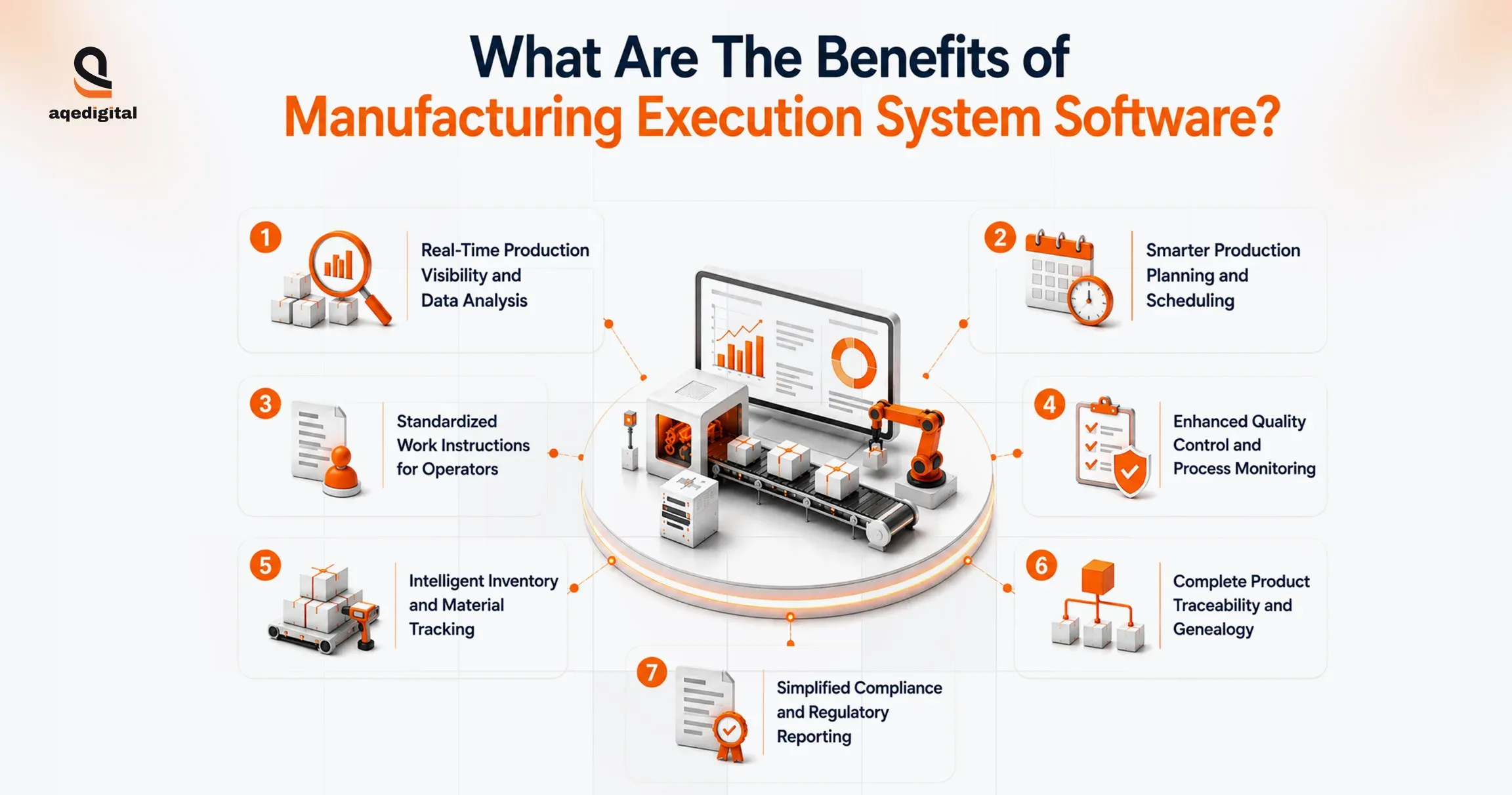
Real-Time Production Visibility and Data Analysis
Modern manufacturing execution systems continuously capture production data from machines, sensors, and operators. This provides accurate insights into production status, equipment utilization, downtime, and process performance, allowing teams to identify issues before they affect output or customer commitments.
Why It Matters
Real-time visibility enables faster decisions, minimizes production disruptions, and supports continuous process improvements through accurate operational intelligence.
Smarter Production Planning and Scheduling
A robust MES system for manufacturing improves production scheduling by balancing machine availability, workforce capacity, material readiness, and order priorities. Dynamic scheduling helps manufacturers respond quickly to changing demand without disrupting ongoing operations or reducing productivity.
Why It Matters
Optimized production planning improves resource utilization, shortens lead times, and ensures manufacturing targets remain achievable despite changing business conditions.
Standardized Work Instructions for Operators
A manufacturing MES system delivers digital work instructions directly to production operators. Standardized procedures reduce manual interpretation, improve execution consistency, and ensure every task follows predefined operational and quality standards across multiple production lines.
Why It Matters
Consistent execution minimizes human error, accelerates employee onboarding, and improves production quality across every manufacturing shift.
Enhanced Quality Control and Process Monitoring
Manufacturing execution system MES software continuously monitors production parameters, inspection results, and process deviations throughout manufacturing. Automated quality checks help identify defects early, reduce rework, and maintain consistent product specifications without interrupting production workflows.
Why It Matters
Early defect detection lowers quality costs, strengthens customer confidence, and supports continuous improvement initiatives.
Intelligent Inventory and Material Tracking
Leading manufacturing MES software tracks raw materials, work-in-progress inventory, and finished goods in real time. Accurate inventory visibility reduces material shortages, prevents excess stock accumulation, and improves coordination between production, procurement, and warehouse operations.
Why It Matters
Better inventory accuracy reduces operational waste while ensuring materials remain available whenever production requires them.
Complete Product Traceability and Genealogy
Advanced cloud-based manufacturing execution systems maintain complete digital records of materials, production batches, machine settings, operator activities, and quality inspections.
Why It Matters
Complete genealogy simplifies recalls, improves root cause analysis, and strengthens transparency across regulated manufacturing environments.
Simplified Compliance and Regulatory Reporting
Many industries require detailed production documentation and audit readiness. Manufacturing execution system services support compliance by automatically recording production activities, quality data, electronic records, and process history, reducing manual documentation while improving reporting accuracy.
Why It Matters
Automated compliance reporting reduces audit preparation efforts and helps manufacturers consistently meet industry and regulatory requirements.

Key Features and Functions of Manufacturing Execution System Software
The capabilities of manufacturing execution system software determine how effectively manufacturers manage production, improve quality, and increase operational efficiency. Integrating production planning & manufacturing scheduling software improves production accuracy and resource utilization.
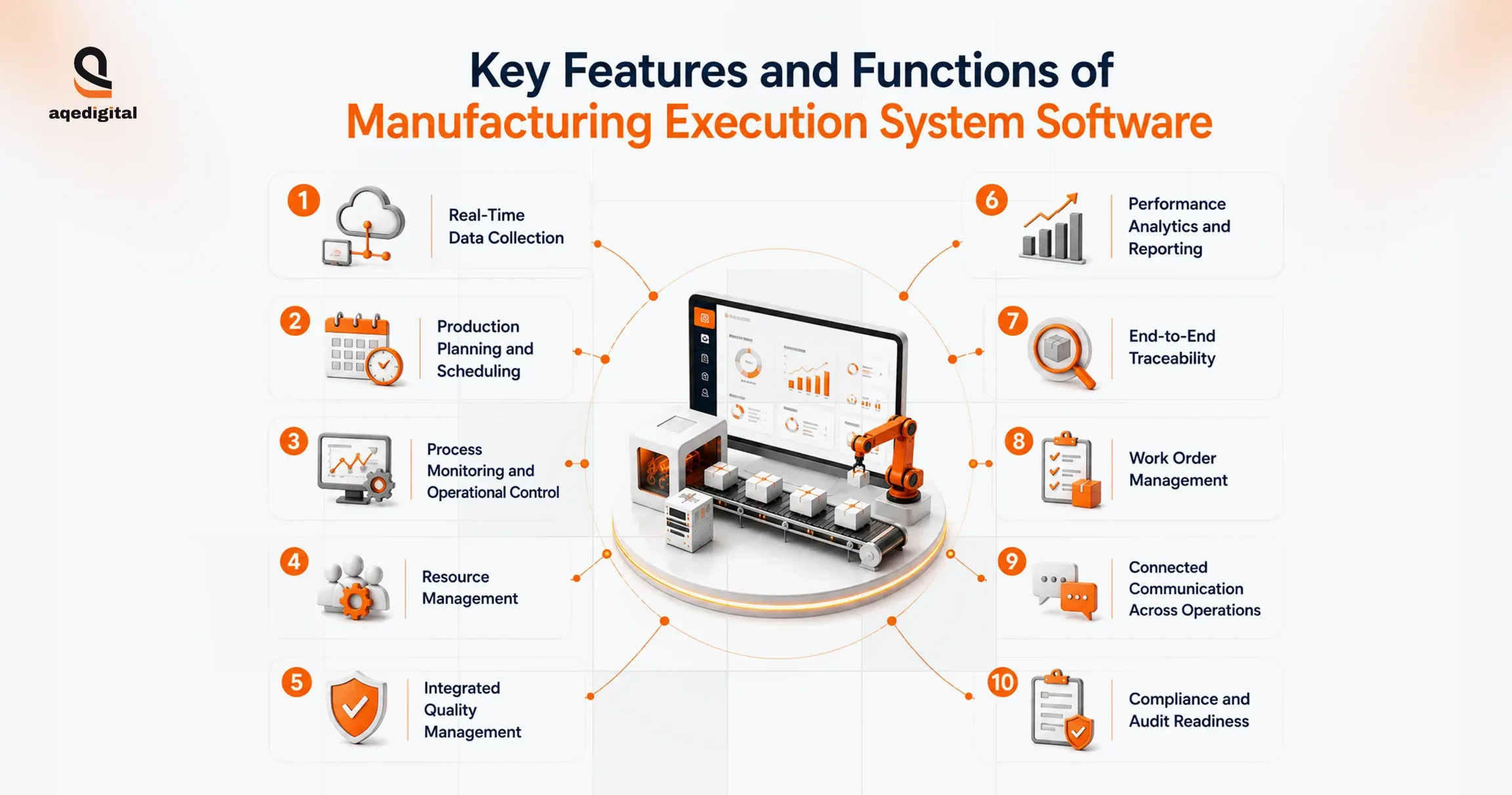
Real-Time Data Collection
A modern manufacturing MES system continuously gathers data from machines, sensors, production equipment, and operators. Creates a live view of manufacturing activities, enabling production teams to monitor operations, identify abnormalities, and respond before minor issues become costly disruptions.
Production Planning and Scheduling
An efficient MES system for manufacturing optimizes production schedules by considering machine capacity, workforce availability, material readiness, and customer demand. Dynamic scheduling allows manufacturers to adjust production priorities without affecting overall operational performance.
Process Monitoring and Operational Control
One of the core strengths of manufacturing execution system MES software is continuous process monitoring. It compares live production data with predefined operating parameters, helping manufacturers maintain workflow consistency, improve equipment performance, and quickly resolve production deviations.
Resource Management
Advanced manufacturing execution systems software tracks equipment utilization, workforce allocation, production materials, and maintenance schedules within a centralized environment. Better resource visibility improves capacity planning while reducing idle equipment, production delays, and unnecessary operational costs.
Integrated Quality Management
Quality should be monitored throughout production instead of only during final inspection. Manufacturing MES software embeds quality checks into every production stage, allowing manufacturers to detect defects early, automate corrective actions, and maintain consistent product standards.
Performance Analytics and Reporting
Modern MES platforms for manufacturing productivity transform production data into actionable performance metrics. Interactive dashboards monitor equipment effectiveness, production efficiency, downtime, throughput, waste generation, and overall operational performance, supporting faster and more informed business decisions.
End-to-End Traceability
Complete product traceability is essential for quality assurance and regulatory compliance. Cloud-based manufacturing execution systems record every production event, including raw material usage, machine settings, operator actions, inspection results, and finished product history for complete manufacturing transparency.
Work Order Management
A software manufacturing execution system manages work orders from initiation through completion. Production teams can monitor progress, prioritize manufacturing activities, allocate resources efficiently, and ensure every order follows standardized production workflows.
Connected Communication Across Operations
Effective manufacturing depends on seamless collaboration between production, quality, maintenance, inventory, and management teams. MES manufacturing execution systems centralize operational information, ensuring every department works from the same accurate, real-time production data.
Compliance and Audit Readiness
Manufacturers operating in regulated industries require accurate production documentation and complete process visibility. Manufacturing IT automation and MES services simplify compliance by automatically maintaining electronic production records, audit trails, process documentation, and quality evidence for faster regulatory reporting.
Emerging Trends Shaping Manufacturing Execution System Software
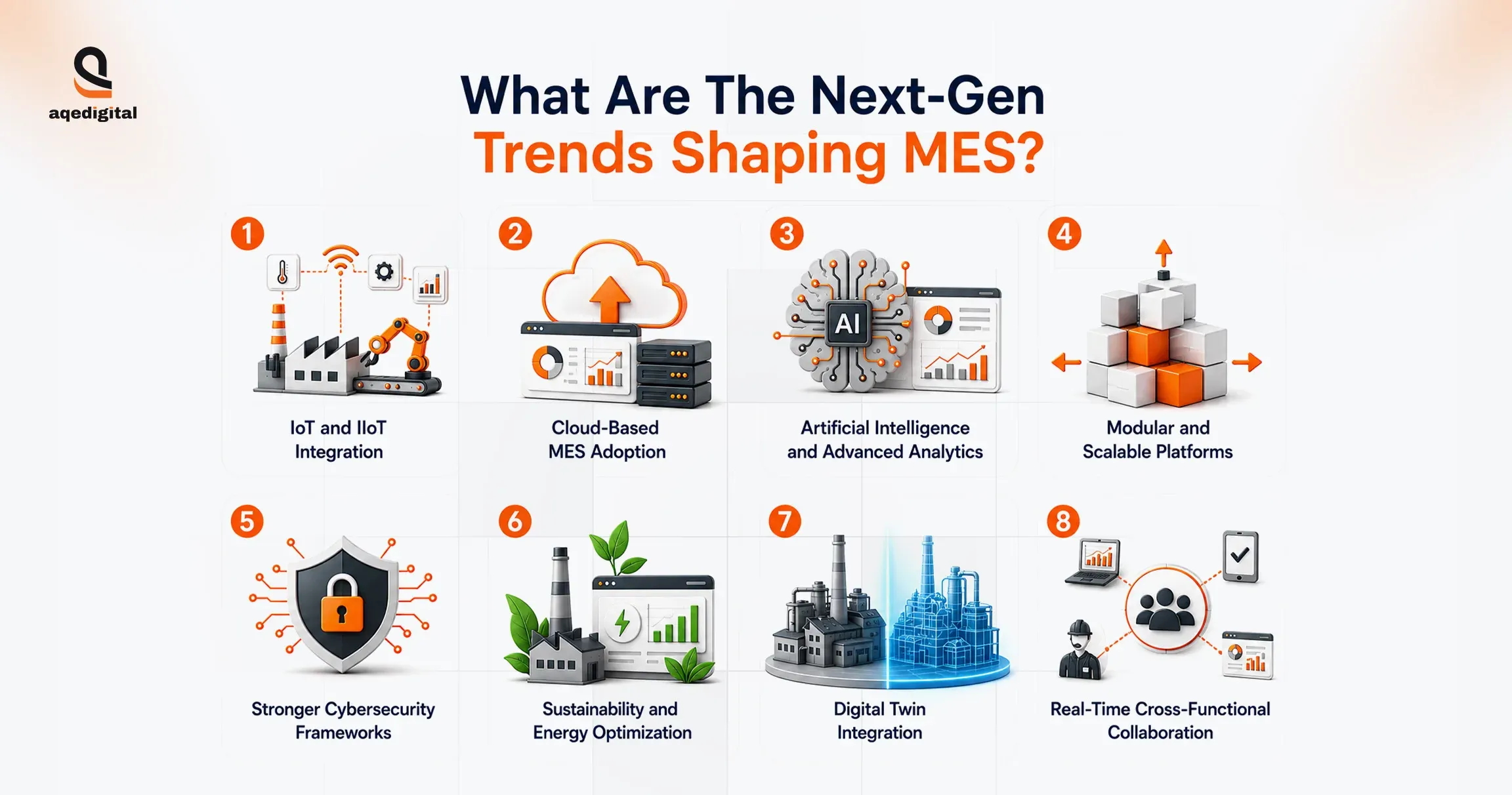
Manufacturing is evolving rapidly, and manufacturing execution system software continues to advance alongside emerging digital technologies. These trends are helping manufacturers improve operational agility, strengthen production intelligence, and accelerate smart factory transformation.
- IoT and IIoT Integration: Modern manufacturing execution systems connect machines, sensors, and production assets, enabling continuous data collection and faster operational decision-making.
- Cloud-Based MES Adoption: Cloud-based manufacturing execution systems provide greater scalability, simplified deployment, lower infrastructure costs, and secure access to production data from anywhere.
- Artificial Intelligence and Advanced Analytics: AI-powered manufacturing MES software predicts equipment failures, identifies production patterns, and recommends process improvements using real-time operational intelligence.
- Modular and Scalable Platforms: Businesses increasingly prefer flexible MES systems for manufacturing solutions that adapt easily to changing production requirements and future expansion.
- Stronger Cybersecurity Frameworks: Modern manufacturing execution systems software incorporates advanced security controls to protect connected production environments from evolving cyber threats.
- Sustainability and Energy Optimization: Leading MES platforms for manufacturing productivity monitor energy consumption, material usage, and production waste to support sustainable manufacturing initiatives.
- Digital Twin Integration: Digital twins enable manufacturing execution system MES software to simulate production scenarios, optimize workflows, and reduce operational risks before implementation.
- Real-Time Cross-Functional Collaboration: Connected MES manufacturing execution systems improve communication between production, maintenance, quality, and supply chain teams through shared operational visibility.
Businesses investing in smart manufacturing solutions are better prepared for future operational demands.
MES and ERP Integration: Why Manufacturers Need Both
Many manufacturers compare ERP and MES when planning digital transformation. In reality, these technologies solve different operational challenges and deliver the greatest value when they work together.
Integrating production planning & manufacturing scheduling software improves production accuracy and resource utilization.
An ERP platform manages business functions such as procurement, inventory, finance, customer orders, and production planning. Manufacturing execution systems, however, focus on executing those production plans while monitoring every shop floor activity in real time.
When manufacturing execution system software integrates with ERP, manufacturers gain continuous visibility from order creation to final product delivery. Business decisions become more accurate because production data and enterprise information remain synchronized across every department.
Integrating ERP and MES also improves forecasting, inventory optimization, production scheduling, and asset utilization. Instead of relying on assumptions, organizations make faster decisions using real-time operational intelligence generated by a connected manufacturing MES system.
Combining ERP for manufacturing with MES improves operational visibility and planning accuracy.

Cloud MES: Digitizing Shop Floor Operations
Cloud-based manufacturing execution systems overcome these limitations by delivering scalable, intelligent, and highly connected production environments. Manufacturers increasingly rely on cloud computing in manufacturing to support digital transformation initiatives.
- Real-Time Connected Manufacturing: A cloud-enabled MES system for manufacturing connects machines, sensors, operators, and enterprise applications through continuous data exchange across the production ecosystem.
- Smarter Industrial IoT Integration: Industrial IoT devices continuously feed operational data into manufacturing MES software, enabling faster monitoring, automated responses, and improved production visibility.
- AI-Driven Operational Intelligence: Artificial intelligence analyzes production data to predict equipment failures, optimize workflows, improve scheduling, and reduce manufacturing waste before disruptions occur.
- Flexible and Personalized Production: Modern MES platforms for discrete manufacturing support customized production strategies, allowing manufacturers to deliver tailored products without sacrificing operational efficiency.
- Virtual Simulation and Process Optimization: Digital twins, augmented reality, and virtual reality help manufacturers simulate production scenarios, optimize workflows, reduce downtime, and validate process improvements before implementation.
- Scalable Smart Factory Foundation: As manufacturing operations expand, manufacturing execution system services combined with cloud technologies provide the flexibility, security, and scalability required for future-ready digital factories.
Common Challenges in Manufacturing Execution System Software Implementation
Implementing manufacturing execution system software is a strategic initiative that transforms production operations. However, successful deployment requires careful planning, strong stakeholder collaboration, and a well-defined implementation roadmap to overcome common technical and operational challenges.
Integrating with Existing Business Systems
Many manufacturers operate multiple business applications, including ERP, CRM, warehouse management, and legacy production systems. Connecting these platforms with manufacturing execution systems can become complex when data formats, communication protocols, and workflows differ across systems.
How to Overcome It
Begin with a comprehensive assessment of your existing technology landscape and operational processes. Build a phased integration strategy, leverage APIs or middleware where necessary, and involve experienced implementation partners to ensure the manufacturing MES system exchanges accurate, real-time information across every connected platform.
Maintaining High-Quality Production Data
A MES system for manufacturing depends on accurate production data to generate reliable insights. Organizations transitioning from manual reporting often face inconsistent records, duplicate entries, or incomplete production information that affects operational visibility and decision-making.
How to Overcome It
Establish standardized data governance policies before implementation. Automate data capture wherever possible, validate production records continuously, and train operators on consistent reporting practices to maximize the value delivered by manufacturing execution system MES software.
Balancing Customization with Future Scalability
Every manufacturer has unique production workflows, making customization an important requirement. Excessive modifications, however, can complicate future upgrades and reduce the long-term flexibility of manufacturing execution systems software.
How to Overcome It
Select flexible cloud-based manufacturing execution systems that support modular configuration instead of extensive custom development. Prioritize scalable architecture, align customization with business objectives, and ensure the solution can adapt as production volumes, technologies, and operational requirements evolve.
Conclusion
Manufacturing success is no longer defined only by production speed or output volume. The real competitive advantage comes from building connected, intelligent, and resilient operations that can quickly adapt to changing customer demands and market conditions. Choosing the right manufacturing execution system software creates the digital foundation needed to support long-term operational excellence and continuous innovation.
At AQe Digital, we help manufacturers design, implement, and modernize scalable digital manufacturing ecosystems through tailored manufacturing execution system services and enterprise technology expertise. Our practical, business-focused approach enables organizations to maximize technology investments while preparing for future growth.
Contact Us to explore the right digital strategy for your business and capitalize on your technology investment.