How Modern Facility Management Software Improves Asset Performance, Maintenance Efficiency, and Operational Control?

Nirav Oza
Facility operations have become significantly more complex than they were a decade ago.
Organizations today manage multiple buildings, distributed workspaces, critical assets, compliance requirements, maintenance teams, service providers, and growing sustainability initiatives. Whether it is a hotel property, healthcare facility, manufacturing plant, educational campus, or commercial office space, the pressure to maintain operational efficiency continues to increase.
Yet many organizations still rely on spreadsheets, disconnected applications, emails, and manual processes to manage these responsibilities.
The result is often delayed maintenance, rising operational costs, inconsistent reporting, and poor visibility into facility performance.
This is where facility management software creates a measurable difference.
Instead of operating with fragmented information, organizations gain a centralized environment to manage assets, maintenance activities, work orders, inspections, compliance records, and operational workflows. More importantly, they gain the ability to make informed decisions based on real-time data rather than assumptions.
As facilities become increasingly connected and data-driven, investing in the right technology is no longer just an operational decision. It has become a strategic business priority.
What Is Facility Management Software and Why Is It Becoming Essential?
At its core, facility management software helps organizations manage the people, assets, processes, and infrastructure required to operate facilities efficiently.
It provides a centralized system where maintenance schedules, asset records, inspections, work orders, vendor activities, compliance documentation, and operational performance data can be managed from a single location.
The shift toward digital facility operations is being driven by a simple reality. Reactive management is expensive.
When organizations only respond after equipment fails or issues occur, downtime increases, repair costs rise, and productivity suffers. Modern facility teams are moving toward proactive and predictive approaches that help prevent problems before they disrupt operations.
A modern facility management software solution eliminates silos and creates a connected operational ecosystem where every stakeholder works from the same source of truth.
Common Challenges Organizations Face Without a Modern Facility Management Platform
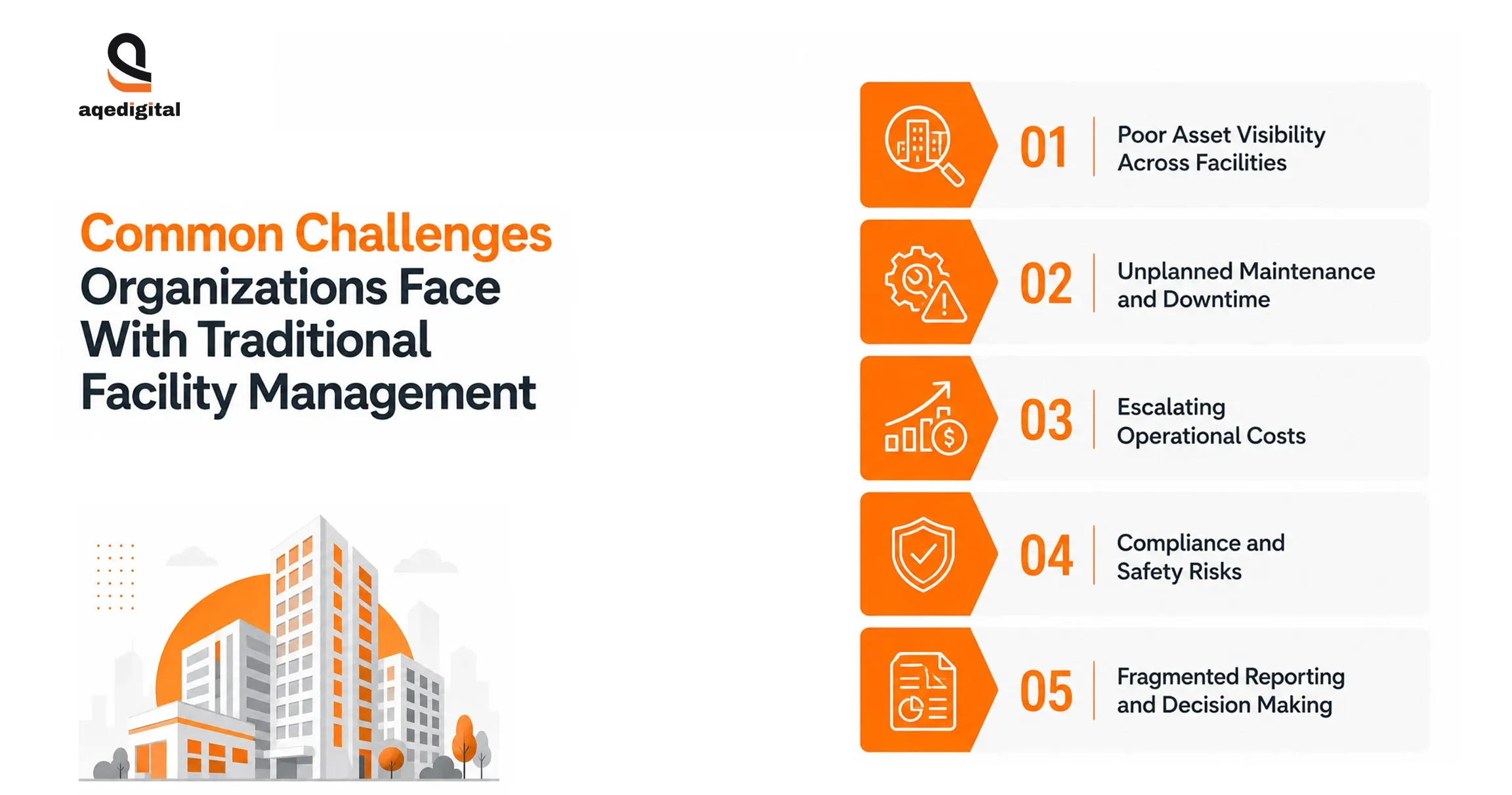
Facility operations may appear manageable on the surface. However, inefficiencies often accumulate quietly over time. What begins as a minor maintenance issue can gradually evolve into larger operational and financial challenges.
Common signs your facility operations may be struggling include:
- Frequent equipment breakdowns disrupt daily operations
- Limited visibility into asset performance and maintenance history
- Rising maintenance expenses without clear accountability
- Delayed work order completion and technician inefficiencies
- Difficulty maintaining compliance documentation across locations
- Inconsistent reporting that makes strategic planning difficult
- Lack of centralized oversight across multiple facilities
Poor Asset Visibility Across Facilities
Many organizations operate hundreds or even thousands of assets across multiple locations. Without centralized visibility, tracking equipment condition, maintenance history, warranty information, and performance trends becomes difficult.
As a result, critical decisions are often made using incomplete information.
Unplanned Maintenance and Downtime
Reactive maintenance remains one of the biggest cost drivers in facility operations.
A malfunctioning HVAC system in a hotel can impact guest satisfaction. The same issue in a healthcare facility, office complex, or manufacturing environment can disrupt operations and productivity. Regardless of the industry, unplanned downtime creates unnecessary costs and operational risks.
Escalating Operational Costs
Manual processes create hidden expenses that accumulate over time.
Duplicate work orders, delayed inspections, inefficient technician scheduling, and unnecessary asset replacements all contribute to higher operational spending.
Compliance and Safety Risks
Facilities must comply with a wide range of safety regulations, industry standards, and internal policies.
Without centralized tracking and documentation, organizations may struggle to demonstrate compliance during audits or inspections.
Fragmented Reporting and Decision Making
Leaders need accurate data to make informed decisions. When information exists across spreadsheets and disconnected systems, generating meaningful insights becomes difficult.
This lack of visibility often delays strategic planning and operational improvements.
Key Capabilities Every Facility Management Platform Should Offer
Not all solutions deliver the same value. A modern facility management platform should support both operational efficiency and long-term business goals.
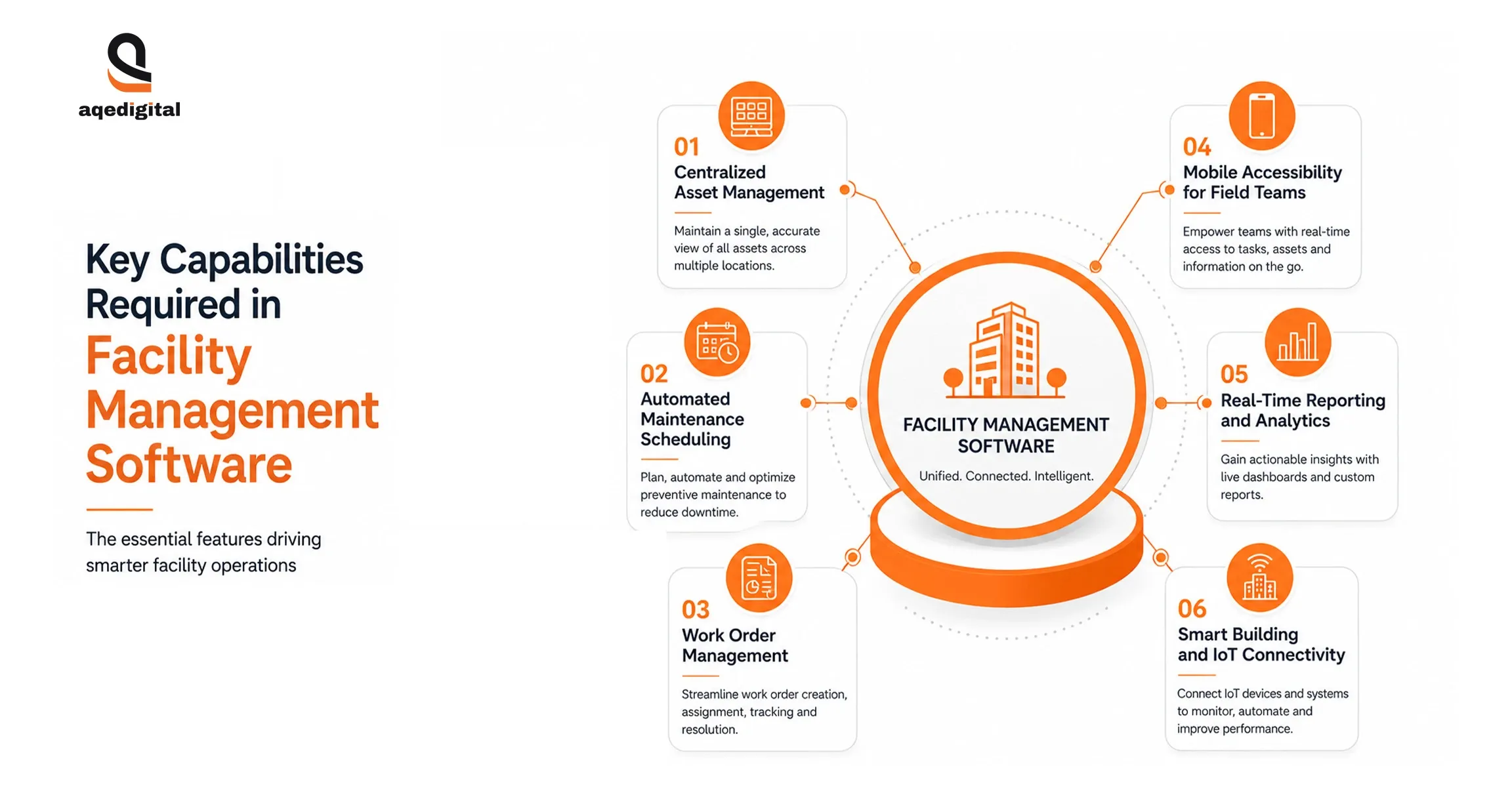
Centralized Asset Management
Organizations need complete visibility into their asset portfolio. While off-the-shelf platforms offer standard functionality, many organizations require deeper integrations and workflow customization, making custom software development services a practical option for addressing unique operational requirements.
A centralized system should provide access to asset specifications, maintenance records, warranty details, lifecycle information, and performance metrics.
Automated Maintenance Scheduling
Preventive maintenance is far more effective than reactive repairs.
Automation ensures inspections, servicing activities, and maintenance tasks are scheduled consistently. This reduces equipment failures while extending asset lifespan.
Work Order Management
Work orders should move seamlessly from creation to completion.
Effective systems allow teams to assign tasks, track progress, prioritize requests, and monitor technician performance in real time.
Mobile Accessibility for Field Teams
Facility teams rarely operate from a desk.
Mobile access allows technicians to receive work orders, update job status, capture images, record inspections, and access asset information directly from the field.
Real-Time Reporting and Analytics
Data becomes valuable when it supports decision-making.
Advanced reporting capabilities help organizations identify performance trends, optimize maintenance strategies, and monitor key operational metrics.
Smart Building and IoT Connectivity
Connected sensors can provide real-time insights into equipment performance, environmental conditions, energy consumption, and occupancy levels.
This transforms facilities from reactive environments into intelligent operational ecosystems.
How Facility Asset Management Software Extends Asset Lifecycles and Reduces Costs?
Assets represent a significant portion of facility operating costs.
Managing them effectively requires more than simply recording inventory information. It requires continuous visibility into performance, condition, maintenance requirements, and replacement planning.
This is where facility asset management software delivers substantial value.
Creating a Single Source of Truth for Assets
When asset information is centralized, maintenance teams can quickly access historical records, service schedules, performance trends, and operational data.
This improves decision-making while reducing administrative overhead.
Improving Preventive Maintenance Strategies
Asset failures rarely occur without warning.
Maintenance history and performance data can reveal patterns that help teams address potential issues before they become major problems.
Using Historical Data for Smarter Asset Decisions
Data-driven asset management enables organizations to identify underperforming equipment, evaluate repair costs, and determine whether replacement or continued maintenance represents the better investment.
This approach is particularly valuable in asset-intensive environments such as hospitality properties, commercial real estate portfolios, healthcare facilities, and industrial operations, where infrastructure reliability directly impacts business performance.
Supporting Long-Term Capital Planning
Facility leaders must balance operational needs with financial constraints.
Facility asset management software helps organizations forecast replacement timelines, estimate future capital expenditures, and prioritize investments based on business impact.
Why Enterprise Facility Management Software Is Critical for Multi-Site Operations?
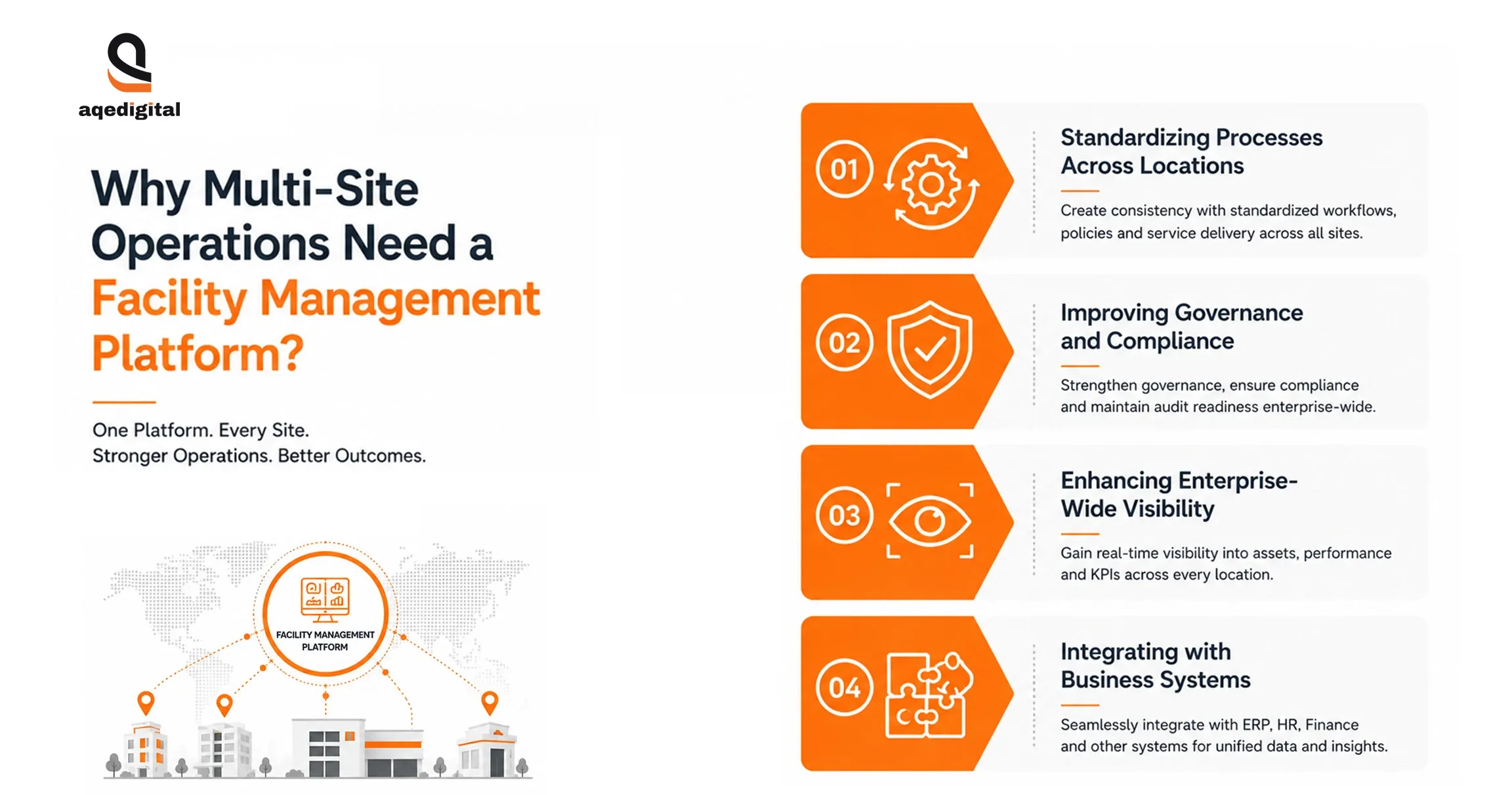
Managing a single facility presents challenges.
Managing dozens or hundreds of locations introduces an entirely different level of complexity.
Enterprise facility management software helps organizations standardize operations while maintaining visibility across geographically distributed facilities.
Standardizing Processes Across Locations
Consistency improves efficiency.
Organizations can establish standardized maintenance procedures, inspection workflows, reporting frameworks, and compliance requirements across all sites.
Improving Governance and Compliance
Centralized oversight helps ensure regulatory requirements are consistently followed throughout the organization.
This reduces risk while improving audit readiness.
Enhancing Enterprise-Wide Visibility
Executives need visibility beyond individual locations. Enterprise dashboards provide insights into asset performance, maintenance costs, service levels, and operational trends across the entire portfolio.
Integrating with Business Systems
Facility operations do not exist in isolation.Modern enterprise facility management software integrates with ERP, procurement, finance, HR, and inventory systems to support seamless business processes and data exchange.
This becomes especially valuable for organizations operating multiple properties, whether those facilities are hotels, educational campuses, healthcare networks, retail locations, or commercial office buildings.
Best Facility Management Software Features That Deliver Measurable Business Value
When evaluating the best facility management software, organizations should focus on capabilities that directly contribute to operational performance and business outcomes.
Predictive Maintenance Capabilities
Predictive maintenance uses data analytics, machine learning, and sensor information to identify potential equipment issues before failures occur.
This helps reduce downtime while improving asset reliability.
Asset Performance Monitoring
Continuous monitoring provides valuable insights into utilization, efficiency, maintenance requirements, and operational effectiveness.
Organizations can identify performance gaps before they impact business operations.
Energy and Sustainability Tracking
Energy consumption remains a major operational expense.
Advanced platforms help organizations monitor usage patterns, identify inefficiencies, and support sustainability objectives.
Vendor and Contractor Management
Facility operations often involve multiple external service providers. Centralized vendor management improves accountability, communication, contract oversight, and service quality.
Advanced Analytics and Executive Dashboards
Operational data should support strategic decisions. The best facility management software provides executive-level visibility through dashboards, KPIs, forecasting tools, and performance analytics.
Organizations looking to understand how advanced reporting and operational intelligence can drive better outcomes can explore our construction project analytics platform case study for a practical example of data-driven decision support in action.
Facilities Management Tools That Help Teams Work Smarter
Technology should simplify operations rather than add complexity. Modern facilities management tools help teams streamline workflows, improve collaboration, and increase operational efficiency.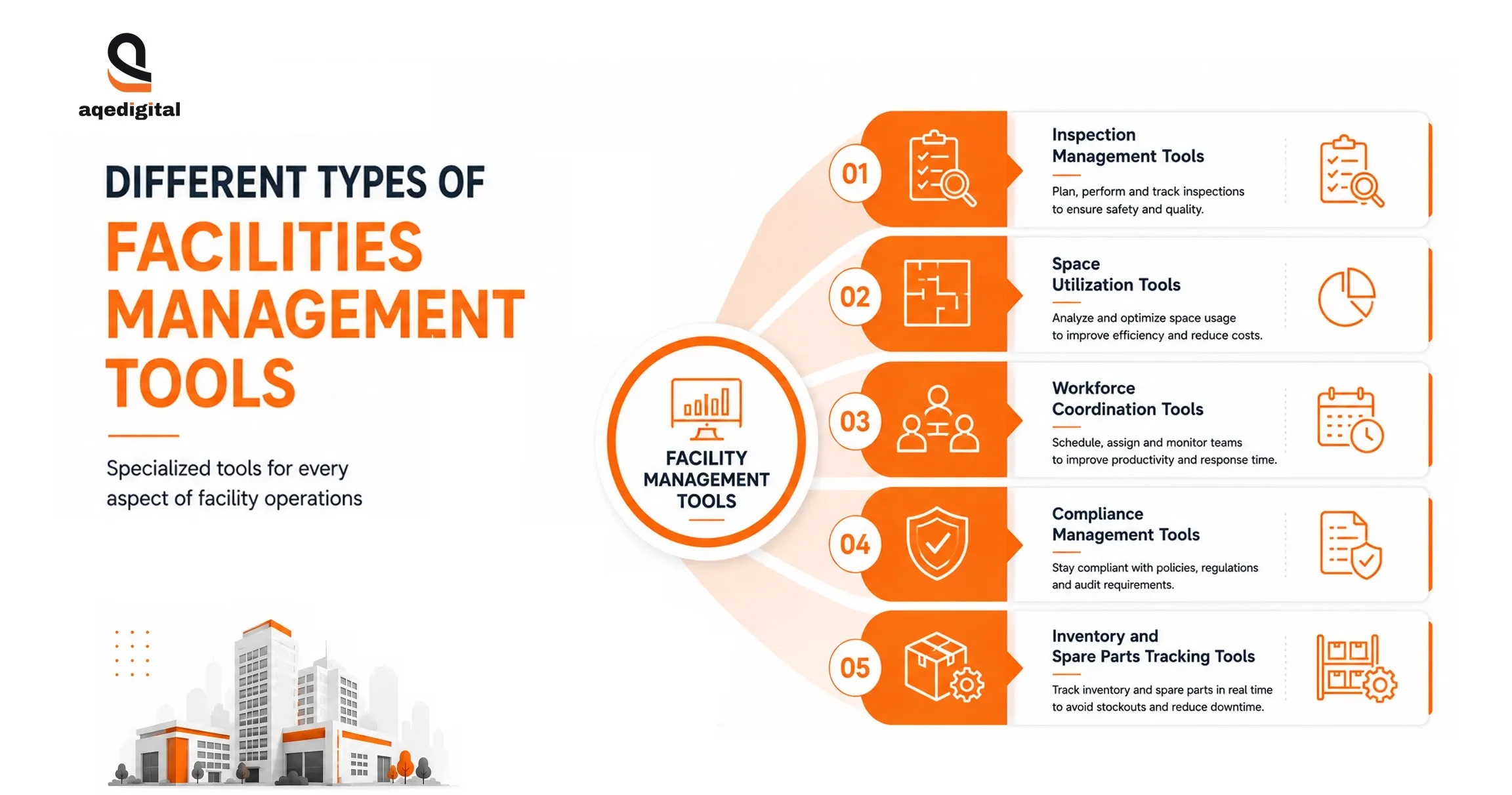
Inspection Management Tools
Digital inspections improve consistency, accuracy, and documentation quality while reducing administrative effort.
For example, a hospitality property may use digital inspections to maintain service standards, while a healthcare organization may use the same tools to support compliance and safety requirements.
Space Utilization Tools
As workplace models evolve, organizations need better visibility into how spaces are being used. Space management capabilities help optimize occupancy, resource allocation, and workplace planning.
Workforce Coordination Tools
Coordinating maintenance teams, contractors, and facility personnel becomes easier when schedules, tasks, and communications are managed from a single platform.
Compliance Management Tools
Automated compliance tracking reduces risk by ensuring inspections, certifications, and documentation remain current and accessible.
Inventory and Spare Parts Tracking Tools
Maintenance delays often occur because critical parts are unavailable when needed. Inventory management capabilities help ensure essential components remain in stock while minimizing excess inventory costs.
The Business Benefits of Investing in Facility Management Software
The value of technology extends beyond operational convenience. Organizations that implement facility management software often achieve measurable improvements across multiple areas.
Organizations implementing modern facility management software often experience:
- Lower maintenance and repair costs
- Reduced unplanned downtime
- Improved asset utilization
- Faster maintenance response times
- Better compliance management
- Greater visibility into facility performance
- More accurate operational reporting
- Enhanced workforce productivity
Reduced downtime helps maintain productivity and service continuity. Lower maintenance costs improve budget efficiency and resource allocation.
Better asset utilization increases return on infrastructure investments. Improved reporting supports faster and more confident decision-making.
Enhanced employee experiences contribute to workplace satisfaction and operational effectiveness. For customer-facing environments such as hospitality and commercial real estate, these improvements can also contribute to stronger service delivery and overall user satisfaction.
Emerging Trends Shaping the Future of Facility Management
Facility management continues to evolve alongside advances in technology. Artificial intelligence is enabling smarter maintenance planning and operational forecasting.
Digital twins are creating virtual representations of facilities that support simulation, planning, and optimization.
Smart building ecosystems are connecting assets, sensors, systems, and workflows into unified operational environments.
Predictive analytics is helping organizations anticipate issues before they impact performance. Sustainability reporting is becoming increasingly important as organizations pursue ESG goals and regulatory compliance.
These innovations are transforming facilities from cost centers into strategic assets that contribute directly to business success.
How to Choose the Right Facility Management Software for Your Organization?
Selecting the right solution requires more than comparing feature lists.
Before selecting a solution, ask the following questions:
1. Can the platform scale as facility operations grow?
2. Does it integrate with existing ERP and business systems?
3. Can field teams access information through mobile devices?
4. Does it provide real-time reporting and analytics?
5. Can it support preventive and predictive maintenance strategies?
6. Does it offer strong security and compliance controls?
7. Will it adapt to future technology initiatives such as IoT and AI?
Organizations should evaluate scalability, integration capabilities, security requirements, mobile accessibility, reporting functionality, and long-term adaptability.
The right solution should support current operational needs while providing flexibility for future growth.
It should integrate seamlessly with existing business systems and enable data-driven decision-making across the organization.
Organizations navigating platform selection, modernization initiatives, or integration planning often benefit from expert software consulting services to evaluate requirements, reduce implementation risks, and define a scalable technology roadmap.
How AQe Digital Helps Organizations Build and Modernize Facility Management Solutions?
Modern facility operations require more than off-the-shelf technology.
Organizations often need customized solutions that align with unique operational requirements, enterprise systems, and long-term digital transformation goals.
AQe Digital helps businesses design, develop, modernize, and optimize facility management solutions through custom application development, cloud modernization, enterprise integration, mobile workforce enablement, IoT implementation, and advanced analytics.
Whether organizations are building a new facility management platform, modernizing legacy applications, or creating intelligent asset management ecosystems, AQe Digital delivers the technology expertise required to support scalable and future-ready operations.
Conclusion
Organizations that continue relying on manual processes and disconnected systems will find it increasingly difficult to maintain operational efficiency, control costs, and maximize asset performance. Modern facility management software provides the visibility, automation, and intelligence needed to manage facilities more effectively.
From improving maintenance efficiency and extending asset lifecycles to supporting enterprise-wide operational control, the right solution can create significant business value.
AQe Digital helps businesses modernize complex operational ecosystems through custom digital solutions, intelligent integrations, and scalable technology architectures designed around real-world business requirements. If you're exploring the next step in your facility modernization journey, contact us to discuss your goals and challenges.