ERP Software for the Construction Industry: How to Stop Cost Overruns Before They Start

Cheta Pandya
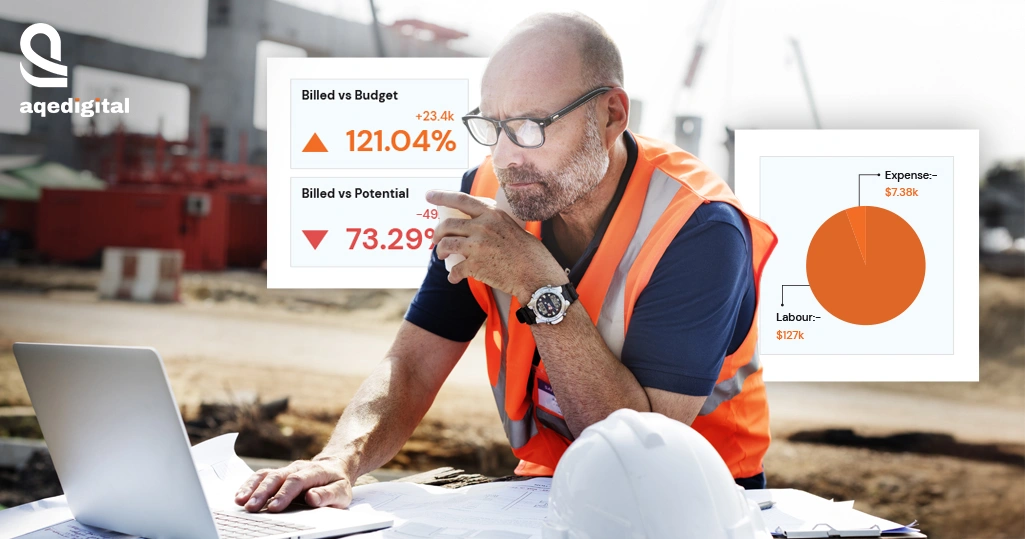
Managing a large construction project is high-stakes work. One cost miscalculation can derail the entire schedule and erode profitability. In an industry where the global average for preliminary costs on small projects sits at 11.1 percent and large projects at 10%, planning and budgeting are not optional. It’s survival.
Construction companies that still rely on disconnected systems and a traditional approach experience poor operations management and ineffective execution. Project managers can manage every project phase and resources with a centralized platform like an ERP software for construction industry.
If you are a project manager, developing an ERP system leveraging custom software development makes sense. This will allow you to customize the entire workflow as per your project.
But before you invest in an ERP software for construction industry, understanding its needs, challenges it can help overcome, and the cost impact is necessary. This guide explains how ERP software for the construction industry is essential and how it reduces project costs. But first, let’s understand why cost optimization is vital for your construction project.
Why Managing Construction Costs is Crucial?
Construction projects involve huge capital outlays, multiple stakeholders, and long delivery timelines. Even a small overspend can:
- Disrupt cash flow
- Cut into profit margins.
- Trigger contract disputes or penalties
For CFOs, Project Managers, and Financial Controllers, the challenges of volatile material prices, delayed payments, labor shortages, and compliance risks keep project budgets under pressure. However, leveraging expert digital transformation services, they can overcome such challenges, creating custom ERP systems.
With an ERP system for construction, you can centralize cost tracking, automate reporting, and adjust allocations instantly when conditions change.
Poor cost control can disrupt cash flow, lower profit margins, and cause project delays. Despite its massive scale, the construction sector still suffers from inefficiencies. Studies reveal that large construction projects often run 20% longer and cost up to 80% more than planned.
Here, ERP for construction industry helps teams stay on track and control costs more efficiently.
What is ERP Software in Construction Industry?
An ERP system for construction industry integrates project management, procurement, accounting, HR, and inventory into a single source of truth.
Key Benefits:
- Real-time financial visibility
- Accurate data across all departments
- Improved decision-making from live dashboards
- Workflow automation to reduce delays

Why Construction Firms Need ERP?
Construction is among the most dynamic and multifaceted industries. It involves a wide range of stakeholders, massive resource allocations, and extended timelines. Traditional project management methods often lag when it comes to meeting today’s demand for speed, accuracy, and cost-efficiency.
An ERP for the construction industry removes this fragmentation by:
- Unifying data between office and site teams
- Automating repetitive admin work
- Enabling precise budget control
- Supporting cross-department collaboration
An ERP system for construction brings all project processes together in one place, making data accessible and decision-making more innovative.
Having automated tasks, streamlined data sharing, and smooth collaboration is essential in today’s modern work culture. An ERP for the construction industry, designed with an enterprise software development approach, makes this possible, helping construction companies achieve better project control, cost savings, and enhanced performance.
Common Reasons for Construction Overruns
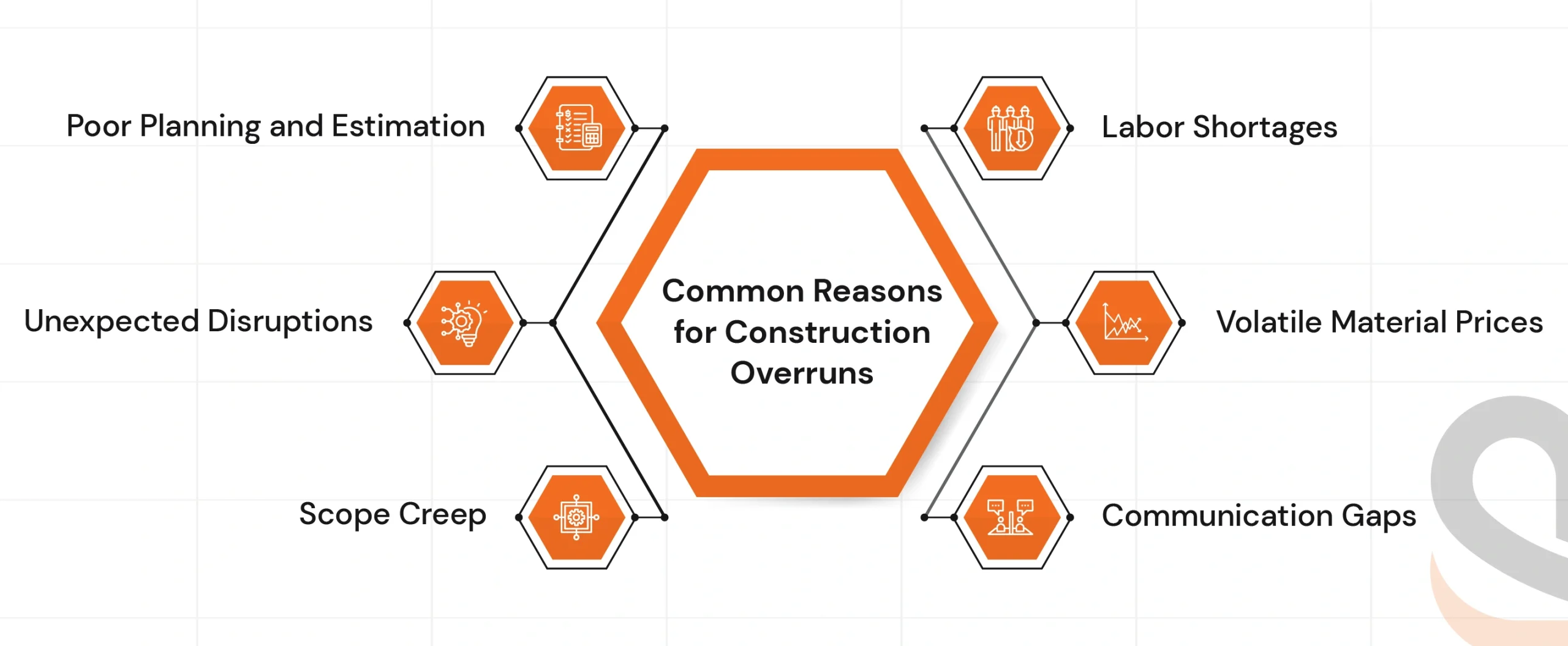
The common reasons for construction overruns are listed below:
- Poor Planning & Estimation – Inaccurate timelines and budgets
- Unexpected Disruptions – Weather, regulation changes, or site issues
- Scope Creep – Unmanaged project expansions
- Labor Shortages – Skills gaps drive delays and costs
- Volatile Material Prices – Price spikes disrupt procurement
- Communication Gaps – Missing or delayed updates cause rework
With ERP software for the construction industry, project risks can be identified in early stages and mitigated before they impact the bottom line.
Key Challenges in Construction Budget Management
| Challenge | ERP Solution |
| Cost Volatility | Adjust budgets in real time based on changing site conditions |
| Fragmented Financial Data | Consolidates all transactions into one dashboard |
| Resource Misallocation | Tracks labour/equipment usage across all sites |
| Regulatory Complexity | Hybrid streaming+batch design, message queuing |
| Scope Changes | Controls and tracks variation orders automatically |
| Cash Flow Issues | Improves billing speed & receivables follow-up |
Here are the challenges your construction company can face during the budgeting phase.
1. Cost Volatility
Construction budgets are often hit by sudden changes rising labor rates, supply chain disruptions, or weather delays. Just as road construction must adapt to dynamic site conditions, practical budgeting demands flexible, real-time monitoring. ERP for the construction industry allows companies to adjust their budgets based on up-to-date project conditions quickly.
2. Fragmented Financial Data
Many firms still rely on spreadsheets or outdated software. This creates data silos and hampers decision-making. Without centralized access to financial data, it becomes hard to manage cash flow and costs. A modern ERP software for construction industry consolidates financial information, making it accessible to all decision-makers.
3. Resource Misallocation
Effective resource planning is a cornerstone of cost control. Without ERP software for the construction industry, companies often struggle with overstaffing or underutilized equipment. Real-time tracking through ERP ensures optimal use of materials, labor, and machinery.
4. Regulatory Complexity
Construction companies operate under diverse local and national regulations. And if they fail to meet these compliance requirements, it can result in delays and penalties. An ERP for the construction industry automates documentation and ensures adherence to legal standards.
5. Scope Changes
As projects evolve, change orders become inevitable. If not appropriately tracked, these changes can disrupt the budget. Using an ERP system for construction helps managers control scope creep by maintaining version control, monitoring changes, and updating budgets accordingly.
6. Cash Flow Issues
Construction projects rely heavily on timely payments. Delays in billing or collections can choke cash flow and stall operations. With ERP software for the construction industry, companies can automate invoicing, track receivables, and maintain healthy cash flow.
How ERP Systems Help Optimize Costs and Budgets?
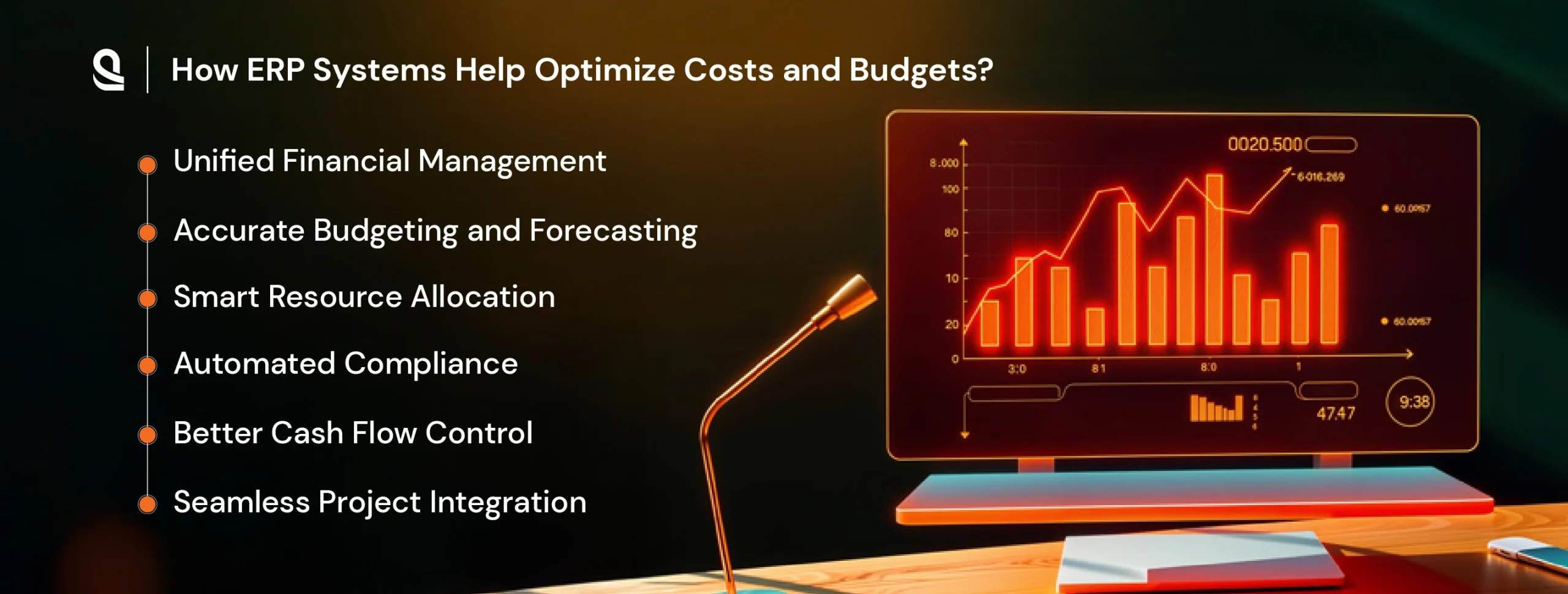
ERP systems help businesses save money and manage budgets effectively. It combines data and automates specific tasks, enabling operational efficiency. This integration offers many advantages that lead to lower costs and better budget management.
Some of the key benefits of using an ERP software for construction industry are,
1. Unified Financial Management
An ERP system for construction unifies all financial activities, budget planning, expense tracking, cash flow analysis, and forecasting within a single platform. This centralization allows decision-makers to monitor financial performance in real time, identify deviations early, and take corrective action swiftly.
Whether it’s handling payments, tracking vendor invoices, or analyzing profitability, an ERP system ensures transparency and accountability across the board.
Example:
A mid-sized civil engineering firm implementing ERP software can replace its fragmented accounting system with real-time dashboards and centralized financial reports. This enables the CFO to track spending across projects, significantly reducing budget variances and showcasing the value of integrated financial oversight.2. Accurate Budgeting and Forecasting
Accurate project budgeting relies on understanding historical trends and making informed assumptions. ERP software for the construction industry provides tools that incorporate historical project data, labor rates, material costs, and seasonal trends to develop more precise cost projections. These insights help planners set achievable financial goals and minimize unexpected overruns.
Example:
A road infrastructure company can leverage an ERP system to analyze past project costs before starting a new highway project. By comparing previous timelines, labor costs, and material prices, the ERP can automatically generate budget forecasts, helping the company reduce contingency reserves and boost profit margins. This demonstrates how construction ERPs enhance forecasting capabilities.3. Smart Resource Allocation
Efficient use of manpower, materials, and machinery can make or break a construction budget. ERP for the construction industry helps track availability and usage of all resources in real time, minimizing overbooking, underutilization, and idle time. This not only reduces costs but also shortens project duration.
Example:
A construction contractor managing multiple residential buildings can use ERP software to optimize resource allocation. The system identifies idle equipment on one site that another team needs urgently, enabling efficient reallocation and saving significant costs on rental fees. This demonstrates the practical benefits of real-time resource visibility offered by an ERP system in construction.4. Automated Compliance
Construction companies must navigate a maze of safety, labor, and environmental regulations. Non-compliance with the required regulations can lead to hefty fines and project delays.
An ERP software for construction industry automates compliance tracking, maintains audit trails, and generates reports as are necessary for regulatory submissions, significantly reducing risk and manual effort.
Example:
A commercial real estate builder can utilize ERP software to standardize safety protocols and regulatory documentation, alerting site managers for safety checks and flagging non-compliance. This enhances compliance during audits, underscoring the ERP’s importance in regulatory readiness.5. Better Cash Flow Control
Maintaining steady cash flow is crucial in construction, where payments often come in stages. ERP for the construction industry supports timely billing, tracks receivables, and automates follow-ups for unpaid invoices. It helps construction firms maintain liquidity, avoid financial strain, and ensure work continues uninterrupted.
Example:
A highway contractor is facing delays in payments, affecting payroll and vendor management. By switching to ERP software for the construction industry, the company can automate invoicing and use milestone-based billing, improving collection times and cash flow across all projects6. Seamless Project Integration
A construction firm having multiple ongoing projects can integrate financial, operational, and on-site data across all active projects by implementing an ERP system for construction.
Stakeholders can make strategic as well as data-driven decisions more quickly without switching between disconnected systems. It also helps project managers compare performance and identify under-performing areas to develop strategies for better operational efficiency and productivity.
Example:
A national construction firm utilizing ERP software can integrate multiple projects into a single dashboard, enabling executives to monitor budgets, labor, and vendor performance across all sites. This streamlines administration and enhances decision-making for construction projects.Conclusion
Managing budgets and avoiding cost overruns are vital for construction companies. ERP software tailored for the construction industry offers a centralized view of financial transactions and streamlines operations. By implementing a customized ERP system, you can enhance efficiency and set the stage for long-term success.
If you’re looking to integrate or modernize your ERP system, schedule a consultation with our experts. We harness the latest technologies, including AI and machine learning, to help you complete projects on budget and drive growth and profitability.
