Data Science vs Data Engineering: Differences, Similarities, and Applications

Cheta Pandya
Creating a reliable data analytics system is like building a car. Data engineers design and build the engine and structure that make the vehicle run, while data scientists fine-tune its performance and chart the best route to take. Both roles are vital, yet they differ in their expertise, responsibilities, and the impact they have on a business.
The comparison of data science vs data engineering stems from the increased investment by businesses in data analytics. According to Fortune Business Insights, the data analytics market is set to grow by a CAGR of 13.5% leading to a $961.89 billion in investments by businesses by 2032.
In fact, the US data analytics market is set to reach $248.89 billion by 2032. This shows why understanding data analytics and the differences between data science and data engineering matters the most. It can help you design data analytics solutions that are reliable, scalable, and accurate.
In this blog, we’ll discuss the roles, responsibilities, and key differences between the two fields, and highlight how data engineering and data science in business can be a game-changer.
Data Engineering vs Data Science: The Core Differences
At first glance, data engineering vs data science may sound like interchangeable buzzwords. But the reality is very different. These two fields complement each other, serving unique functions within the data ecosystem.
One ensures the foundation is firm and scalable, while the other generates insights that drive growth. And without both, businesses risk losing the real power of their data.
Here are some clear differences between data science and data engineering,
What is Data Science?
Data science is not just about analyzing numbers; it’s about uncovering the “why” behind the numbers. It’s an interdisciplinary field that blends statistics, programming, algorithms, and domain knowledge to extract value from data.
What sets it apart is its ability to offer future trends and predictive capabilities. Instead of just reporting on the past, data science predicts what’s likely to happen next and explains how businesses should respond.
A data scientist can sift through massive datasets that include both structured (such as sales figures) and unstructured (like social media comments) sets of data to identify trends, detect anomalies, and forecast outcomes.
They are the ones who turn raw information into powerful insights that shape business strategy. From healthcare diagnosis predictions to e-commerce recommendation engines, data science in business has transformed industries by driving smarter, faster, and more personalized decisions.

Roles and Responsibilities of a Data Scientist
- Collect, clean, and pre-process large volumes of data for analysis.
- Apply statistical and machine learning models to predict outcomes.
- Conduct exploratory data analysis to discover hidden trends.
- Visualize findings to simplify decision-making for non-technical stakeholders.
- Collaborate with data engineers to ensure the development of high-quality data pipelines.
Tools Used by Data Scientists
Data scientists rely on:
- Programming languages: Python, R, and SQL.
- Machine learning libraries include TensorFlow, Scikit-learn, and PyTorch.
- Visualization tools: Tableau, Power BI, Matplotlib.
- Big data platforms: Spark, Hadoop (when datasets scale).
The rise of data science consulting has given businesses without in-house teams access to these powerful insights, helping startups and enterprises alike unlock growth opportunities that are hidden in their datasets.
What is Data Engineering?
Data engineering, on the other hand, is the foundational layer that enables data science to be possible. Think of it as the system of the data world that ensures information flows seamlessly from multiple sources into a usable form.
While scientists ask “what can we learn from this data?”, engineers ask “how can we make this data accessible, reliable, and scalable?”
A data engineer designs and maintains systems that collect, clean, and organize data at scale. They handle the heavy lifting behind the scenes: building ETL pipelines, optimizing databases, integrating cloud platforms, and implementing data governance.
For businesses seeking to streamline this process, investing in the correct engineering data management software is crucial.
Simply put, if data were crude oil, engineers are the refiners making it usable, while scientists turn it into energy that powers growth. That’s the essence of data engineer vs data scientist collaboration.
Roles and Responsibilities of a Data Engineer
- Design and manage scalable data pipelines (ETL: Extract, Transform, Load) to ensure efficient data processing and integration.
- Integrate data from multiple, sometimes conflicting sources.
- Ensure databases and warehouses are secure, optimized, and reliable.
- Implement measures for data governance, compliance, and quality assurance to ensure effective management of data.
- Support data scientists by providing ready-to-use datasets.
Tools Used by Data Engineers
Data engineers work with:
- Big data frameworks: Apache Spark, Apache Hadoop.
- Databases: SQL, NoSQL, PostgreSQL, MongoDB.
- Cloud platforms: AWS, Azure, Google Cloud.
- Orchestration tools: Airflow, Kafka.
Similarities Between Data Science and Data Engineering
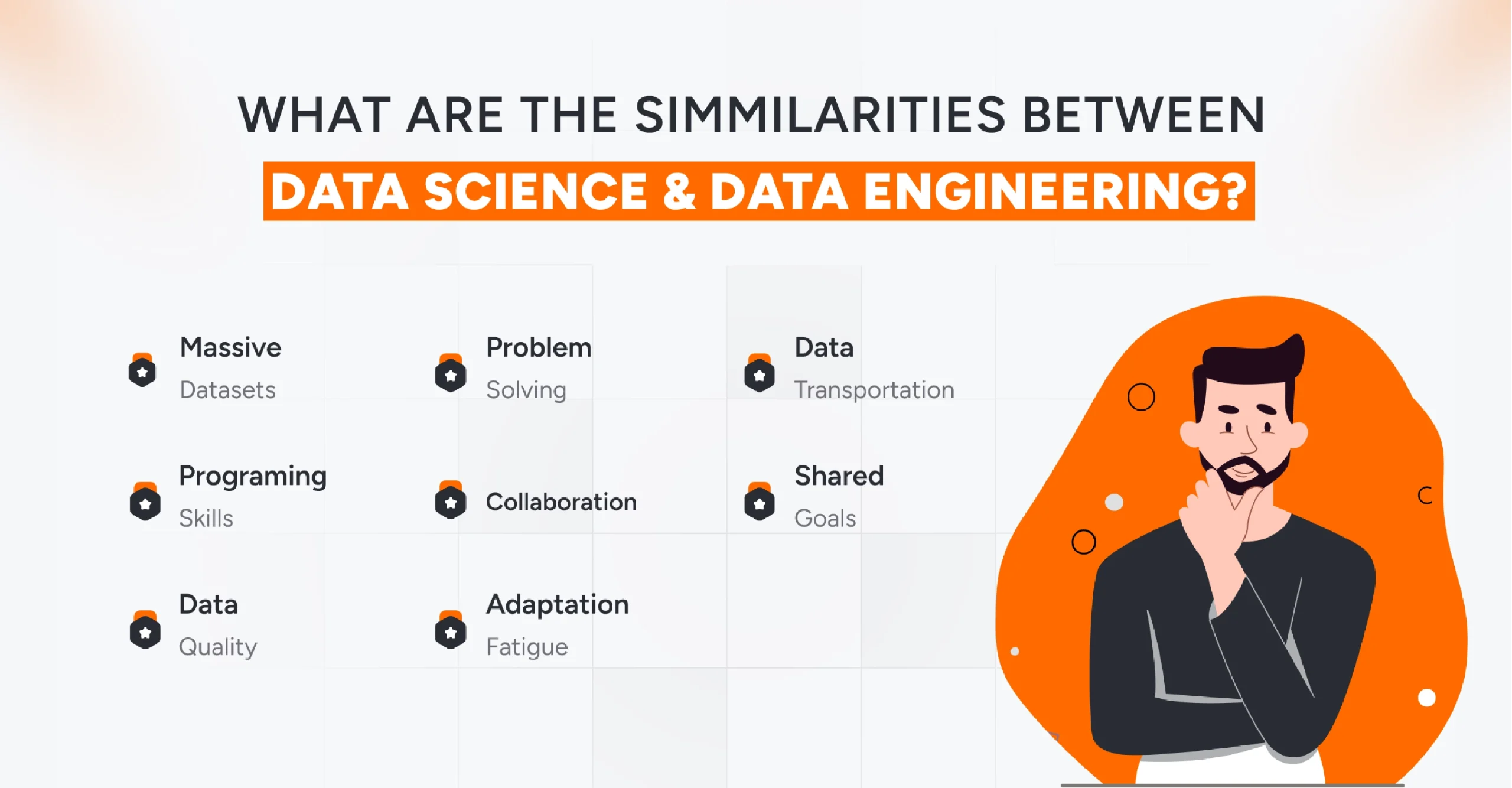
When people discuss data science versus data engineering, they typically focus on the differences. But here’s the catch: they also share a lot in common. In fact, these similarities are what make them interdependent in every data-driven company. Engineers build the pipelines, scientists generate the insights, and together they help businesses stay competitive.
Let’s break down the key similarities:
- Both deal with massive datasets: Data engineers design systems to handle raw information, while data scientists analyze that same data to uncover patterns and predictions.
- Programming is a must: Python, SQL, and even Java or Scala are commonly found in both toolkits. Without coding skills, neither role can perform at scale.
- Data quality is a shared priority: Engineers preprocess and validate data, and scientists depend on that accuracy for effective modeling.
- Problem-solving drives both roles: Whether it’s fixing a broken pipeline or tuning a machine learning algorithm, creative troubleshooting is part of the job.
- Collaboration is non-negotiable: Engineers build the infrastructure, scientists utilize it, and their back-and-forth ensures that reliable insights inform business decisions.
- Tools often overlap: Databases (SQL, NoSQL), big data platforms (Hadoop, Spark), and cloud services (AWS, Azure, Google Cloud) are common ground.
- Data transformation is a shared process: Engineers shape raw data into usable formats, while scientists further refine it for analysis.
- The end goal is the same: Both roles ultimately exist to align data with business outcomes, fueling growth, efficiency, and smarter strategies.
While people often compare data analysts to data engineers or highlight differences in job titles, the real strength lies in collaboration. The success of data science in business depends just as much on these shared foundations as it does on their differences.
For Businesses: Choosing the Right Expertise for Projects
One of the toughest decisions is determining whether your project requires a data scientist, a data engineer, or both. In the data science vs data engineering debate, the right choice depends on what stage your organization is at and what outcomes you’re targeting.
When to Lean on Data Science?
If your goal is to uncover customer trends, predict market shifts, or turn historical data into actionable strategies, then data science is the answer. Data scientists excel at building predictive models, running experiments, and transforming raw data into actionable insights that decision-makers can trust. For companies without in-house expertise, tapping into data science consulting can accelerate insights without the overhead of building a team from scratch.
When to Rely on Data Engineering?
On the other hand, if your challenge is managing fragmented data sources, building scalable pipelines, or ensuring compliance and security, you’ll need data engineering. A robust data infrastructure ensures that scientists, analysts, and even AI systems have access to clean, reliable data to work with. Without it, insights will always fall short.
Striking the Right Balance
It’s rarely about a data engineer vs a data scientist. It’s about sequencing and synergy. Many organizations begin by engineering a solid foundation, then bring in scientists to extract value. Others run both in parallel to ensure faster time-to-insight.
Businesses need to map their goals first. If you want predictions, personalization, or deeper analytics, data science leads the way. If you need robust pipelines, scalability, and governance, engineering is a non-negotiable requirement. In most real-world projects, it’s the partnership of both that delivers long-term ROI.

How AQe Digital Helps Businesses Select The Right Approach?
At AQe Digital, we go beyond delivering services. We build partnerships that unlock real value from your data. Whether it’s setting up robust infrastructure or extracting insights that fuel growth, we help you strike the right balance between data engineering and data science.
Our process begins with your business goals. We work closely with teams to identify challenges, whether it’s fragmented systems, underutilized analytics, or a lack of predictive intelligence, and design scalable, high-impact solutions.
From building clean, secure, future-ready data pipelines to developing models that predict customer behavior and optimize operations, we ensure your data works for you. With expertise across both engineering and science, we turn raw data into actionable strategies that drive measurable ROI.
With AQe Digital, you gain more than just technical expertise; you get a trusted partner who understands both complexity and context, helping you move faster, smarter, and with confidence.
Conclusion
Data science and data engineering both can play a crucial role for businesses of any size and vertical. From informed decision-making to streamlining workflows, data engineering and data science can make a remarkable transformation and impact that exceeds expectations.
Yet, the real impact doesn’t just come from the technology—it comes from choosing the right data analytics consulting service provider to guide you through it.
With expertise in both engineering and analytics, AQe Digital doesn’t just deliver insights; we help businesses operationalize them for growth, efficiency, and long-term success.
Whether you’re looking to modernize your infrastructure or unlock predictive intelligence, our tailored consulting services ensure you get measurable results, not just reports. Contact us today and book your free consultation with our experts.