Custom Mobile App Development: Building Scalable Apps That Drive Business Growth

Jigar Mistry
Having a generic mobile app in the current market scenario, where millions of apps are available, is the biggest risk any business organization will take. To succeed and grow, it is mandatory for businesses to have something that can distinguish them from other apps.
As per the data by Statista, the worldwide mobile network subscriptions are expected to exceed 7.9 billion by 2028.
Generic apps are designed to focus on the needs and requirements as per industry standards, but not every organization has the same goal, process, customer, and challenges. So, businesses that want to deliver a unique and targeted user experience must resort to custom mobile app development.
Custom apps are designed around your specific requirements, such as unique features, targeted user experiences, and integration of existing systems.
Custom apps are in demand for the businesses who dont want adapt a pre-built applications and have specific requirements around their business apps. From flexibility to inclusion of unique features, custom app development can address every demand and objective of the business organization.
In this guide, we will explore how mobile app development services help businesses create tailored solutions, what factors influence mobile app development cost, and how the right development approach can transform an idea into a scalable digital product.
In this blog, we are exploring how mobile app development services can help your business create tailored solutions and deliver the best user experience.
What is Custom Mobile App Development and Why Does it Matter for Businesses?
Every business has unique requirements, workflows, and different types of users, so custom mobile app development is about developing and designing the app as per specific business challenges and goals.
Instead of adapting your business processes to fit an existing application, a custom app adapts technology around your business.
For example,
- Application of an e-tail online store demands features like personalized recommendations, loyalty programs, and seamless payments.
- A healthcare application may require features such as appointment scheduling, a patient record management system, and other features.
- An enterprise with multiple departments and entities may need internal tools that connect multiple systems.
So, what we can understand here is that generic apps can have standard features and tools, but to address unique requirements and needs, one needs to go for a custom mobile app development process.
To deliver and control the entire digital experience and operational management of custom business applications is the best option for businesses of all scales and verticals.
Custom Apps vs Ready-Made Apps: Key Differences
Ready-made apps are good for those businesses that follow a standard workflow and don’t require special features, and don’t want to distinguish themselves from their competitors. It is the best choice for them if they can manage to work well with basic features and don’t need advanced functionalities.
Custom apps are different.
They are created after analyzing business objectives, user requirements, technical needs, and future growth plans.
| Ready-Made Apps vs. Custom Mobile Apps | ||
| Factor | Ready-Made Apps | Custom Mobile Apps |
| Features | Pre-built functionality designed for general business needs. | Tailored features built around your specific business processes. |
| Flexibility | Limited customization with fixed workflows. | Fully customizable to match changing business requirements. |
| Scalability | Growth is limited by vendor capabilities and licensing. | Built to scale with increasing users, features, and business expansion. |
| Integrations | Supports only predefined third-party integrations. | Seamlessly integrates with existing enterprise systems and APIs. |
| User Experience | Generic interface built for a broad audience. | Personalized experience optimized for your users and workflows. |
Why Are Custom Mobile Apps Needed For Businesses?
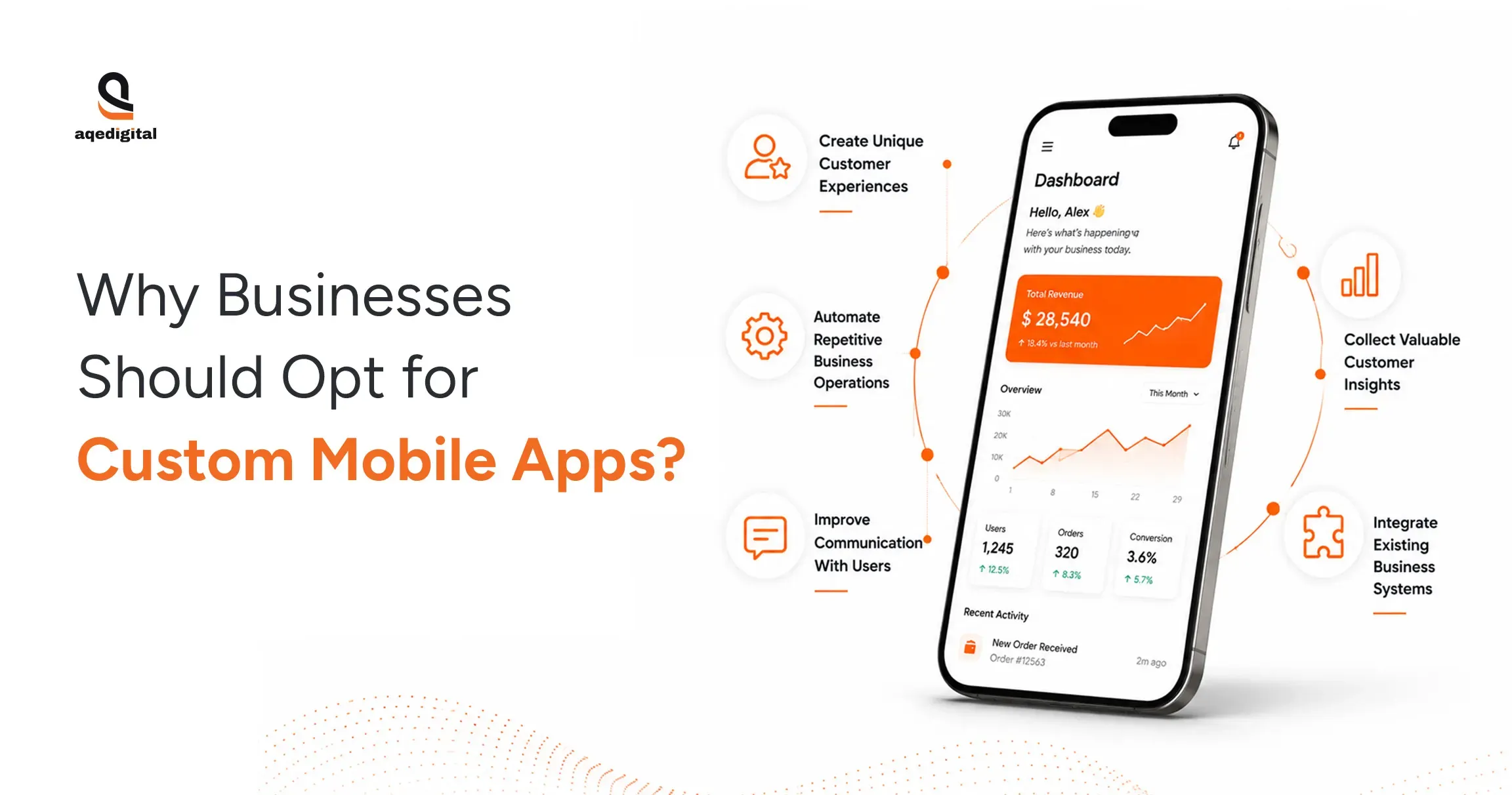
Mobile app users are setting themselves up for less now and demand applications that are faster, intuitive, and have the best UI/UX.
A custom mobile app allows companies to:
- Create unique customer experiences
- Automate repetitive operations
- Provide better communication
- Collect valuable customer insights
- Integrate existing business systems
For example, with custom apps, an eCommerce store can fetch data and use it to provide product recommendations to the users as per their preferences, make the checkout process more simplified, and connect the app with inventory systems for accurate stock availability.
Such customized features and tools may not be available in a standard application that can help deliver a better user experience. And to do so, businesses need to get the best custom mobile app development services on board for the expected results.
Why Businesses Are Investing in Custom Mobile App Development Services?
For many businesses, their mobile app has become their brand value and business asset that makes them stand out and helps them have exclusive brand recognition.
The biggest advantage of custom development is that the organization can have complete control over it.
You decide how the application works, what features matter, and how users interact with your brand.
1. Create Personalized User Experiences
A successful app understands what users need and removes unnecessary friction from their journey.
Custom mobile app development allows businesses to create personalized experiences through:
- Customized dashboards
- User-specific recommendations
- Location-based services
- Personalized notifications
- Simplified workflows
For example, a fitness company with a custom app can create personalized workout plans as per user’s goal and requirements, helping them have better user retention and outcomes.
2. Improve Business Efficiency With Tailored Features
Every business has unique users, internal processes, and a target audience and it can be addressed with software having mediocre features and tools.
Organizations opting for custom business app development can expect to have automated workflo,ws and better productivity.
Examples include:
- Employee management apps
- Inventory tracking systems
- Customer relationship platforms
- Field service applications
For example, if a logistic company wants to have a better visibility and faster decision, they can develop a custom app for themselves. Because by adding features that allows drivers to update delivery statues in realtime and facilitating managers to monitor operations through a centralied dashboard they can easily achieve their goals.
3. Build Scalable Applications For Future Growth
Custom apps are not just build for today they are built focusing future growths and business scalability, it can handle 1000 users and 1,00,000 users too without any struggle.
Developers can plan:
- Flexible architecture
- Cloud infrastructure
- Database optimization
- API integrations
- Performance improvements
This creates a foundation that supports future growth without requiring a complete rebuild.
4. Strengthen Security And Data Protection
Customer data needs to be protected anyhow and businesses need to take strong measure to keep it safe. It is not just about data protection; it is about building trust and safeguarding your customer’s interests.
With custom apps, businesses can implement security measures as per their requirements.
These may include:
- Secure authentication
- Data encryption
- Access controls
- Regular security testing

Key Features To Include In A Custom Business App
Though what features should be added totally depends on nature of business and their objectives, user base, and workflow. But the main objective of opting for custom mobile app development services should be better user experience, business growth and better productivity.
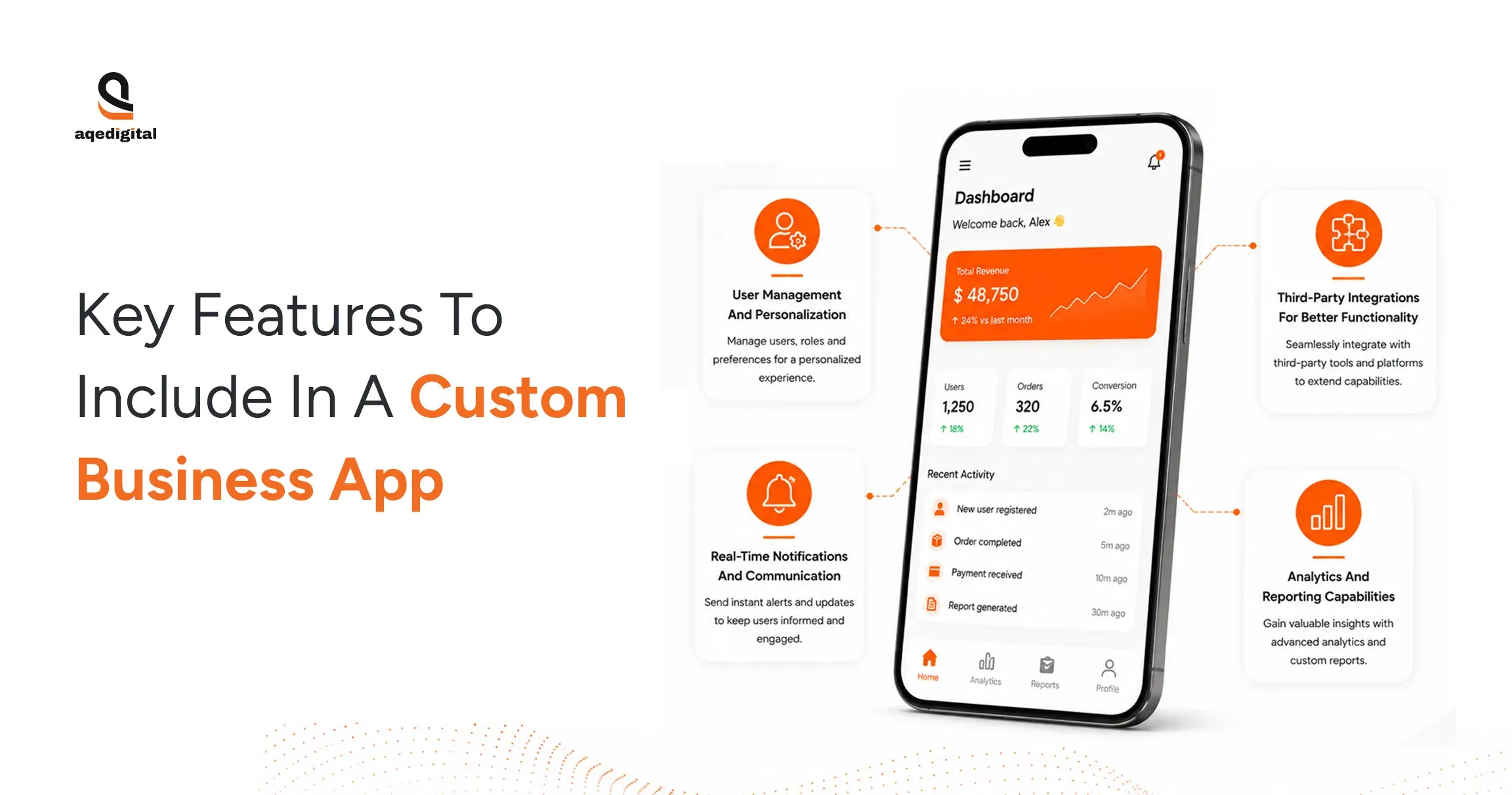 Some of the many key features are listed below that can help you have the right set of features for your custom app development:
1. User Management And Personalization
Modern users expect apps to remember their preferences and provide relevant experiences.
Features like user profiles, personalized dashboards, saved preferences, and customized recommendations help businesses create stronger connections with customers.
For example, a retail app can show product suggestions based on previous purchases, while a financial app can provide personalized spending insights.
Personalization turns an ordinary app experience into a customer-focused digital journey.
2. Third-Party Integrations For Better Functionality
Most businesses already use multiple digital platforms
A successful app should connect with existing systems instead of working separately.
Custom mobile app development services can include integrations with:
- Payment gateways
- CRM platforms
- ERP systems
- Analytics tools
- Cloud services
- Communication platforms
These integrations improve data flow, reduce manual work, and create a connected business ecosystem.
For example, an online marketplace app can integrate payment systems, inventory platforms, and shipping solutions to provide a complete buying experience.
3. Real-Time Notifications And Communication
Timing matters in mobile experiences.
Push notifications, in-app messaging, and real-time updates help businesses stay connected with users.
A travel application can notify customers about booking updates. A healthcare app can remind patients about appointments. A service app can provide instant status updates.
These features improve engagement while creating more opportunities for customer interaction.
Analytics And Reporting Capabilities
Data helps businesses make better decisions.
Custom applications can include analytics dashboards that track user behavior, engagement patterns, conversions, and operational performance.
These insights help businesses understand:
- Which features do users prefer
- Where customers drop off
- How users interact with the app
Instead of making decisions based on assumptions, businesses can improve their app using real data.

How Much Does It Cost To Make An App?
One of the first questions businesses ask is:
“How much does it cost to make an app?”
The answer depends on several factors.
There is no fixed price because every application has different requirements, features, technology needs, and complexity levels.
The mobile app development cost usually depends on:
- App functionality
- Platform selection
- Design requirements
- Backend complexity
- Third-party integrations
- Testing requirements
- Post-launch support
Understanding these factors helps businesses plan their investment more effectively.
1. App Complexity And Feature Requirements
The complexity of an app has a direct impact on development effort.
A simple application with basic screens and limited functionality requires less time compared to an enterprise solution with advanced features.
For example:
A basic business app may include:
- User registration
- Profile management
- Basic notifications
A complex application may require:
- Real-time tracking
- AI-powered recommendations
- Payment processing
- Multiple user roles
- Advanced integrations
The more customized the experience, the more planning and development effort is required.
2. Platform Selection Impacts Development Cost
Technology selection plays an important role in application performance, scalability, and maintenance. Understanding the right frameworks and approaches through resources like technologies to develop mobile apps can help businesses make informed decisions.
Businesses can build:
- Native iOS applications
- Native Android applications
- Cross-platform applications
Cross-platform frameworks can help businesses reach multiple platforms efficiently, while native development may be preferred for applications requiring highly specialized device capabilities.
The right choice depends on performance needs, target audience, and business goals.
4. Design, Testing, And Maintenance Consideration
App development does not end after launch.
A successful application requires continuous improvements.
The overall cost may include:
- UI/UX design
- Quality assurance testing
- Security updates
- Performance optimization
- Feature enhancements
A well-maintained app stays competitive and continues delivering value as customer expectations evolve.
What To Consider Before You Hire Mobile App Developers For Your Project?
Businesses often consider whether they should hire mobile app developers internally or partner with an experienced development team. The right choice depends on project complexity, technical requirements, timeline, and long-term goals.
When choosing developers, look beyond coding skills. Evaluate their experience with mobile architecture, security practices, integrations, scalability planning, and post-launch support.
Industry recognition and proven expertise can also indicate a partner’s ability to deliver quality solutions. Working with an award-winning mobile app development company in Los Angeles can provide businesses with confidence in technical capabilities and delivery experience.
Build Future-Ready Digital Experiences With Custom Mobile App Development
The success of a mobile app depends on how well the application supports users, adapts to market changes, and creates business value over time. Custom mobile app development helps businesses move beyond basic functionality and create experiences designed around their customers and operations.
AQe Digital helps businesses transform ideas into scalable digital solutions by combining strategic thinking, technical expertise, and a user-focused approach. With experience across diverse industries, we help organizations build applications designed for long-term impact.
Explore how we can support your next digital initiative. Contact us to discuss your custom mobile app development requirements.