How a Hospitality Brand Transformed Guest Support with AI-Powered WhatsApp Ticketing?

Priyanka Wadhwani
With the advent of digitization, different apps, and platforms, guest expectations in hospitality have changed significantly.
Users don’t want to wait for hours to get their simple queries answered and go through complicated support channel procedures. The expectation is simple: fast and convenient communication through daily usable platforms.
WhatsApp has become a great communication channel for personal as well as professional purposes. From sending OTPs to operational updates, WhatsApp is becoming popular among many industries, and the hospitality sector is not an exception.
According to Meta’s Business Messaging research, 73.3% of consumers prefer messaging when communicating with businesses, showing how conversational channels are becoming a major part of customer engagement.
There are multiple ways users are using WhatsApp for their convenient conversations. It could be for booking-related questions, check-in requests, service inquiries, and much more. It is convenient for users, but for hotel staff, it becomes an operational challenge if these conversations are managed manually.
With increasing WhatsApp conversations, it becomes hard for support teams to respond swiftly, which results in inconsistent communication and missing guests’ requests.
Hospitality businesses can transform WhatsApp conversations into structured support workflows with AI-powered WhatsApp ticketing. It helps with capturing, categorizing, prioritizing, and routing requests by guests to the right teams.
This approach helps hotel businesses improve response efficiency while maintaining the personal communication experience guests expect.
The Guest Support Challenges Before AI Automation
Before implementing an AI-powered support workflow, hospitality businesses used to manage guest communication through traditional WhatsApp conversations.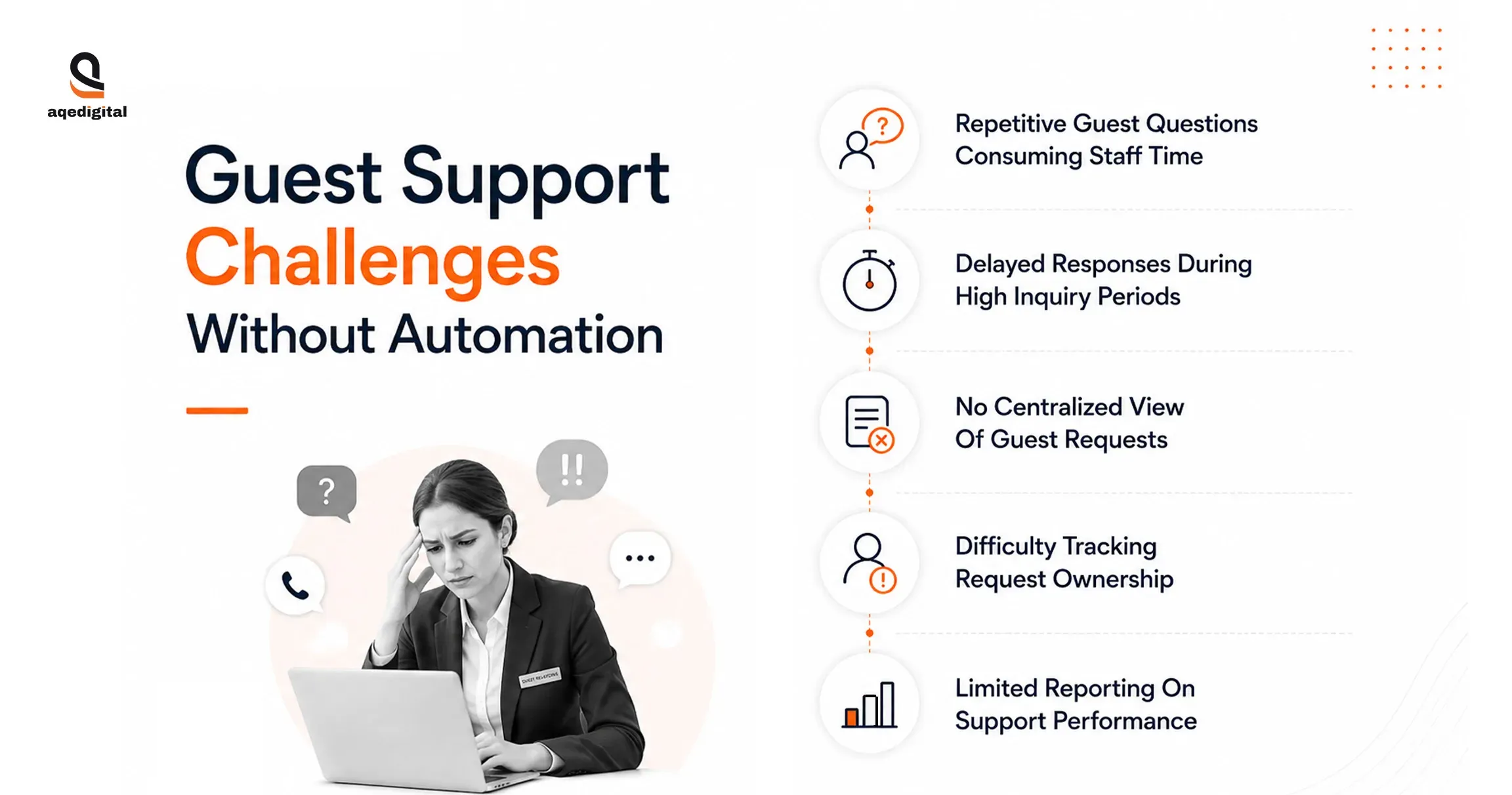 While the channel was convenient for guests, the internal process created several operational limitations.
Guest messages were handled manually, making it difficult to track pending requests, identify urgent issues, and maintain consistent response quality during busy periods.
Common challenges included:
- Repetitive guest questions consuming staff time
- Delayed responses during high inquiry periods
- No centralized view of guest requests
- Difficulty tracking request ownership
- Limited reporting on support performance
The problem was not the communication channel itself.
WhatsApp was already where guests preferred to communicate. The challenge was creating a system that could manage those conversations efficiently without increasing workload for hospitality teams.
Why Traditional Guest Support Workflows Could Not Scale With Growing Expectations?
Manual support systems often depend on team availability and individual knowledge, where accurate and prompt responses to guests are not possible every time.
As guest volume grows, this approach becomes harder to maintain.
Improving Hospitality Operations With Customer Support Automation
Customer support automation helped transform WhatsApp conversations into structured service workflows.
Instead of agents manually reviewing every message, AI systems could identify guest intent, create support tickets, assign categories, and trigger appropriate responses.
Research from Adobe indicates that 78% of organizations expect AI agents to handle customer support interactions within the near future, showing how businesses are moving from basic automation toward intelligent service workflows.
The workflow became more organized:
How AI Organizes Guest Support 1Guest Message
→ 2AI Understanding
→ 3Ticket Creation
→ 4Routing
→ 5Resolution Tracking
This allowed teams to spend less time managing repetitive requests and more time handling situations that required human attention.
Implementing AI-powered WhatsApp Ticketing Resulted For Smarter Guest Support
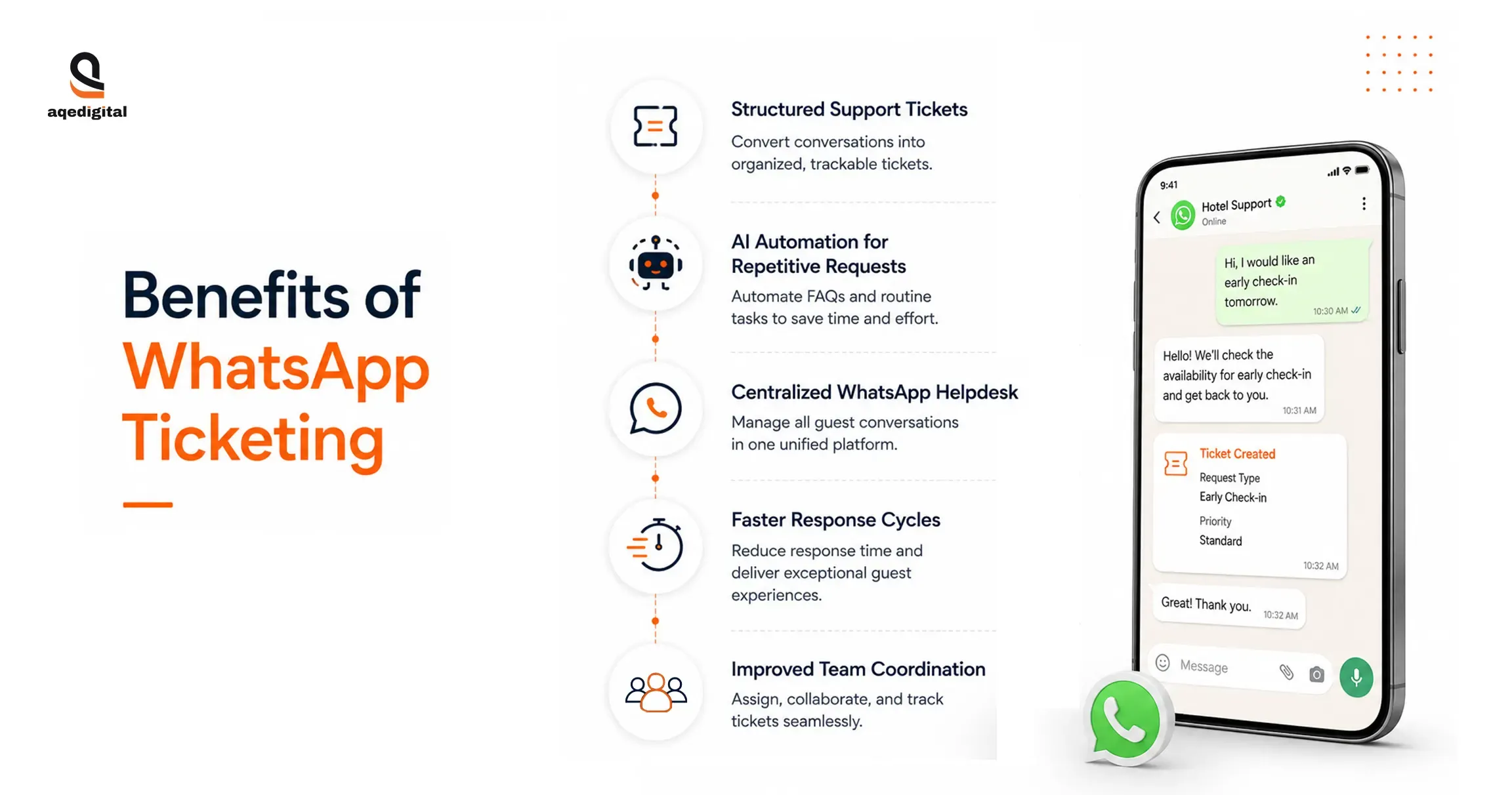
1. Turning WhatsApp Conversations Into Structured Support Tickets
One of the biggest operational improvements was converting unstructured guest conversations into trackable support requests.
Previously, a WhatsApp message could remain inside a conversation thread without clear ownership or status.
With AI-Powered WhatsApp Ticketing, every guest interaction could be converted into a structured ticket with relevant details.
For example:
How AI Processes the Request 📩 Guest Message"Can I request an early check-in tomorrow?" ↓ 🤖 AI Detects
| Request Type | Early Check-In |
| Priority | Standard |
| Department | Front Desk |
| Status | 🟢 Open |
This creates visibility for support teams and reduces the chances of requests being missed.
What Steps Should Hospitality Businesses Take?
- Automate ticket creation from WhatsApp conversations
- Categorize requests based on guest intent
- Assign tickets to appropriate departments
- Track resolution status
Immediate Action
Start by identifying the most common guest requests and automating ticket creation for those categories first. This creates immediate operational visibility without changing the entire support structure.
2. Using AI Customer Support for Repetitive Guest Requests
Many conversations involve repeated questions.
Guests frequently ask about:
- Check-in and check-out timings
- Hotel amenities
- Booking information
- Location details
- Service availability
- Policies
Handling these requests manually takes valuable team time.
AI customer support allows hotels to automate responses for common inquiries while maintaining consistent communication quality.
It helps reduce repetitive workload so teams can focus on guest experiences that require human involvement.
What Steps Should Hospitality Businesses Take?
- Identify repetitive guest questions
- Create automated response workflows
- Maintain a brand-specific communication tone
- Escalate complex requests to human teams
Immediate Action
Review your most frequent guest inquiries and automate the top recurring questions first. These usually create the quickest improvement in response efficiency.
3. Creating a Centralized WhatsApp Helpdesk Experience
Managing guest conversations directly inside WhatsApp can become challenging when multiple team members handle requests.
A centralized WhatsApp helpdesk creates a more structured environment where teams can view conversations, assign responsibility, and monitor resolution progress.
Instead of individual employees managing separate conversations, the hospitality business gains a unified support system.
This improves accountability and makes it easier to understand overall support performance.
What Steps Should Hospitality Businesses Take?
- Connect WhatsApp conversations with helpdesk workflows
- Create ticket ownership rules
- Monitor open and resolved requests
- Maintain conversation history
Immediate Action
Move important guest requests from individual WhatsApp chats into a centralized workflow where every request has a clear owner and status.
4. Improving Guest Experience Through Faster Response Cycles
In hospitality, response time directly influences guest perception.
A delayed response to a simple request can create unnecessary frustration, especially when guests are traveling or preparing for arrival.
AI-powered workflows help reduce response delays by handling initial communication, organizing requests, and ensuring teams receive the right information.
The result is a more consistent guest support experience across different touchpoints.
What Steps Should Hospitality Businesses Take?
- Monitor first response time
- Track resolution time
- Improve request prioritization
- Maintain communication consistency
Immediate Action
Measure response time before and after automation. This helps identify whether support improvements are creating measurable operational value.
5. Improving Internal Coordination Between Hospitality Teams
Guest requests rarely belong to one department.
A simple WhatsApp message may require coordination between:
- Front desk
- Housekeeping
- Reservations
- Maintenance
- Guest relations
Without structured workflows, requests can move slowly between teams.
AI-powered ticket routing improves internal coordination by ensuring requests reach the correct department faster.
What Steps Should Hospitality Businesses Take?
- Create department-based routing rules
- Automate request assignment
- Track internal handoffs
- Reduce manual coordination
Immediate Action
Map your most common guest requests and define which department should own each category. This creates a stronger foundation for automation.
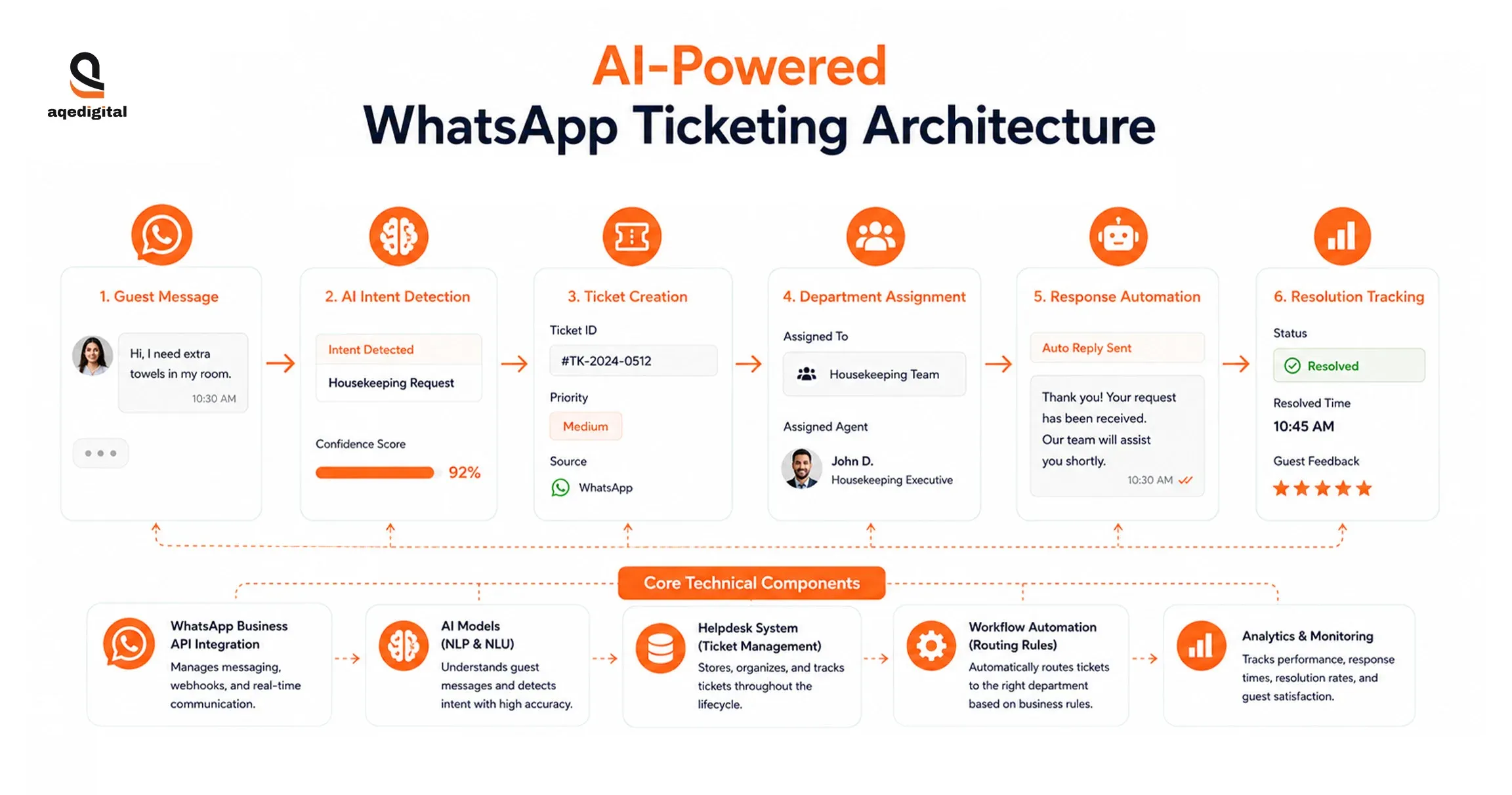
How AI-Powered WhatsApp Ticketing Architecture Works Behind the Scenes
A successful AI-powered support system requires multiple layers working together, including message processing, intent recognition, ticket generation, workflow routing, and human escalation.
Building these workflows often requires custom AI solutions designed around specific hospitality operations, guest communication patterns, and business requirements rather than generic automation.
When a guest sends a message through WhatsApp, the system analyzes the conversation context, identifies the request type, and determines the next action based on predefined business rules.
A typical workflow includes:
AI-Powered WhatsApp Ticketing Workflow 📩 Guest Message → 🤖 AI Intent Detection → 🎫 Ticket Creation
👥 Department Assignment → ⚙️ Response Automation → ✅ Resolution Tracking
This architecture allows hospitality teams to handle higher message volumes without increasing manual workload.
Technical components involved:
- WhatsApp Business API integration for communication management
- AI models for understanding guest intent
- Helpdesk systems for ticket tracking
- Workflow automation rules for routing requests
- Analytics layers for monitoring support performance
The value comes from connecting these components into one operational workflow instead of managing separate communication channels.

Operational Impact After Implementing AI-Powered WhatsApp Ticketing
After implementing an AI-driven WhatsApp support workflow, the organizations move from reactive communication management to a more structured support operation.
The biggest improvements came from creating visibility around guest requests.
Teams gained a better understanding of:
- Which requests were pending
- Which departments handled them
- Which questions could be automated
- Where support delays occurred
Instead of spending most of their time managing incoming messages, support teams could focus on improving guest relationships and handling complex situations.
The transformation has created a more scalable guest communication system for the organization.
Measuring the Business Impact of AI Customer Support Automation in Hospitality
Implementing AI customer support is not only about reducing response time.
Hotels need measurable improvements across guest satisfaction, operational efficiency, and support performance.
The effectiveness of automation can be evaluated through multiple operational metrics.
Key performance areas include:
Response efficiency
Measure:
- Average first response time
- Average resolution time
- Number of automated conversations handled
- Guest experience improvement
Monitor:
- Repeat guest questions
- Support satisfaction feedback
- Escalation frequency
- Operational efficiency
Analyze:
- Agent workload reduction
- Ticket distribution patterns
- Department response performance
A mature support automation system continuously improves because every interaction creates insights that help refine future workflows.
How Does AQe Digital Help Hospitality Brands Build AI-Powered Guest Support Systems?
Modern hotel businesses need support systems that match guest expectations while improving internal efficiency.
AQe Digital helps hospitality brands design and implement AI-driven communication workflows backed by AI and Data solutions that simplify guest interactions, improve operational visibility, and support smarter decision-making.
- AI Workflow Design: We analyze guest communication patterns and create automation workflows based on real support requirements.
- WhatsApp Support Integration: We help businesses build structured WhatsApp helpdesk systems that connect conversations with ticket management processes.
- AI Customer Support Optimization: Our solutions help automate repetitive requests while maintaining personalized guest communication.
- Support Analytics and Improvement: We help organizations track response performance, request patterns, and operational opportunities.
Ready to Transform Guest Support?
Guest communication has become a critical part of the hospitality experience. As customer expectations continue to increase, brands need support systems that can handle growing conversation volumes while maintaining speed, accuracy, and personalization.
AI-Powered WhatsApp Ticketing helps hospitality businesses move beyond manual message handling and create a more organized approach to guest support.
AQe Digital helps organizations build practical AI solutions that improve communication workflows, operational efficiency, and customer experience outcomes.
If your team wants to create a smarter and more reliable guest support process, contact us.