AI in Retail: The Simple & Effective Way to Boost Your Store Experience

Nirav Oza
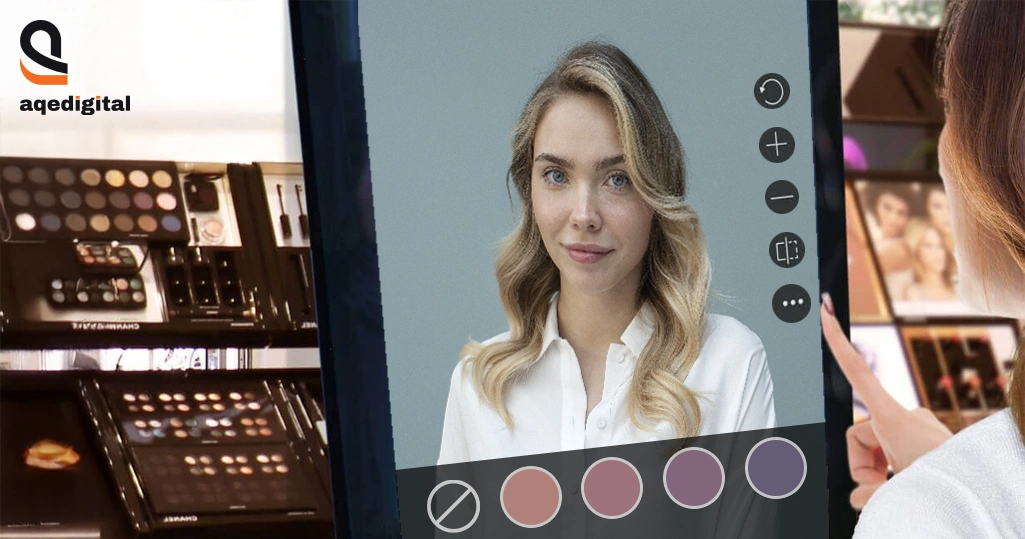
Even in a post-pandemic world where convenience often wins, brick-and-mortar stores continue to drive over 80% of global retail sales. Why? Because humans are sensory beings. We like to touch, feel, try, and trust what we buy. But what’s changing is how people expect to shop in-store!
Today’s customers walk in with their phones in hand, personalized expectations in mind, and little patience for inefficiencies. They want the speed and relevance of online shopping — but with the human touch of a physical environment.
AI is changing how physical stores operate — not by replacing people, but by helping businesses make smarter decisions, improve the customer journey, and respond to real-time needs. From automated inventory management to personalized displays and intelligent checkout experiences, AI is turning retail spaces into responsive, data-driven environments.
Understanding AI in Retail: A Simple Guide for Store Owners
Artificial Intelligence (AI) simply means teaching machines to learn from data, understand patterns, and make smart decisions — much like a well-trained employee who starts noticing customer habits, knows when something’s running low, and can anticipate what needs to happen next.
In the context of physical retail, AI isn’t about robots walking around your store. It’s about using intelligent systems — often in the background — that help you run your store more efficiently and offer a better experience for your customers.
Here’s what that looks like in action:
- Smart cameras that anonymously observe foot traffic and tell you which areas of the store get the most attention — so you can design better layouts and display key products where they’ll be seen.
- AI-powered inventory tools that monitor stock levels in real time and even forecast what products are likely to sell out next weekend — saving your team from guesswork and manual checks.
- Digital signage that adapts its content based on who’s walking by — showing different promotions depending on time of day, season, or even local events.
- Computer vision that can “see” when shelves are empty or disorganized — and trigger alerts to staff before a customer even notices.
- Retail predictive analytics that learn customer buying patterns and help you plan ahead for sales, staffing, and promotions.
How AI Is Enhancing the In-Store Shopping Experience?
For years, the conversation around retail has focused on the rise of eCommerce. But now, the spotlight is turning back to physical stores — this time, with a twist. Today’s stores aren’t just about shelves and products. They’re becoming smarter, faster, and more personalized — thanks to AI in retail.
So what does that look like in practice? Let’s break it down with real, human-centered examples of how smart AI software development services are improving the retail customer experience from the moment someone walks in the door.
1. AI Shopping Assistants (Even Without the Screens)
AI shopping assistants might sound like something from a sci-fi movie, but they’re already here. These digital assistants use machine learning algorithms to understand customer behavior, preferences, and even purchase history. They provide personalized recommendations in real time, making the shopping experience smoother and more enjoyable.
AI shopping assistants are powered by data collected from customer interactions, such as browsing history, purchase patterns, and even interactions with store displays. This data is processed through recommendation engines, which use natural language processing (NLP) and predictive analytics to suggest products based on the individual’s unique preferences.
Customers can engage with these assistants through smart kiosks, digital displays, or their mobile devices. The assistant provides tailored suggestions, helping customers find what they need faster.
-
- Benefits:-
-> Improved customer experience through personalized shopping.
-> AI-driven product recommendations lead to higher sales and customer loyalty.
-> Fewer missed sales opportunities, as the system can instantly suggest complementary items based on past behavior.
- Benefits:-
2. Smarter Inventory = Happier Shoppers
AI can completely revolutionize how you manage your store’s inventory. By tracking product sales in real-time, AI systems can predict demand and automatically reorder stock before it runs low.
AI-powered inventory management systems use machine learning and data analytics to monitor stock levels, analyze customer purchase patterns, and predict future trends. By continuously analyzing sales data, the system can forecast which products will be in demand and when, enabling automatic restocking or alerts to staff when items are low.
The system integrates with RFID tags, smart shelves, and even IoT devices (like sensors) to track product movement in-store. This creates a dynamic view of inventory that updates in real time.
-
- Benefits:-
-> Reduced out-of-stock situations, ensuring customers always find what they need.
-> Less time spent manually checking inventory, freeing up staff for more critical tasks.
-> Real-time data allows for better decision-making and more accurate demand forecasting.
- Benefits:-
3. Personalized In-Store Experiences (Without Being Creepy)
Gone are the days of one-size-fits-all shopping. Today, AI helps stores deliver personalized experiences tailored to individual customers in real-time, creating an experience that feels thoughtful and seamless.
Using data gathered from a customer’s mobile app, RFID tags, or even facial recognition, AI can adjust in-store experiences dynamically. This might include personalized promotions, location-based offers, or even adjusting digital signage based on the time of day or the customer’s past behavior.
AI uses computer vision, facial recognition technology, and predictive analytics to understand who is in the store and what they’re likely interested in. For example, if a customer has previously bought fitness gear, they might see promotions for new workout clothes or accessories when they walk past related aisles.
-
- Benefits:-
-> More engaging and relevant in-store experience.
-> Increases the likelihood of impulse purchases by showing customers offers they care about.
-> Builds a stronger customer relationship, as the store “remembers” their preferences and needs.
- Benefits:-
4. Store Layouts That Work Smarter, Not Harder
AI goes beyond helping with inventory or recommendations — it can also help you design better store layouts that align with customer behavior.
AI systems use smart cameras, sensors, and heat maps to track customer movement and see which areas of your store are getting the most traffic. By analyzing this data, AI can provide insights into which products are being overlooked and which displays are working well.
The system uses computer vision (for tracking foot traffic) and machine learning algorithms to analyze patterns, from how long customers stay in a particular area to what items they interact with. It can even track in-store dwell time, giving you an idea of which displays or sections are most engaging.
-
- Benefits:-
-> Increases conversion rates by highlighting high-demand products in key locations.
-> Helps create a better customer flow, ensuring that high-traffic areas aren’t overcrowded.
-> Optimizes space by adjusting product placement based on real-time data.
- Benefits:-
5. Faster, Frictionless Checkouts
Waiting in long lines is one of the quickest ways to lose a customer. With AI, stores can now provide faster, more seamless checkout experiences — even without a cashier.
AI-enabled systems can include smart checkout kiosks, mobile checkout apps, and contactless payment options. Computer vision can be used to scan items automatically, and RFID tags allow customers to simply walk through a designated checkout area with their items being scanned and paid for in seconds.
Using AI in checkout typically involves object recognition through computer vision algorithms. These systems can instantly identify items on a counter or in a shopping cart and calculate the total cost, while machine learning can offer fraud detection, ensuring that all items are properly scanned.
-
- Benefits:-
-> Reduces wait times at checkout, improving the overall customer experience.
-> Increases sales per hour by speeding up the purchase process.
-> Provides a contactless experience, aligning with customers’ preferences for convenience and safety.
- Benefits:-
Basically, smart retail solutions are not about replacing human staff but enhancing their capabilities, improving customer satisfaction, and enabling faster decision-making.
The Future of AI in Physical Retail
The retail landscape is undergoing a transformative shift, with AI technologies at the forefront of this evolution.
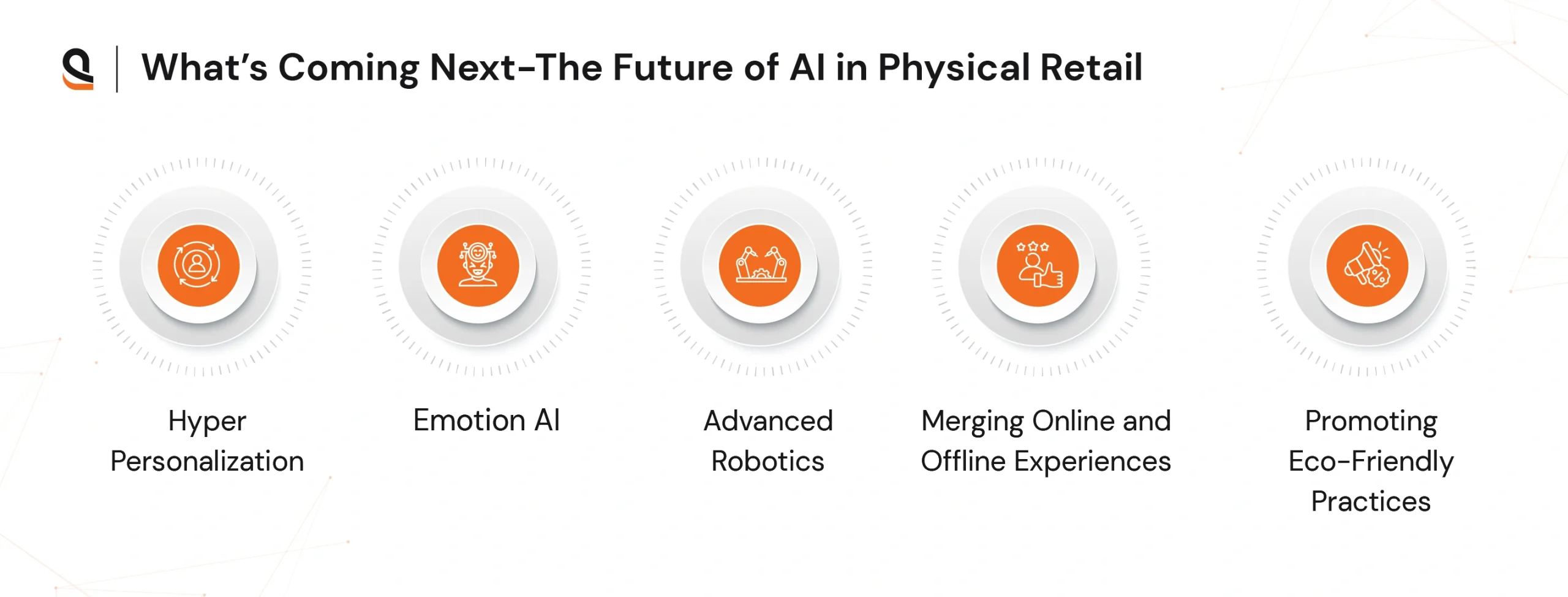 Here’s a glimpse into the emerging trends that are set to redefine the in-store shopping experience:
Hyper-Personalization – Modern consumers expect personalized shopping experiences. AI enables retailers to analyze vast amounts of data to deliver tailored recommendations and promotions.
Companies implementing personalization strategies see an average revenue increase of 40% compared to those that don’t.
Emotion AI – Also understood as affective computing, it allows retailers to gauge customer emotions through facial expressions, voice tones, and other biometric indicators. Implementing Emotion AI can help retailers adjust their services in real-time, enhancing the overall shopping experience.
The global emotion recognition market is projected to reach $56 billion by 2030, growing at a CAGR of 12.9%.
Advanced Robotics – The integration of advanced robotics in retail stores is revolutionizing operations, from inventory management to customer assistance. By adopting robotics, retailers can streamline operations and improve service quality.
Robots can reduce product handling errors by up to 50% and increase order accuracy by 10%.
Merging Online and Offline Experiences – AI facilitates the seamless integration of online and offline retail channels, providing a cohesive shopping experience. This integration ensures that customers receive uniform service, whether shopping online or in-store.
92% of companies are leveraging AI to enhance their personalization strategies across platforms.
Promoting Eco-Friendly Practices – Consumers are increasingly conscious of the environmental impact of their purchases. AI can help retailers track and communicate sustainability metrics effectively.
By providing transparency about product origins and environmental impact, retailers can build trust and loyalty among eco-conscious consumers.
What Business Benefits Can You Expect from Using AI in Retail?
We’ve talked about what AI in retail stores can do — from personalizing the shopping experience to automating the stockroom. But what does that actually mean for you as a retail business owner? Here’s a closer look at the tangible business benefits smart retailers are already seeing — and how they directly impact your bottom line.
Higher Sales with Smarter Recommendations and Store Layouts
AI isn’t just about flashy tech — it’s about helping people buy more of what they actually want. When customers are shown relevant product suggestions (thanks to an AI shopping assistant), they’re more likely to make impulse purchases or explore premium options. AI tools can also optimize your store layout based on how people move, ensuring that high-performing products are placed in the right spots.
Lower Operating Costs Through Automation and Forecasting
Running a store is hard work, but AI in retail helps lighten the load. Retail automation tools handle repetitive tasks like inventory checks, restocking alerts, and even customer queries. AI-powered demand forecasting helps you avoid overstocking or running out of essentials, — saving space, time, and money. It’s not just cost-cutting — it’s smart resource use. This allows your staff to focus on higher-value tasks, like customer engagement and upselling.
Happier Customers, Higher Retention
People remember how you make them feel, and AI in retail stores can help you make a lasting impression. Personalized in-store offers, smoother checkout experiences, and helpful recommendations make shopping feel effortless. When shoppers feel seen and valued, they’re more likely to come back — and bring others with them.
Better Decisions Through Data You Already Have
Your store is full of data — foot traffic, purchase patterns, peak hours, shelf dwell times — but most of it goes unused. AI in retail commerce helps you make sense of this data in real-time. See which products are underperforming and why. Understand shopper behaviors by time, day, or location. Use heatmaps and visual analytics to plan staffing and promotions more effectively. This means fewer assumptions and more confident, data-backed decisions.
Final Thoughts
AI isn’t here to complicate retail — it’s here to make it more human, more connected, and more efficient. Whether you’re running a boutique store, a high-traffic chain, or somewhere in between, the potential of AI in retail isn’t just futuristic — it’s practical, proven, and ready for your business now.
With years of experience in retail IT services, we’ve worked with forward-thinking businesses to transform their physical stores into intelligent, insight-driven environments.
From deploying retail automation systems to building tailored AI shopping assistant platforms, we bring the tech, the strategy, and the execution together — seamlessly. We understand that every retail business is unique, which is why our solutions are built to fit you, not the other way around.
So whether you’re looking to modernize your store operations, personalize customer journeys, or future-proof your retail experience, — AQe Digital is the digital transformation partner you can count on!
