How AI & Tech Are Transforming At-Home Care in 2025

Vishal Panchal
This “age-in-place” preference is fueling the rapid growth of at-home and community-based care services. According to a report by AARP, 77% of adults over the age of 50 want to stay in their homes as they age. However, home care providers who will be key for such an aging demographic remain fragmented.
Operational inefficiencies often reduce caregiver productivity, increase administrative burdens, and make it harder to consistently deliver quality care at scale. Combined with staffing shortages and rising costs, these challenges leave agencies under pressure to do more with fewer resources.
This is where innovation like artificial intelligence (AI) can help. The combination of home care services, AI tech, and automation is enabling providers to “do more with less,” streamlining operations, improving shift management, and ensuring better patient outcomes.
The growing adoption of AI-powered tools and smarter scheduling solutions is reshaping how patients receive personalized support at home. In this article, we will focus on how AI is reshaping at-home care services, its benefits, and the core technologies used in this transformation.
Why Is AI Becoming Essential in Home Care?
With rising demands and strict regulatory compliance, artificial intelligence in home care is the need of the hour to increase productivity, efficiency, reduce costs, and provide better services with better workforce management.
- Addressing workforce shortages: Technology in healthcare management ensures carers are deployed efficiently, filling coverage gaps and reducing scheduling conflicts.
- Improving efficiency: Carers can dedicate more attention and time to patients with reduced operational burden and costs by automating repetitive and back-end administrative tasks.
- Predictive analytics: AI anticipates future care demands and health risks, enabling early intervention and optimal allocation of resources.
- Smarter workflows: AI automates admin tasks, answers patient FAQs through chatbots, and supports clinicians with real-time insights.

The Role of AI & Tech in Transforming Home Care by 2025
A combination of foresight, automation, and adaptability makes AI indispensable for today’s home care providers. It transforms each aspect, right from how services are booked, doctor visits, maintaining shifts, and key medical decision making.
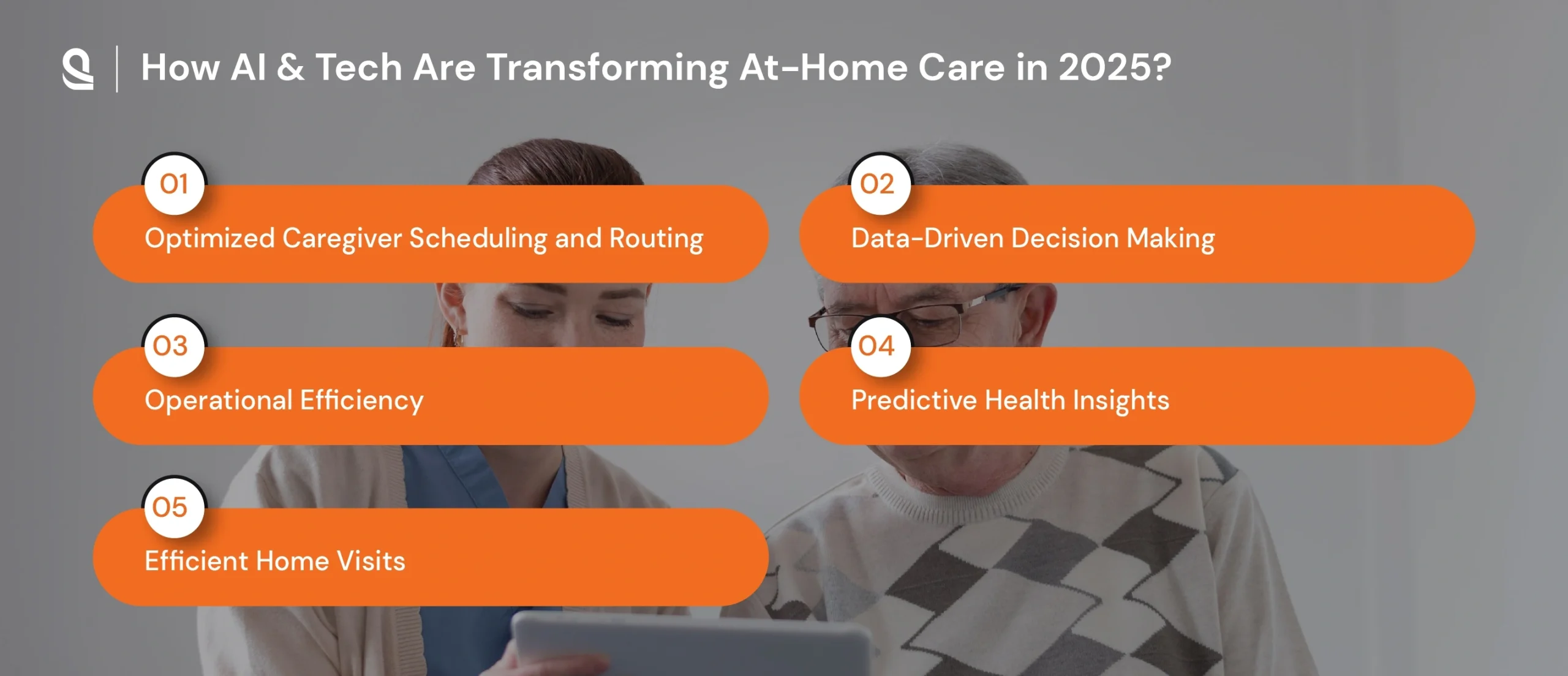
1. Optimized Caregiver Scheduling and Routing
Coordinating doctor visits, caregiver shifts, and virtual check-ins can be overwhelming. AI-driven scheduling tools automate these processes, adjusting dynamically to patient conditions, appointment frequency, and caregiver availability.
Advanced algorithms also factor in travel times and skill matches, ensuring efficient home visits that maximize caregiver productivity and client satisfaction.
2. Data-Driven Decision Making
Modern healthcare technology management services rely on AI to analyze agency-specific performance data from caregiver productivity to patient outcomes. This generates actionable recommendations for cost control, workflow enhancements, and improved service delivery.
Integrating IoT devices and wearables into care plans enables real-time health tracking, alerting carers to changes in patient vitals before they escalate into emergencies.
By combining AI software development services with advanced data analytics, healthcare providers can create customized platforms that optimize staff allocation and enhance patient outcomes.
3. Operational Efficiency
Automation now handles routine administrative tasks like billing, compliance checks, and digital record-keeping. This reduces human error, speeds up processes, and allows staff to focus on delivering compassionate care.
For agencies, this translates into higher throughput, improved accuracy, and a leaner, more sustainable operating model.
4. Predictive Health Insights
Machine learning detects subtle health patterns that may otherwise go unnoticed. By predicting potential health risks, agencies can intervene earlier — reducing hospital admissions, preventing complications, and improving long-term patient well-being.
Studies show predictive analytics in healthcare can cut over-diagnosis rates by up to 54%, shifting the model from reactive to proactive care.
5. Efficient Home Visits
Before automation, home care visits often suffered from poor routing and misaligned caregiver assignments. AI solves this by optimizing schedules for both travel efficiency and patient needs.
The result is a smoother workflow where every visit is purposeful, timely, and better aligned with patient requirements.
Top Technologies Transforming Home Healthcare
In 2025, the future of healthcare technology is elevating at-home care, no longer a matter of adding gadgets, but rather about building an intelligent, connected care ecosystem.
The home care services AI tech market is rapidly evolving, bringing together passive tools that work quietly in the background and active solutions that caregivers and patients use directly. Together, these innovations empower people to live healthier, more independent lives while helping providers deliver consistent, high-quality care.
1. Remote Patient Monitoring (RPM)
By 2027, AI-powered remote patient monitoring platforms will be tracking the health of over 115 million patients, a significant portion of whom will be older adults and individuals managing chronic conditions.
Modern RPM systems go beyond simple vitals tracking; they integrate with a variety of sensors to capture:
- Vital signs and activity data (heart rate, oxygen levels, mobility).
- Medication adherence and routine health behaviours.
- Subtle changes in movement or sleep patterns may indicate emerging health risks.
These insights are sent directly to healthcare providers or home health agencies, allowing for:
- Early detection of potential complications.
- Data-driven adjustments to treatment plans.
- Continuous tracking during care transitions to prevent readmission to the hospital.
The latest trend in healthcare technology management services is ambient AI sensors. Unlike wearables, these systems monitor movement, sleep quality, and bathroom visits without requiring patient interaction. If unusual patterns are detected, for example, reduced movement or increased nighttime activity, caregivers and family members receive alerts, enabling proactive intervention.
AI-driven sensors and wearables track patient vitals in real time, enabling proactive interventions. AI/ML services can develop intelligent algorithms that detect anomalies and alert caregivers instantly. This ensures timely responses and reduces the risk of emergency incidents.2. Telehealth and Virtual Care Platforms
Once designed to reach patients in remote areas, telehealth is now a cornerstone of technology in healthcare management. Video consultations, remote check-ins, and secure messaging are integrated into broader virtual care platforms, which include:
- Care planning & coordination tools that keep all stakeholders aligned.
- Smart scheduling that matches telehealth visits with caregiver availability.
- Billing and insurance integration to streamline payment processes.
- E-prescribing capabilities for faster, paperless medication delivery.
Specialized virtual care platforms go further incorporating chronic disease management, palliative care support, mental health monitoring, and patient education modules. In 2025, these tools aren’t just about convenience; they’re vital for closing access gaps and reducing the strain on overburdened in-person services.
Connected medical devices share real-time health data with doctors and care teams for better coordination. Product engineering services can integrate IoT hardware with secure cloud systems for seamless data flow. Such connectivity boosts accuracy in diagnosis and treatment planning.3. mHealth Apps for Patients and Caregivers
The home care ecosystem involves patients, family caregivers, clinicians, and administrative teams and mHealth apps keep this network connected in real time. These mobile solutions can:
- Coordinate care by storing all care-related information in one accessible location.
- Manage medications with reminders, dosage tracking, and refill alerts.
- Track health progress via shared logs, giving all parties a clear picture of outcomes.
- Facilitate secure documentation exchange for more collaborative, transparent care.
In a field where communication lapses can lead to preventable hospitalizations, mHealth bridges the gaps, ensuring everyone is informed and engaged. For healthcare technology startups, this is one of the fastest-growing segments due to its scalability and adaptability.
Patients and caregivers utilize mobile apps for booking appointments, receiving medication reminders, and participating in virtual consultations. Mobile app development can deliver intuitive, HIPAA-compliant apps tailored for home healthcare workflows. This increases patient engagement and simplifies care management.4. Voice Assistants and Smart Home Integration
Advances in technology and communication in healthcare are making homes smarter and more patient-friendly. Voice assistants, enhanced by caretaking AI and natural language processing, now do far more than play music or set reminders. They can:
- Provide personalized medication reminders.
- Conduct proactive well-being check-ins based on emotional cues in a patient’s speech.
- Alert caregivers if distress or unusual behaviour is detected.
When integrated with smart home systems, these assistants enable hands-free control of lights, temperature, security systems, and entertainment devices. For older adults, people with disabilities, or anyone seeking greater independence, this blend of AI and smart living tech delivers safety, convenience, and dignity.
Voice-enabled devices enable patients to control their home environments, request assistance, and access health information hands-free. AI/ML services and product engineering can integrate smart home systems with healthcare platforms for seamless interaction. This creates a safer, more comfortable living space while enhancing patient independence.5. Artificial Intelligence (AI) and Machine Learning (ML)
Artificial intelligence in home care is the quiet force behind many of these technologies. From predictive health alerts to automated care plans, healthcare AI solutions are enabling home care providers to deliver more proactive, personalized, and responsive services.
In 2025, AI and ML power:
- Predictive analytics to anticipate health events before they occur.
- Dynamic scheduling and routing for caregivers to minimize travel time and maximize patient interaction.
- Natural language processing in voice assistants to make interactions more human-like.
- Real-time anomaly detection in patient data streams enables faster clinical responses.
AI is also enabling 2025 healthcare technology consulting firms to help providers choose, implement, and optimize digital solutions, ensuring they integrate seamlessly with existing healthcare technology management systems.
Data-driven predictive models help forecast care needs and allocate resources accordingly. Data analytics services can turn large datasets into actionable care strategies. This improves resource utilization and ensures patients receive the right care at the right time.
Benefits of Integrating AI in Home Care
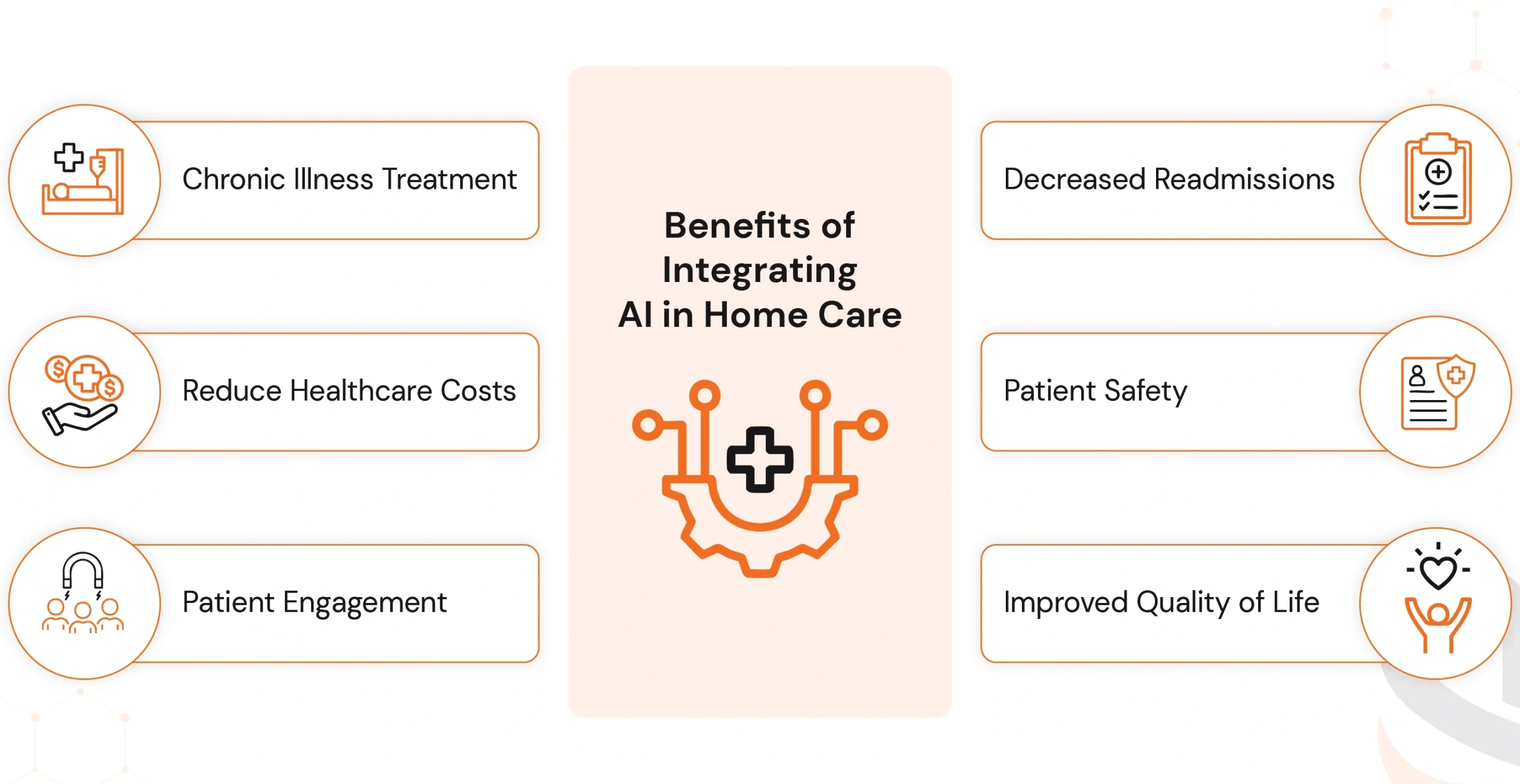
AI tech has become a cornerstone for delivering better care and streamlining operational workflows in home care services.
1. Chronic Illness Treatment
Chronic conditions demand constant monitoring, and AI-powered home care services make this possible without disrupting daily life. By analyzing patterns in patient data, artificial intelligence in home care enables timely interventions that can prevent emergencies. This is how future healthcare technology is elevating at-home care for individuals managing long-term health challenges.
2. Reduce Healthcare Costs
Remote monitoring and predictive tools reduce unnecessary hospital visits, lowering overall healthcare expenses. Through smarter healthcare technology management, resources are used more efficiently while maintaining treatment quality. Such approaches also address some disadvantages of technology in healthcare by focusing on practical, cost-saving solutions.
3. Patient Engagement
The benefits of AI agents in healthcare include round-the-clock virtual assistance, personalized reminders, and patient education that keeps individuals more engaged in their treatment plans. Interactive platforms, powered by technology and communication, keep patients informed and actively involved in their care plans.
With caretaking AI, patients receive personalized reminders, progress updates, and support that boost motivation. Engagement at this level helps healthcare technology startups create more connected and responsive care models. Tools like chatbots, reminder apps, and monitoring devices powered by home care services AI tech ensure patients remain active participants in their treatment journey.
4. Decreased Readmissions
Predictive analytics and real-time alerts allow early detection of complications, reducing the chances of readmission. Healthcare technology management services ensure data from devices is used effectively to guide timely action.
This makes 2025 healthcare technology consulting a crucial part of building proactive home care frameworks.
5. Patient Safety
From preventing falls to ensuring medication accuracy, artificial intelligence in home care strengthens patient safety measures. Innovations in technology in healthcare management enable constant oversight without compromising independence.
Even with the disadvantages of technology in healthcare, these systems prioritize security, reliability, and peace of mind. With custom healthcare software development, monitoring tools can be integrated directly into home environments, offering real-time alerts and seamless coordination with medical teams.
6. Improved Quality of Life
Integrating AI-driven tools into home care promotes independence, better health outcomes, and emotional well-being. Home care services AI tech adapts to changing needs, ensuring patients receive the right level of support over time.
This demonstrates how future healthcare technology is elevating at-home care beyond traditional models.
How AQe Digital Can Help You With AI-Powered Optimization For At-home Care Services?
Adopting AI in at-home care is no longer optional; it’s essential for agencies navigating rising demand, workforce shortages, and the need for greater operational efficiency. From smarter scheduling to automated workflows, AI-driven solutions are helping providers deliver reliable, patient-centred care while reducing administrative burdens.
At AQe Digital, we specialize in building scalable, compliant, and healthcare-focused AI solutions tailored to the unique challenges of home care providers. Our team combines deep domain expertise with advanced technology capabilities to help agencies enhance care quality, improve efficiency, and meet regulatory requirements. Connect with us today to explore how we can empower your organization to lead the future of at-home care.