

Compliance is no longer just a legal checkbox. It’s now a core business safeguard protecting revenue, trust, and operations. With regulations constantly evolving, manual processes can’t keep up. Even one missed update can escalate into penalties or litigation.
High-profile cases like Equifax’s $575M settlement or TikTok’s data mishandling lawsuit prove that compliance lapses are anything but minor. It must shift from a formality to a board-level priority.
That’s why businesses are turning to compliance management software. These platforms move organizations from reactive fixes to proactive governance. By automating routine work, centralizing regulatory updates, and creating a single source of truth, they make compliance scalable and error-resistant.
Unlike traditional methods that leave teams scrambling, modern tools help companies stay ahead of risk reducing human error and allowing compliance leaders to focus on strategic decisions that strengthen resilience. This article focuses on what is compliance management software, its benefits and key features. Let’s start with the basics first.
What is Compliance Management Software?
Compliance management software is a digital solution designed to help businesses stay aligned with ever-changing regulations and internal policies. So basically, it helps organizations to have a centralized system that helps them keep and access everything in one place, such as policies, audits, reports, certificates, and regulatory updates. There is no need to juggle between spreadsheets, emails, manual checklists, and follow-ups.
Compliance software solutions help automate workflows, and ensure no requirements get missed. From safeguarding customer data, adhering to financial reporting rules, to keeping up with privacy laws, compliance management software helps organizations with everything they need to stay compliant.
The best compliance software solutions continuously track regulatory changes, so your team isn’t scrambling to react after the fact. You’re always working with the most accurate and up-to-date information, which minimizes risk and maximizes confidence.
Why Compliance Management Software Is Important?
One missed regulation, one overlooked update, and the consequences can spiral into penalties, legal action, or irreversible damage to your brand.
The True Cost of Non-Compliance
Here are some of the cases that highlight the consequences of non-compliance:
Siemens (2006): Hit with $1.6 billion in sanctions tied to bribery.
Volkswagen (2015): The infamous diesel-gate scandal drained over €30 billion in fines, penalties, and buybacks.
Cum-EX scandal (2020): €14 million in fines, plus an order to repay €177 million to the state.
More Than Just Avoiding Penalties
Compliance management software goes beyond protecting businesses from fines. It strengthens resilience by ensuring your operations, products, and services consistently meet regulatory standards. Integration of compliance management software is not limited to meeting regulations; it is a security & compliance solutions that safeguard your organization’s data, operations, and reputation in an increasingly digital business landscape.
From Reactive to Proactive
The smartest companies resort to preventing the risks rather than scrambling after them. Modern compliance software solutions help organizations stay updated and adhere to the most up-to-date regulatory reforms and information.

Benefits of Compliance Management Software
Modern businesses operate in a fast-changing regulatory environment, and staying compliant can be challenging. Compliance management software and compliance management tools make this task manageable while providing a range of strategic benefits that go beyond basic rule-following.
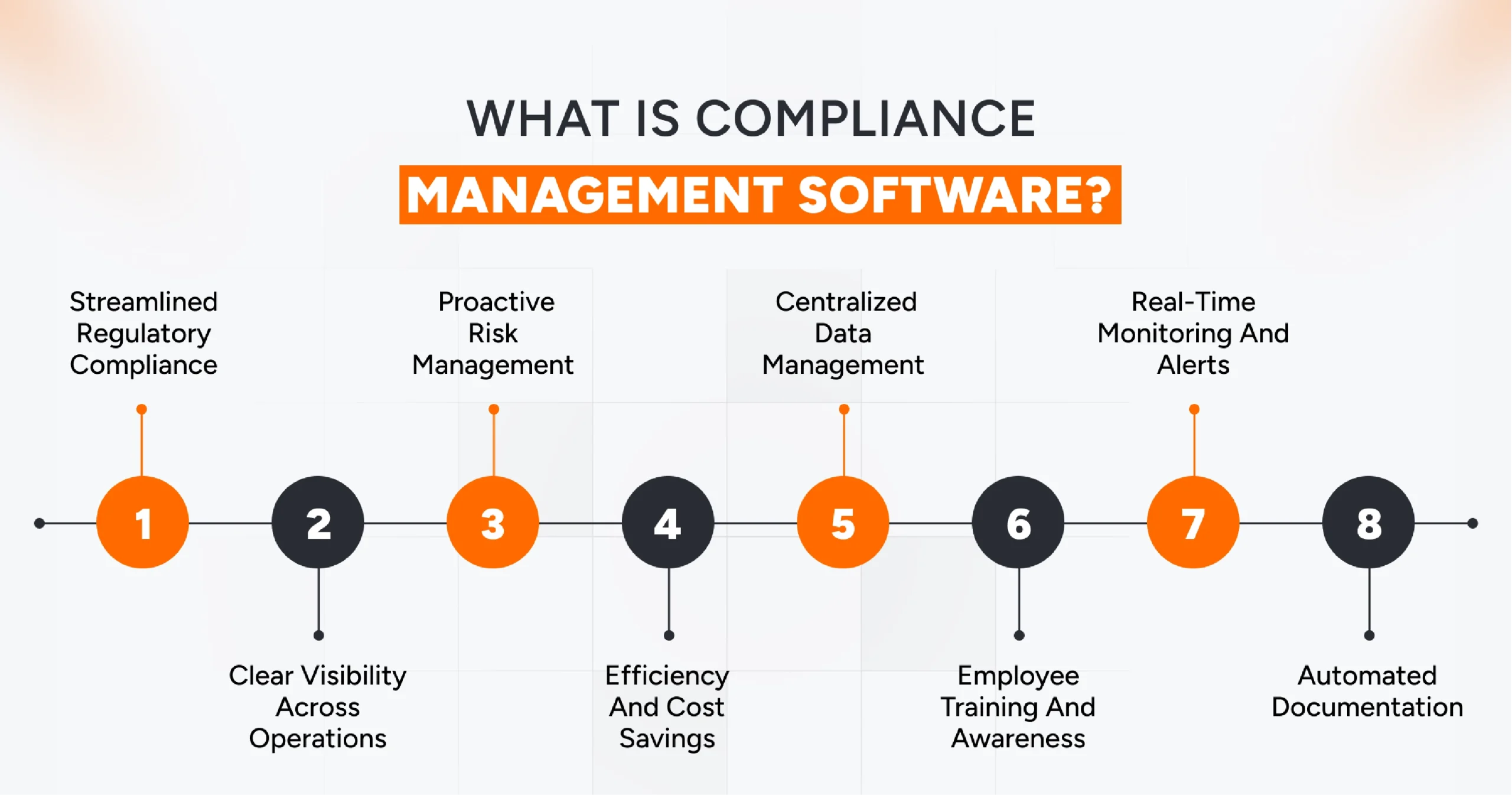
1. Streamlined Regulatory Compliance
These tools automatically capture, document, and map regulatory requirements to your internal policies and controls. By reducing reliance on spreadsheets and manual processes, they ensure your organization consistently stays aligned with regulations. This means fewer errors, less oversight, and more confidence that every obligation is being met.
2. Clear Visibility Across Operations
A centralized dashboard provides a real-time view of all compliance activities, allowing managers to track progress and quickly spot gaps. This visibility ensures corrective actions can be taken promptly, helping teams avoid any issues during audits or regulatory inspections.
3. Proactive Risk Management
Advanced compliance software solutions allow businesses to identify potential risks, weaknesses, and control gaps before they escalate. Addressing these issues early minimizes the likelihood of fines, reputational damage, and operational disruptions. Proactive risk management helps organizations make smarter decisions and maintain stakeholder trust.
4. Efficiency and Cost Savings
Automation reduces repetitive manual tasks, cutting labor costs and limiting errors. Tasks such as documentation, monitoring, and reporting are completed faster and more accurately. Over time, the ability to prevent penalties and optimize internal processes delivers a measurable return on investment for compliance management system software.
5. Centralized Data Management
All compliance-related information is stored in a single platform, eliminating fragmented spreadsheets or scattered documents. Centralization improves data accuracy, reduces silos, and makes audits, reporting, and analysis more straightforward. Teams spend less time searching for information and more time focusing on compliance strategy.
6. Employee Training and Awareness
Many compliance management tools include features for staff training and awareness programs. Keeping employees up-to-date with policies and regulations reduces the risk of accidental non-compliance. It also fosters a culture of accountability, where everyone understands their role in maintaining organizational compliance.
7. Real-Time Monitoring and Alerts
Compliance tracking software provides real-time monitoring of regulatory changes. Automated alerts and notifications ensure teams never miss deadlines or critical updates. Staying ahead of evolving regulations reduces risk and gives businesses the agility to adapt quickly.
8. Automated Documentation
Manual record-keeping can be slow, error-prone, and difficult to manage. Automation ensures accurate, up-to-date documentation, which is essential for audits, inspections, and regulatory reporting. Teams can focus on strategic initiatives rather than chasing paperwork. Many modern compliance software solutions go beyond basic tracking; they’re transforming digital content management with secure SaaS solutions, centralizing policies, controls, and audits in a single platform while providing real-time updates and secure access.
9. Customizable Dashboards
Organizations have unique compliance needs. Customizable dashboards allow businesses to prioritize the information most relevant to their regulatory environment. This tailored view improves clarity, supports faster decision-making, and ensures compliance teams focus on what matters most.
What Are The Risk Of Non-Compliance?
Failing to manage compliance effectively can cost a business in many ways, such as:
Financial Penalties
- Non-compliance can lead to heavy fines, costly settlements, and legal fees.
- Many companies have faced hefty penalties for violating regulations such as SOX or anti-money laundering law.
- Beyond immediate costs, these penalties can affect cash flow and limit resources for growth initiatives.
Legal Consequences
- Ignoring compliance obligations may trigger regulatory investigations, lawsuits, and operational restrictions.
- Prolonged legal disputes drain time, money, and organizational focus.
- Unfavorable rulings can impact long-term profitability and business strategy.
Reputational Damage
- Non-compliance erodes trust among clients, partners, and the public.
- Loss of credibility can lead to customer attrition and decreased revenue.
- Rebuilding reputation often takes much longer than addressing the compliance issue itself.
Operational Disruption
- Regulatory restrictions can delay projects, halt operations, or limit business activities.
- Disruptions reduce efficiency and affect productivity across departments.
- Operational setbacks can have a cascading effect on overall business performance.
Strategic Risks
- Non-compliance may hinder partnerships, investments, or entry into new markets.
- Companies can face limitations in expansion or new product launches due to regulatory scrutiny.
Using compliance management software or compliance management system software helps businesses prevent these risks by ensuring ongoing adherence to regulations, protecting finances, reputation, and operational stability.
Key Features to Look for in Compliance Management Software
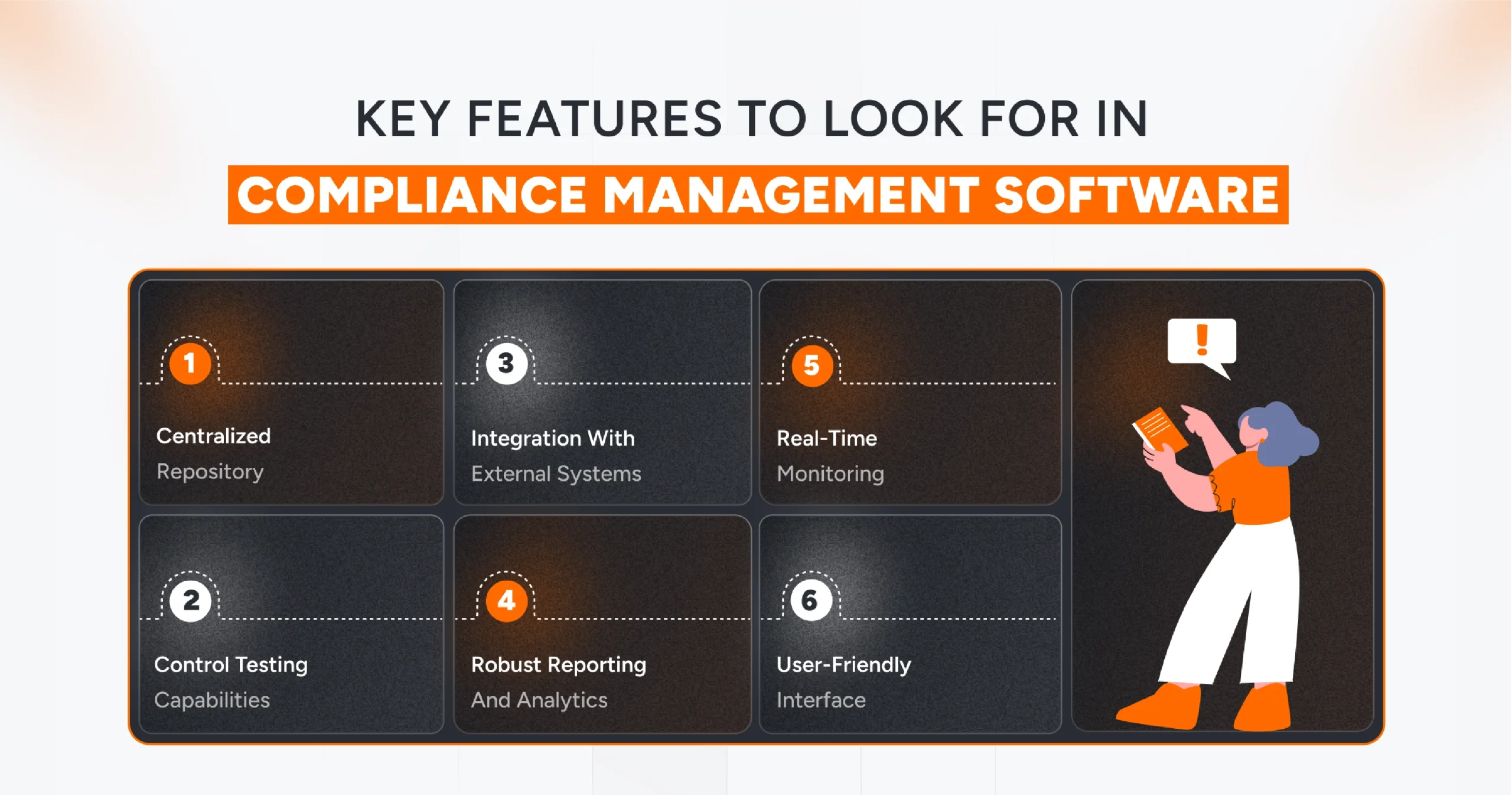
Not all tools are created equal, so here’s what to look for when evaluating compliance management system software:
1. Centralized Repository
A central hub that records internal controls and links them to assets, processes, policies, and regulatory requirements is essential. This creates a single source of insights, giving teams full visibility across all compliance activities. With a unified repository, your organization can track everything in one place and make informed decisions faster.
2. Control Testing Capabilities
The system should allow structured control tests with logical workflows. From designing tests to setting up self-assessments through surveys or questionnaires, the right platform helps teams quickly identify gaps and address non-compliance. Efficient control testing ensures that issues are addressed before they escalate.
3. Integration with External Systems
Seamless connectivity with other platforms, like regulatory content providers or horizon scanners, is crucial. Compliance management tools that integrate effortlessly keep your organization updated with the latest regulatory changes, reducing the risk of missing critical updates.
4. Robust Reporting and Analytics
Customizable dashboards enable you to track compliance trends, identify risks, and make informed, data-driven decisions. The insights provided by these tools help stakeholders respond proactively rather than reactively.
5. Real-Time Monitoring
Immediate alerts when controls are breached or regulations are violated are vital. Real-time monitoring ensures that potential issues are flagged instantly, allowing corrective actions before penalties or operational disruptions occur.
6. User-Friendly Interface
A clean, intuitive design makes it easy for everyone to navigate the system without technical proficiency. A user-friendly interface improves productivity, reduces errors, and encourages adoption across teams, making compliance management a smoother, more efficient process.
Investing in compliance software solutions with these features helps businesses stay ahead of regulatory requirements, streamline workflows, and safeguard their operations effectively.
How to Choose the Right Compliance Management Software
Selecting the right compliance solution is more than just picking a tool. It is important to have the right tool in place that aligns with your organization’s goals, simplifies processes, and adapts to evolving regulations. With the right compliance management system software, your business can stay ahead of risks and maintain operational efficiency.
1. Understand Your Compliance Requirements
Before evaluating any solution, map out your specific compliance needs. A clear understanding ensures you choose a system that addresses your organization’s exact requirements rather than a one-size-fits-all solution.
For example, Industries like healthcare face complex regulatory landscapes where patient data protection and privacy are critical. Compliance management software helps healthcare organizations stay aligned with HIPAA security rule updates and other regulations, reducing risk and building trust with patients and stakeholders.
2. Assess Cost-Effectiveness
Don’t just chase the lowest price. Consider the total cost of ownership, including licensing, training, implementation, and support. The best compliance management tools provide a balance of cost and value, delivering functionality that pays off in efficiency, risk reduction, and long-term savings.
3. Prioritize Scalability and Flexibility
Your compliance landscape isn’t static. Choose software that can scale with your organization, accommodate new regulations, and adapt to changes in workflows. Flexibility ensures the system continues to meet your needs as your business grows.
4. Focus on Automation and Efficiency
The right solution automates repetitive tasks such as documentation, alerts, and reporting. Automation minimizes errors, saves time, and allows your compliance teams to focus on strategic initiatives rather than manual tracking.
5. Check Reporting and Analytics Features
Look for customizable dashboards and reporting tools that provide actionable insights. A good compliance software solution should help you spot trends, monitor gaps, and make informed, data-driven decisions quickly.
6. Prioritize Usability
A system is only effective if your team uses it. Choose a platform with an intuitive interface, easy navigation, and clear workflows, ensuring adoption across all departments and maximizing ROI.
Conclusion
Modern organizations face evolving regulations, complex workflows, and high stakes where even a small compliance lapse can impact finances, reputation, and operations. By centralizing compliance data, automating routine tasks, and providing real-time insights, compliance management software solutions not only reduce risk but also empower teams to focus on strategic initiatives that drive growth.
At AQe Digital, we specialize in delivering tailored compliance software solutions that fit the unique needs of your organization. Our team combines industry expertise with cutting-edge technology to implement systems that enhance visibility, ensure regulatory adherence, and optimize operational efficiency.
FAQs
Compliance management software is a digital solution designed to help organizations manage regulatory requirements, internal policies, and risk processes efficiently. It’s important because it reduces human error, ensures adherence to laws, and protects your business from fines, legal issues, and reputational damage.
Compliance management tools centralize data, monitor processes, and automate routine tasks. By providing real-time alerts, risk assessments, and control tracking, they allow organizations to identify and address potential compliance issues before they escalate.
Yes. Modern compliance management system software is highly flexible and can be tailored to meet industry-specific regulations, organizational workflows, and unique risk management requirements.
Automation eliminates repetitive manual tasks such as reporting, documentation, and alerts. This reduces errors, saves time, and allows compliance teams to focus on strategic initiatives rather than administrative work.
Compliance software consolidates all data in a single platform, making it easy to generate accurate reports, track progress, and demonstrate regulatory adherence during audits. Customizable dashboards provide actionable insights for faster decision-making.